Jerry's will with a literal gift
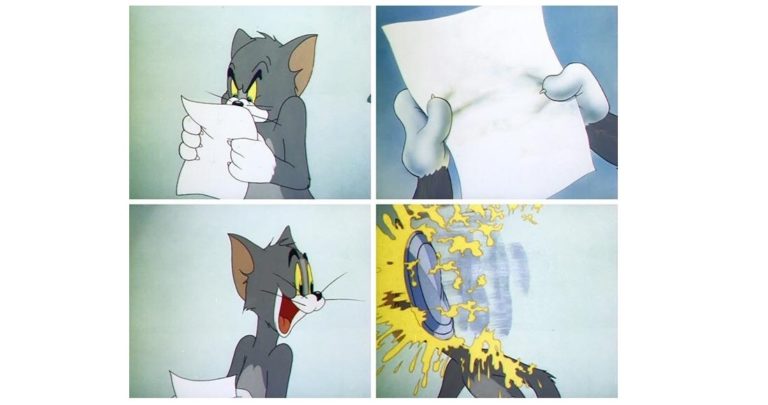
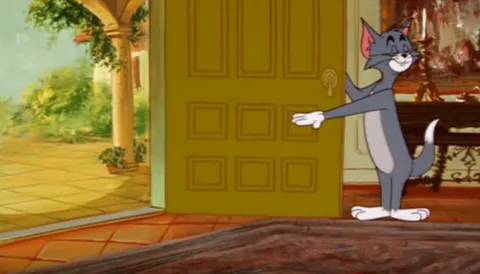
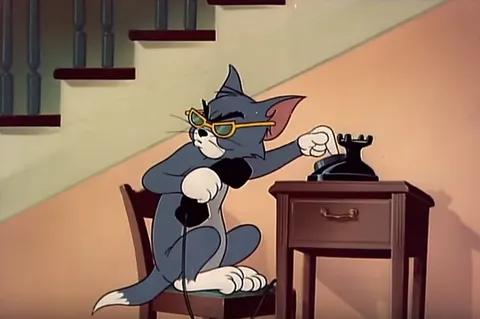
The scene is taken from the short cartoon Quiet Please!, released in December 1945. It was created by William Hanna and Joseph Barbera for MGM. In the story, the dog Spike demands that Tom not disturb his sleep, and Jerry tries to use that condition against the cat. Later Tom puts the dog to sleep, and the little mouse looks for a new way to answer his opponent.
Jerry writes a joking last will: he leaves Tom his only possession, a custard pie. The cat perks up and asks to be given what was promised. The mouse fulfills the request literally, throwing the pie in his face. At the end of July 2018 the scene got a new life on Reddit. Among the early posts, one by MonsieurTank from July 28 stands out, proposing a truce instead of a will. The same day Chewbaxter and other users moved the format to r/MemeEconomy; then new captions appeared in topic communities and Russian-language public pages.
Four panels and a blank sheet
The panels form a square and are read left to right, row by row. Top left, Tom holds a sheet of paper and looks at it attentively. Top right, the sheet is shown large between his paws; the writing has been erased, leaving a blank light field. Bottom left, the cat has already opened his mouth in joyful anticipation. The last panel shows a round plate at his face and yellow custard flying apart. Jerry is not visible in these four frames.
The blank note is a place for a new promise, and the happy face shows that Tom believed it. Between reading and impact there is a separate pause of pleasure: the cat has time to imagine the desired outcome. That is why the ending looks not like an accident but like the destruction of a hope that has already formed. The white gaps between panels turn an animated scene into a compact sequence that can be understood without motion or sound.
The promise arrives in a completely different way
The original joke contains an ambiguity about the gift itself. Tom really does get a pie, but the way it is delivered makes it a nuisance instead of a treat. Memes expand this principle: the sheet shows an attractive condition, while the last panel reveals a hidden cost, an unexpected limitation or the opposite result. A change of text alone is enough to turn four familiar expressions into a new small story.
Unlike a portrait of disappointment, the format shows the path to it. First the reader sees why the hero became interested, then watches him agree, and only after that learns the catch. If the promise is too vague, the blow remains merely a funny fall of expectations. If the sheet names a clear benefit, the final caption can say precisely what destroyed it. This structure makes the template suitable for stories about trusting a tempting phrasing.
Three invented notes
The first invented example writes “A tour without an early wake-up” on the paper, and the final blow is captioned “The bus leaves at five in the morning.” Tom rejoices at a condition that disappears on the first clarification. In the second variant the sheet promises “All the parts for assembly are already in the box,” while the pie means “Except one small part, without which nothing holds together.” The attractive completeness turns out to be almost complete.
Third scenario: “Today we'll pick a short film” on the note and “Watched the trilogy back to back” near the last panel. These examples are invented and are not Jerry's original text. What unites them is a concrete promise, enough to make the hero happy, and a concrete clarification that arrives too late. Four frames let you see this shift in expectations while keeping the expressive simplicity of the old cartoon trap.