What's in the picture
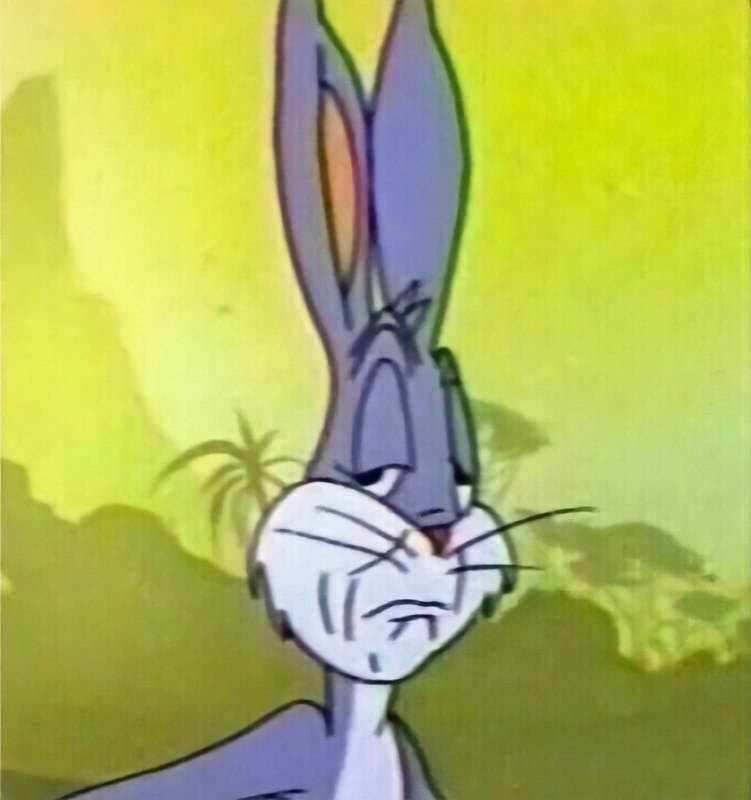
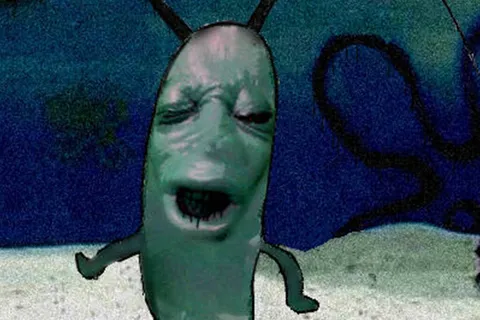
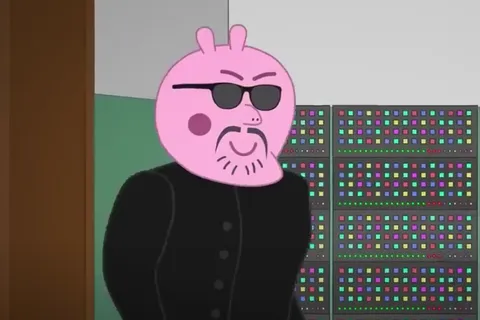
What we see is a close-up of a gray-blue rabbit against a yellow-green background with the silhouettes of a palm tree and rocks. The ears are raised straight up, the eyelids are half-lowered, the eyebrows are drawn together, and the mouth is pressed into a short, crooked line. The image is grainy and the colors are faded, as if it's a frame from an old recording that's been re-saved many times.
The expression is ambiguous. It's neither a scream of horror nor a broad smile, but a restrained blend of bewilderment, weariness, and mild judgment. It's precisely that ambiguity that makes the face so useful: the viewer decides for themselves whether the rabbit is surprised, disappointed, or silently running through everything it just heard.
Where the frame comes from, and what's not known about it
The character himself is Bugs Bunny from the Looney Tunes cartoon series, one of Warner Bros.'s most recognizable characters. However, which exact episode this moment was drawn for, and in what year, hasn't been confirmed, so the precise episode title remains a guess.
The path it spread along is also hard to reconstruct precisely. Based on various accounts, the frame was used as a reaction image on social media, and in 2020 it gained noticeable popularity, including on the Russian-speaking internet. The first post and the exact dates haven't been established.
How the emotion reads
The main thing this frame expresses is composure laid over shock. The rabbit doesn't jump up or shriek — he keeps a straight face. So the joke isn't built on the event itself, but on how calmly it's taken: the more absurd the trigger, the stronger the contrast with this quiet, slightly disdainful look.
The cartoon character's emotion is purely conventional: it was drawn by animators for a specific scene, and in memes it takes on a completely different role.
Example captions
"When a coworker says everything's ready for the deadline, but the file is empty." The caption describes a situation where the speaker is clearly confident, while the viewer can already see the disaster coming. The rabbit's face conveys silent disagreement without a word.
"Mom: it's just a little weight gain after the holidays. The scale: no." Two lines, and the rabbit stands in for the person looking at the numbers. It works off the gap between the excuse and the fact.
"At the store they said: everything's on sale, the price is lowered. I check the tag." The joke is in the pause between the promise and the check, and the frame depicts that very pause.
"Friend: I barely play, just an hour a day. Hours on profile: 2,400." The number contradicts the words, and the face shows that the viewer gets it and isn't going to argue.
Why the picture is so caption-friendly
The frame has no character dialogue, no second character on screen, and no scene that needs retelling: just raised ears, half-lowered eyelids, and a mouth pressed into a crooked line against a faded yellow-green background. So any caption placed above or below reads as a direct reaction from this face, rather than as a caption for something happening off-screen.
It also helps that the viewer doesn't need to recall a specific episode: Bugs Bunny is already known as a character who keeps up an air of calm in the most absurd situation, and the grainy, oft-resaved image only underscores that the frame comes from some old episode that's been forwarded countless times.
How to use the template
The picture works best with a short, one-line caption: the expression will set the tone on its own, and a lengthy explanation only gets in the way. Look for situations where someone says something absurd with a straight face, and you're the only one who notices.
Because of the graininess, it's best not to enlarge the image too much or to overlay small text directly on the face: it's more convenient to place the caption above or below it.