A yard, a gate and a large warrior
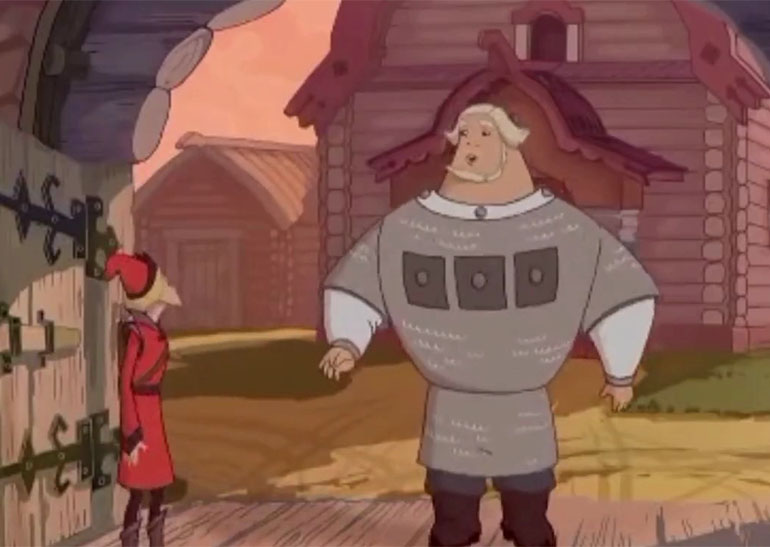
The picture shows a scene in the yard of a wooden house. On the right stands a large, broad-shouldered warrior with light hair and a beard, wearing a gray ring-mail shirt with three dark plates on the chest and white sleeves. His mouth is slightly open, and one hand is held slightly out to the side, as if he has just understood everything and is about to say something aloud. On the left, by a gate panel with black forged hinges, stands a small man in a red cap and red kaftan. In the background are log buildings with carved window frames and a pinkish sky.
The height difference between the two characters itself suggests the plot: a big, calm warrior against a small messenger. This very contrast makes the frame handy for jokes about someone being fooled while another participant still gives credit to the scheme.
The phrase from the 2006 cartoon
The frame is taken from the feature-length animation Dobrynya Nikitich and Zmey Gorynych by the Melnitsa studio, released in 2006 — the second part of a cycle about three warriors. According to the plot, a messenger brings Dobrynya an alarming message from the prince about an enemy attack, but in fact it is a ruse to get the warrior out of the house. Stepping outside and realizing he has been tricked, Dobrynya says a line that was later quoted endlessly: “Listen, that was clever of you to think of that, I didn't even get it at first. Well done!”
The line sounds almost free of anger: the hero is not outraged but sincerely appreciates someone else's invention. This good-natured intonation became the basis of the meme.
How the line came back to life fifteen years later
The cartoon was about fifteen years old when, in late July 2021, the fragment became popular on the Russian internet (Runet). It was first picked up on TikTok, where videos of absurd or clever schemes were set under the line. A few days later, compilations appeared on YouTube, and then the image and quote moved into VKontakte communities as a standalone template.
The scene is at about the twentieth minute of the film. The author of the first video is unknown, so who started the trend has not been established; the exact date of the first TikTok post is also unknown, only the period — late July 2021. By mid-August 2021 the phrase had reached the advertising texts of Russian brands, though companies used it cautiously. It was added to text jokes, to scenes from films, to historical events, and as a reply to other people's clips.
Caption examples and why they work
Below are invented examples; all of them rest on one pattern: first the trick is described, then the frame with the reaction comes.
“A colleague set up an urgent call for Friday at 6 p.m. so that no edits could be made until Monday.” The contrast between the official reason and the real goal works — Dobrynya praises precisely the deception he has uncovered.
“The cat knocked a mug off the edge of the table just as I was getting up, and now I have to clean up while he sits by his bowl.” The praise goes not to the person but to the animal, and that makes the phrase funnier: a deliberately polite address to a fluffy manipulator.
“A friend gave me a board game he wanted to play himself.” Petty self-interest under the guise of generosity is a classic reason for such words.
“In season 8 the show's writer explains everything away as the hero's dream.” A large-scale version: a plot twist that is at once annoying and delightful.
How to use the image
The frame works best as a reaction to someone else's cleverness, not as a standalone joke without context. The caption should be short: one sentence about what exactly was invented. If you add a quote, leave it whole — a cut-up version loses the soft intonation. A version also works well where the caption first gives a short two-line account of the trick and only then the frame itself: the pause between them plays the role of the moment when Dobrynya realizes he was deceived.
Do not apply the frame to real conflicts where the deception caused a person real harm: a joke about calm praise then looks like mockery. It is better to use everyday trifles, games, office tricks and film plots.