A TV ad that became an internet find
In December 2003, the Chilean TV channel Canal 13 aired the original Star Wars trilogy with ads for Cerveza Cristal beer inserted between scenes in a way that made them visually look like a continuation of the film. About two decades later, short clips of these broadcasts began spreading widely online, surprising viewers outside Chile. In 2024, the old clips were discussed again as an example of unusual TV product placement. One shouldn't automatically assume that any modern edit is an authentic recording of the broadcast: parodies and variations also exist online.
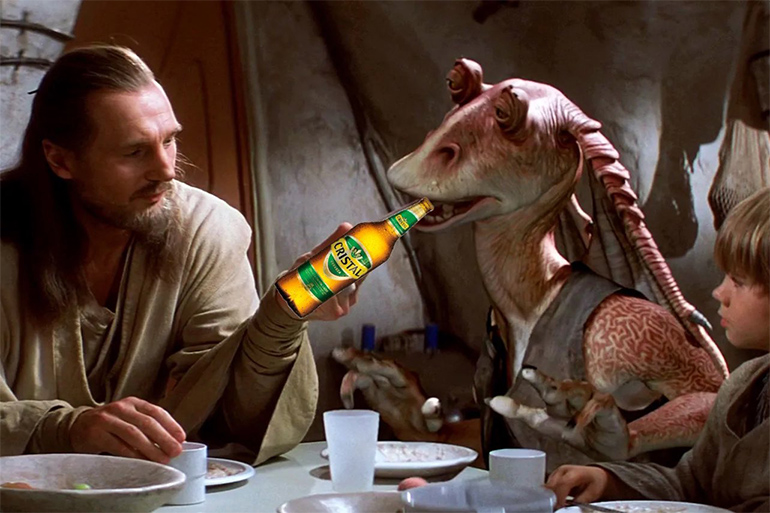
In the image, a man sits at a table across from a large lizard-like figure holding a bottle of Cristal, with another character on the right; this is a stylized edit that plays on the idea of an ad insert within a fantastical story, not a frame confirming that exactly this scene aired in 2003.
The campaign itself played on the clash between two expectations: the viewer is watching a space adventure, and the screen suddenly presents a familiar product as though the characters were genuinely interacting with it. Repeating the same trick at different points in the film made the insert recognizable and turned it into a plot twist of its own. The later meme amplifies this effect by inserting the brand into other franchises and everyday scenes.
When an ad break disguises itself as plot
The comedic gap is built on the dead-serious tone of the fantastical frame and the sudden recognizability of the product. The bottle looks as though it belongs to a world of lasers and alien creatures, even though it's really an advertising object. For a moment, the viewer is unsure whether this is the film, an ad break, or a parody of both forms. Simply placing a logo over any frame might not produce this effect — what matters is the perceived unity of the scene and the absurdity of the product within it.
The name "Cerveza Cristal" means beer of the Cristal brand, not a fictional artifact from the Star Wars story. The film itself doesn't contain this ad in its official version; the inserts belong to the TV broadcast and the advertising campaign.
Examples of swapping the genre
In a kitchen video, you could insert a cereal box right at the moment a character opens the fridge and caption it: "When the breakfast ad suddenly became part of the family saga." It's funny if the product looks like a natural cause of what's happening, even though no one mentioned it before. Another option: "The commander was gathering the crew when a thermos with a branded mug showed up in frame." Here an epic task is interrupted by a mundane object.
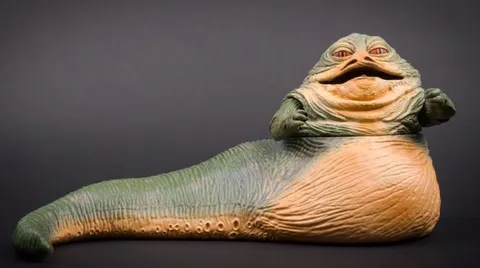
For the catalog image, a fitting caption would be: "The negotiators were arguing over the galaxy's fate until a cold bottle was placed on the table." This is a new parody caption, not a historical text from the ad campaign.
Parody the integration, don't deceive the viewer
The format works well for parodying intrusive advertising, product placement, or an edit that's too seamless. Let the product play a role in the scene, then reveal the absurdity of how naturally it fits there. You can transfer the device to fictional products so as not to create the impression of real sponsorship. For historical discussion, specify the year and country of the broadcast, so as not to mistake the TV ad insert for the film's official version.
Don't claim that any copy found online is the original broadcast: some of the published versions were edited later. The local drawing shows clear stylization, so describe it as a meme edit. Beer and advertising may be inappropriate for a children's context; choose a neutral object if the audience is a family one.