A letter that acquired a political charge
After Russia's full-scale invasion of Ukraine began in February 2022, the letter Z became one of the visible signs of support for the Russian military campaign: it was placed on vehicles and used in public propaganda. Later on, in online slang, the verb "to zig" began to be applied to public figures when authors felt they had shown such support. In the "bad news" meme format, the joke is sometimes to ironically spot a Z where the symbol may have appeared purely by chance. A specific meme edit should not automatically be treated as a political statement by the person depicted.
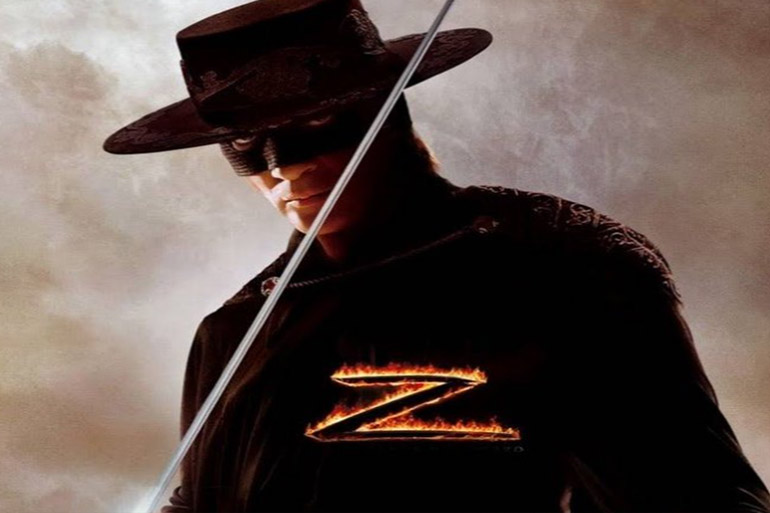
In the photo, a man in a wide-brimmed hat and dark clothing has a glowing red-and-yellow letter Z on his chest, with a thin diagonal line running nearby that looks like a light effect or graphic element. This is an edited frame, not a photograph of a real gesture or belief, and the exact method of the edit can't be established from a single file.
False alarm as a joke
The template opens with a dramatic announcement: "guys, bad news." The viewer is then shown a sign that supposedly changes everything. If the Z turns out to be part of a logo, a pattern, or a random shape, the gap between the serious announcement and the triviality produces a false alarm. In a political version, the author may be criticizing a public figure, but such a judgment requires specific context. In an everyday parody, the target of the joke is the habit of seeing a hidden meaning in any detail.
The word "zigged" is sharply tied to a political accusation, so it shouldn't be used as an established fact just because of a similar-looking letter. The sign may be part of a word, a name, a design, or a random object.
Even in a neutral joke, it's better to pick a sign that's obviously accidental: that way the false exposé is aimed at the interpretation itself rather than at a specific person. This approach preserves the meme's mock-alarm mechanism without an unsubstantiated accusation.
Finding a Z in something harmless
For a box of puzzles, a fitting caption would be: "Bad news: the game's title has a Z in it, now it's an international conspiracy." The exaggeration is obvious and aimed at the conspiratorial reading itself. For an office setting, you could come up with: "Guys, bad news — the charger cord folded itself into the shape of a Z." Here the object really does form the shape by accident, and the dramatic formula turns a trifle into a sensation.
A third example about architecture: "Bad news: two paths crossed at an angle, and someone's already spotted a symbol." This caption mocks reading intentions into shapes. These examples are invented and should not be presented as real accusations against the people in the image.
Keep the symbol and the intent separate
If the image is specifically about political support, explain exactly what action is being discussed and who has confirmed it. If the goal is an absurd false alarm, choose everyday patterns and random letters so as not to substitute a real accusation for a joke. The local frame is suitable for a discussion about signs and interpretations, but by itself it doesn't give the person's name, the date it was shot, or the reason the Z appeared.
Don't romanticize military symbolism, and don't use it to harass people over their origin or political views. Satire can mock speculation, but it shouldn't disguise a call to hatred as "letter-spotting." Don't declare the man in the image a supporter of any idea without confirmation beyond the frame itself.