What the picture shows
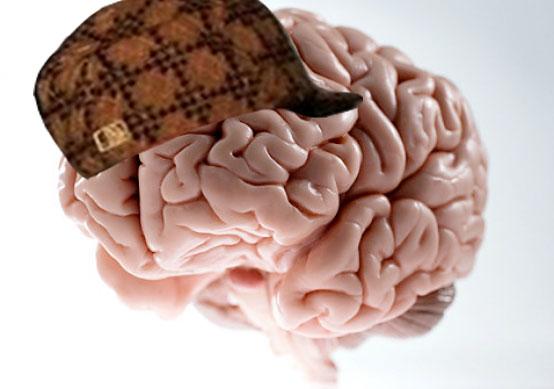
The image is a close-up of an anatomical brain model: a pink surface with dense folds against a light, neutral background, with no people and no text. The organ is turned slightly. Near the left edge sits a cap with a brown checkered pattern and a small square patch on the side.
The shot is object-focused, so the photo works as a clean template. The viewer sees anatomy and immediately understands that the subject is the person himself, not a particular scene. The cap turns an abstract organ into a character with a personality: the brain seems to be stubborn and pesky too.
How the series appeared
The earliest known macro with this image is dated March 24, 2011: it appeared on Reddit and collected a modest number of votes. The series is usually dated from it, but this is the earliest example found rather than a proven first publication, and the author of the original picture is not identified.
In the summer and autumn of 2011 the series spread across humor sites: a collection of macros came out in July, another in August, and on October 10 the webcomic The Oatmeal published a parody of this device. In March 2012 a dedicated site appeared that gathered collections. One of the meme generators accumulated more than 20,000 versions, and on Reddit, in blogs, and on Tumblr thousands of derivatives appeared.
The cap is linked to another character, “Scumbag Steve,” who became a meme in his own right. This image gives the brain an unkind character, and the combination of the two templates produced a whole family of “scumbag” macros.
The mechanics of the caption
The series' formula is built in two steps. The first part of the phrase is a calm thought, a decision, or a normal expectation: going to bed early, studying the topic, quietly leaving the room. The second part is the brain's remark, which at the last moment wrecks that picture: it recalls an old embarrassment, plants a doubt, or makes you worry about a trifle.
What is funny is that the contradiction happens inside one person. It is not an external enemy who spoils the plan, but one's own head. The cap sets the tone: the brain does not behave maliciously, but with everyday cheekiness, like an acquaintance who loves to remind you of awkward moments.
Four captions that work
“Decided to go to bed at 10:00. Brain: remember how in fifth grade you mixed up the words to the anthem?” It works through an abrupt jump from a plan to a memory. A calm intention is broken by an embarrassing detail nobody asked about.
“Studied all the exam tickets. Brain: what if they ask the one you skipped?” Here the contrast is between confidence and anxiety. The first half sounds like a victory, and the second immediately puts it in doubt.
“Sent “good morning” to the chat. Brain: what if they read it and didn't reply?” The joke builds on escalation: a small action turns into a chain of worries within a second. The speed of the shift between thoughts is the main device.
“Remembered that the iron might still be switched on. Brain: maybe the fridge too?” The second line goes beyond the reason for the worry and becomes almost absurd, yet it feels accurate: anxiety spreads quickly.
Where it fits
The macro suits conversations about small inner conflicts: procrastination, late-night thoughts, sudden awkward memories. It works well in messaging, when a person wants to joke at their own expense without making the situation dramatic.
The template does not fit heavy topics where a real person's suffering becomes the subject of a joke. If a caption touches on serious distress, it is better to choose a tone of sympathy or not to use the macro at all. The series lives on light self-irony, and that is where its strength lies.