The wordplay
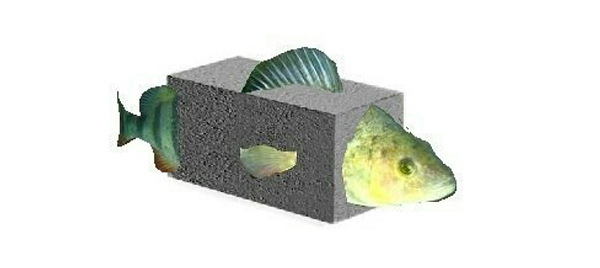
The meme's name rests on a literal fusion. The word "shlakoblok" (cinder block) ends in "ok," and "okun" (perch) begins with the same sound, so combining them produces "shlakoblokun." The pun is short and sounds natural in Russian, as if it were the name of a real fish or some strange building material. It's precisely this ambiguity that gave the whole series its name.
The joke rests on sound, not meaning. The word has no meaning in any ordinary context, but it's easy to pronounce, and it immediately conjures an image that can't exist in reality: a fish living inside a concrete block.
The image
The picture is a collage: cut-out photographs of fish are inserted into an image of a gray cinder block with its characteristic texture. A perch with stripes and fins peeks out of the left side of the block, the dorsal fin of another fish rises above it, and on the right a large head with a bulging eye sticks out of an opening. In the center of the block, another small fish is visible, as if swimming inside the masonry. The background is white, so the scene looks more like an illustration from a catalog than a real-life photo.
This simplicity is exactly what makes the image convenient as a meme. It's understandable even without a caption, and the name, written underneath it or in the post's text, turns the collage into a joke.
Shlakoblokun's friends
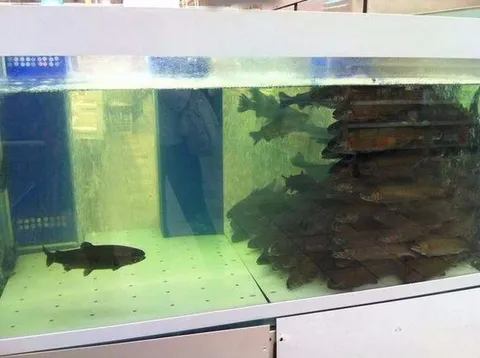
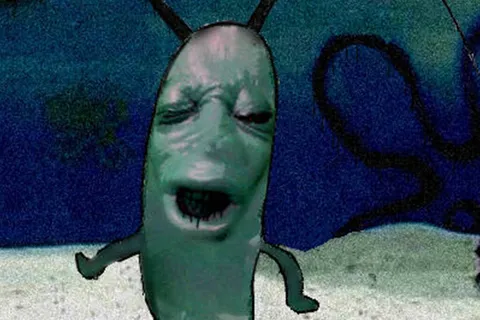
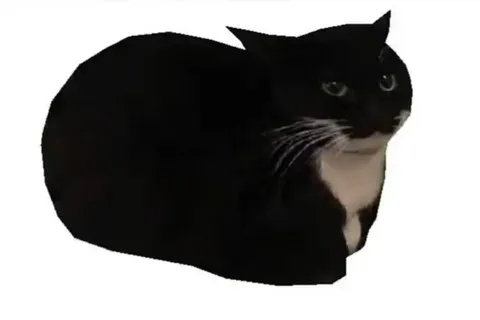
The meme's main find is a series of "friends" built on the same scheme: two words are fused together to form a new, fictional object. "Karuselyd" is assembled from "karusel" (carousel) and "selyd" (herring), "Sportkaras" is made from "sportkar" (sports car) and "karas" (crucian carp), and "Forelsa" is formed from "forel" (trout) with a deliberately lengthened ending. Each name works as a small pun, and together they create the feeling of a whole catalog of nonexistent fish.
The series shows how Russian-language wordplay humor works: one successful pun spawns a sequel, and the joke grows through repetition of the pattern. The audience quickly grasped the rule and began inventing new names themselves, adding new "friends" to the set.
Spread
The meme appeared in 2016 and spread mainly through social media and niche communities that enjoy short wordplay jokes. The exact author of the first collage and the place of its first publication are not known.
The picture was used in comments as a reaction to ridiculous names, failed advertising slogans, and everyday puns. Sometimes it was posted under a fishing or construction-related post to emphasize the absurdity of the combination. Most often the joke sounded like an invitation to come up with your own "friend" of Shlakoblokun.
Cultural context
The meme belongs to the type of joke that thrives in the Russian language thanks to its word formation: words easily stick together, and sound often matters more than meaning. Similar devices appear in children's rhymes, advertising, and folk speech. "Shlakoblokun" simply carries this device over into a visual format.
Today the meme is remembered as an example of how a simple image and a successful pun can spawn an entire series. It requires no knowledge of context and is understood by anyone who has heard the words "shlakoblok" and "okun."