What's shown
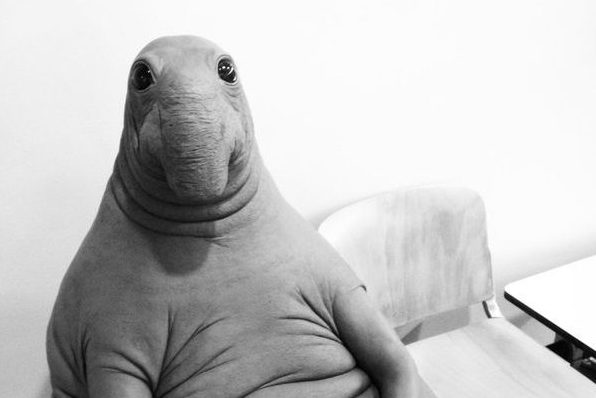
In the photograph, a gray sculpture sits with its hands folded in front of it. Its body resembles a legless mass of leathery flesh, dense and rounded, with a protruding belly and broad folds. The head is large and smooth, with big eyes and a long nose that gives the creature a resemblance to an elephant seal.
The creature's expression is calm and attentive, as if it's patiently waiting to be called. The sculpture looks like a living creature from a fantasy film, yet it's also funny and awkward. This contrast between a patient pose and an unflattering look became the basis for the image's popularity.
History of its creation
The sculpture was created by Dutch artist Margriet van Breevoort in 2016. The commission came from the Leiden University Medical Center, which runs a children's hospital, as part of the Leiden Sculpture Foundation's annual competition, whose 2016 theme was tied to the biological sciences. Instead of depicting illnesses, the artist focused on patients waiting to see a doctor.
According to the artist, the piece was meant to convey the idea that people wait calmly for a diagnosis and hope for the best. The figure was designed to be funny, cute, and the kind of thing you'd want to approach and hug. In May 2016 it was installed in front of the university medical center's children's hospital, and that same year it was named the most photographed object in Leiden. In February 2017 the sculpture was moved inside the center along with other works.
How Zhdun came to the internet
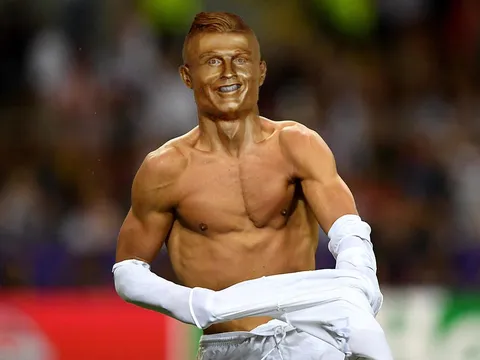
Photos of the sculpture were posted on the Russian-language site Pikabu in 2017, after which the image quickly turned into a meme. In the Russian-speaking and Eastern European internet, the sculpture was named "Zhdun," meaning "the waiter" or "the one who waits." Users began inserting the figure into famous paintings, photographs, and videos, and the images changed its context: the creature ended up in lines, outside offices, and at meetings.
The meme spread beyond the internet as well. A copy of the sculpture appeared in a park in the city of Chita, and in 2021 the image ended up on the cover of an album, "Sand," by the Belgian band Balthazar. That same year, 2021, during the pandemic, the sculpture briefly had a mask added to it. In March 2025 a film called "Zhdun at the Movies" was released in Russia, in which the creature became a character, and in April 2026 a sequel, "Zhdun 2," followed.
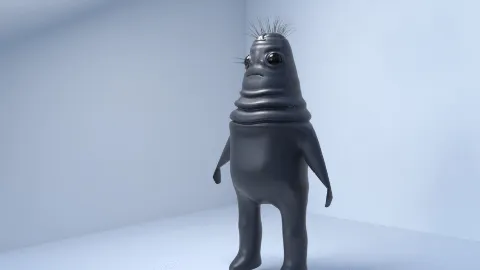
Zhdun was also used in edits that place it in locations where waiting feels especially familiar. There are photos of a model of it sitting in an empty chair in the Ukrainian parliament, as well as numerous collages where the creature joins the lines of famous paintings. Such insertions show how easily the image fits into any context.
How the meme is used
Zhdun is used to describe waiting of any kind: for a reply from an employer, a delivery, a program downloading, or a decision from a boss. The figure sits motionless and calm, so anyone who is waiting recognizes themselves in it. Captions usually accompany the image with a short phrase about the user being stuck in line again.
The meme is often used without irony too, as support for someone stuck waiting. Zhdun isn't angry or irritated, but patient, so the image is received warmly. Internet users often post it along with a sympathetic comment, making the meme a convenient way to express understanding.
Why Zhdun became popular
The main reason is universality. Waiting is familiar to everyone: lines at clinics, slow replies to letters, pages loading slowly, and endless decisions. A figure sitting with its hands folded in front of it expresses what's usually expressed through long sighs, and so it's understood instantly.
The second reason is its visual absurdity. A gray, legless creature with a long nose looks both strange and cozy at once, which creates a comic effect. The photo was taken in a plain interior with a white wall, so the object looks real, which makes it even funnier.
Finally, it mattered that the sculpture was created with good intentions. The artist wanted people to see not irritation in waiting but calm hope, and it's precisely that gentleness that took root on the internet. Zhdun remains one of the most recognizable examples of how a work of art from a hospital lobby turned into a folk hero of the Russian-speaking internet.