What is visible in the screenshot
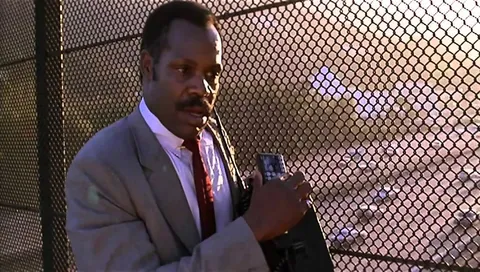
The frame shows a man without a hat, with a narrow beard below the chin and a mustache, in a dark blue jacket, white shirt and red tie. He stands by a stone building with a light fixture on the wall; his eyebrows are raised and his mouth is half open: he is clearly saying something to his interlocutor. In the lower corner of the frame a raised finger is visible, meaning the speaker accompanies his words with a gesture.
The expression combines confidence and slight surprise: the man seems to be stating an obvious conclusion that for some reason others failed to reach. This intonation became the basis of the template.
Where the frame comes from
The man in the picture is American comedian Dave Chappelle, and the source is the sketch show “Chappelle's Show,” which aired on Comedy Central. Reportedly, the frame is from the first episode of the second season, which aired on January 21, 2004. Which exact sketch the scene belongs to is not disclosed in available reviews, so it is better not to retell the plot.
The frame gained popularity as a template much later. It is known that on December 5, 2018, the screenshot collected tens of thousands of votes on Reddit, and on the same day a version referencing Fortnite appeared, which also spread quickly. This period can be considered the start of mass distribution rather than the joke's first appearance.
How the joke works
The formula is simple: first a “modern” problem is named, then a solution is offered that at first glance also seems “modern,” although it may be silly, harmful, or simply self-evident. Chappelle's face serves as a stamp of approval: the man is sure he has come up with something outstanding.
The humor arises from the mismatch between the weighty tone and the content. The more ridiculous the solution, the stronger the effect. The caption usually has two parts, like a line of dialogue: a description of the problem and an unexpected way out.
There is also a reverse version, where the solution looks too obvious: “Want to lose weight? Eat less.” Here the comedy comes from presenting the problem as complex while the answer turns out to be a childish tip. A third variant is a solution that creates a new problem: “Tired of the neighbors' noise. Turned the music up louder.” All three patterns rest on the same confident intonation that the face in the screenshot conveys.
Caption examples
“My phone runs out of battery too fast. Bought a second phone.” The solution is “logical” but meaningless in essence.
“Too lazy to get up to the light switch. Going to bed in my clothes with the light on.” The absurdity is taken down to a domestic level.
“No time to read books. Bought a bookshelf.” A joke about the habit of buying instead of doing.
“Bored at work. Opened one more tab.” A recognizable work situation where the “solution” solves nothing.
How to use it
Captions are more reliable when built on the “problem — solution” scheme, because the frame itself carries the intonation of a conclusion. For insertion, it is better to take everyday situations: the more familiar the problem, the faster the viewer accepts the joke.
Do not turn the template into a retelling of the sketch or a quote about the comedian himself. The real person here serves only as a face for the intonation, not as the subject of the joke.