What is seen in the frame
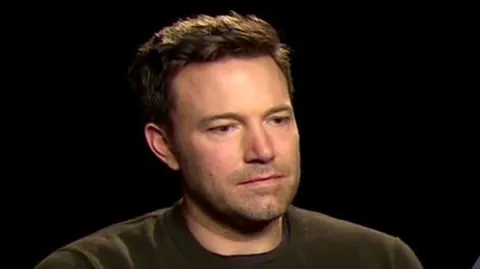
The shot is a close-up: a man with short hair and a neat beard, wearing a gray-blue sweater with a textured knit. His head is slightly lowered, his gaze directed down and to the side, his brows drawn together, the corners of his mouth turned down. His eyes look moist and reddened. The background is blurred, in warm brown tones, as in a studio with soft light.
It is the combination of the lowered gaze and glistening eyes that makes the frame so expressive: it reads both as held-back tears and as tired resignation. The caption completes the rest.
Where the frame comes from
The frame is taken from an episode of the internet talk show Red Table Talk, hosted by Jada Pinkett Smith. The episode aired on July 10, 2020: the actor and his wife discussed rumors surrounding their family, and Jada herself used the word “entanglement” (“tangle,” “connection”) in reference to one of the relationships. This word also quickly became a joke and often accompanies the picture in English-language captions.
Right after the episode aired, the photo spread across social media. It was used as a reaction to any unpleasant news: a favorite team losing, a canceled flight, a broken phone.
Smith on the meme
In October 2020, the actor and his wife returned to the topic in a new episode and laughed as they went through the memes. According to accounts of that episode, Smith said he had not been crying: by his account, the filming took place around midnight, he was very tired, and his facial expression was explained precisely by that. He also admitted he had considered reshooting the moment, but in the end took the audience’s reaction with humor.
This is a good example of the difference between an emotion in the frame and a person’s real state. The meme Will Smith is “sad” only in the captions, while the real conversation was more serious and complicated than any joke.
How the joke works
It works through contrast of scale. The face conveys a degree of grief as if something tragic had happened, while the caption names a trifle. The smaller the occasion, the funnier it is: the exaggeration becomes self-irony.
Another device: expectation and disappointment. The caption describes how everything was supposed to go well, and the face sums it up. This format fits two-line captions well: the situation on top, and the reaction below or inside the picture itself.
Caption examples
“When you walk into the kitchen for something important and forget what it was.” A minor everyday annoyance against a face that looks like the world has collapsed.
“Ordered food for 40 minutes, and the courier has been on the way for 70.” The wait has stretched, and the downward gaze expresses the resignation of someone who can no longer change anything.
“Phone at 1%, and the charger is at home.” A recognizable situation where the face conveys doom.
“When everyone decides to go to the movies to see a film you’ve already seen.” Here sadness is presented as polite silence: it is awkward to say so, and agreeing is boring.
How to use the template
It suits short, clear situations where there is a disappointment without real tragedy. Captions about serious events in real people’s lives work worse: the character’s look in the frame can easily be turned into mockery of someone else’s grief.
Do not attribute to Will Smith himself deeds or words he did not perform. It is better to treat him as a facial expression: “I look just like this right now.” This way the joke stays about the caption’s author, not the actor’s biography. And in short: the fewer the words, the stronger the emotion in the frame works.