What is visible in the frame
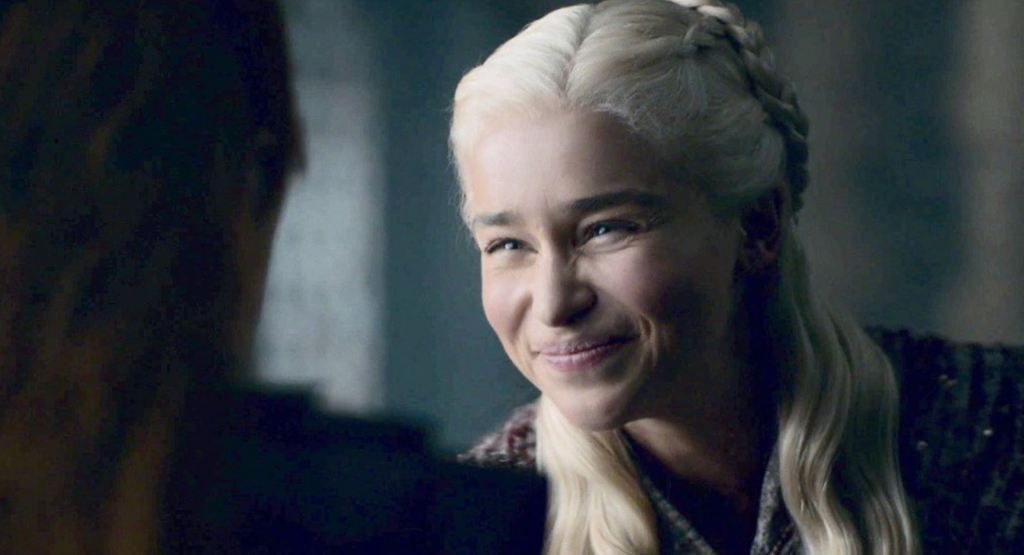
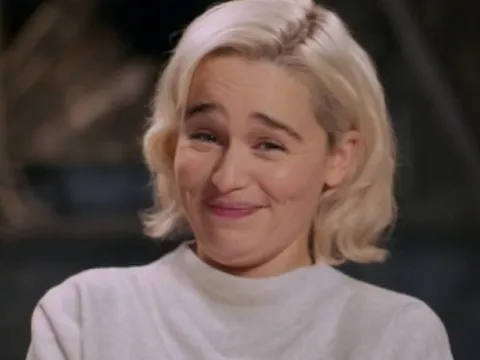
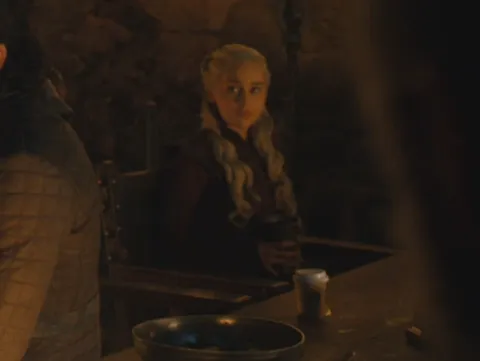
The close-up shows a fair-haired woman with a braid wound over the top of her head. She is looking at her interlocutor, who is visible only as a dark blurred silhouette at the left edge of the frame. The corners of her lips are stretched into a wide smile, her lips are pressed together, and her eyes are slightly narrowed. The background is gray and muted, like a stone wall.
The key to the frame is not joy but mismatch. The smile looks tense, as if it is being held in place with effort. This very detail became the basis of the meme: the viewer sees politeness, but not pleasure.
Where the frame comes from
The frame is taken from the eighth season of “Game of Thrones.” According to reports, the scene belongs to the second episode, which aired in April 2019: the heroine talks with Sansa Stark, and her interlocutor’s question catches her off guard. The instant reaction on her face turned into a template.
Already in the first days after the episode aired, viewers posted the frame with an invitation to come up with a caption. The replies split in two directions: some were built around polite insincerity, others moved the meaning onto office and everyday situations. The author of the snapshot is not named; it is simply a still from the series.
What this smile means
In the template, the meaning rests on the gap between the face and the circumstances. A person smiles because that is what is expected, while inside they are irritated, confused or disagree. The meme suits situations where an honest answer is out of place: a client asks for the impossible, a manager postpones a deadline for the third time, a relative asks about your salary.
The template is not tied to the plot of the series. The character’s name is in the title, but the joke can be understood without knowing the episode. It is enough to imagine the smile people put on “just in case,” so as not to spoil the conversation.
Caption examples and how they work
Below are four variants written for this frame. Each is built on its own device.
“Of course, we’ll move the call to tomorrow. Only tomorrow already has three meetings booked.” The smile comes before a refusal, and the second half of the line reveals that there will be no agreement. The pause between the parts makes the irony noticeable.
“Yes, our salaries grow every quarter. The only question is which one.” The meaning rests on expectation: a supportive statement sounds, and the last word cancels it. The face in the frame fits this almost literally.
“Thank you for your feedback on delivery. We have definitely taken it into account, as usual.” A polite formula turns sarcastic, and the reader fills in for themselves what exactly was taken into account.
“You can return the device if you find the receipt. Of course the receipt will turn up.” The joke relies on repetition: the confidence in the tone first looks like a concession, then turns out to be mockery.
How to use this template
It works best with a short text containing a single refusal or qualification. The fewer the words, the more noticeable the contrast between the smile in the photo and the meaning of the caption. A long caption blurs the thread, and the meme turns into an explanation.
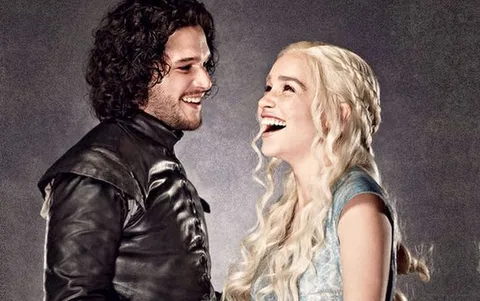
The frame is poorly suited to congratulations and warm news: a smile in it reads as restraint, not joy. For such occasions, a picture where the face is open and happy is needed.