What is visible in the frame
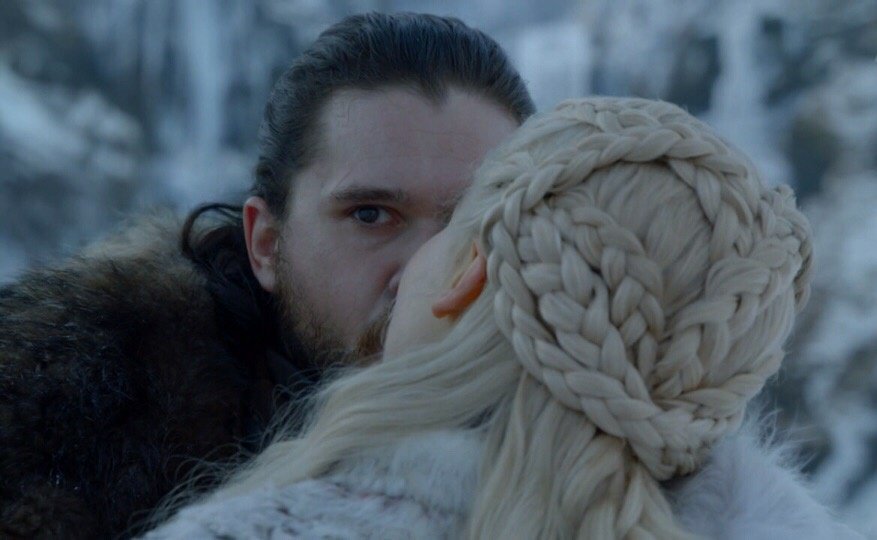
The frame is a close-up. In the foreground a man with dark hair pulled back and a short beard looks toward the camera. The lower part of his face is hidden by a woman who is turned to the viewer with the back of her head.
The woman has long light hair with a large braid at the back of her head and a light fur collar. The background is a snowy landscape with blurred white and gray tones. There is no dragon in this picture, so the title refers to the plot of the scene and to the jokey captions, not to anything shown in the frame.
Scene and season
The frame comes from the eighth, final season of the series, which aired on HBO in spring 2019, and depicts Jon Snow and Daenerys Targaryen. The exact episode and the precise sequence of events around this moment are not reliably established.
The joke comes not from the intimate moment itself but from the hero's look: he is looking not at his partner but past her, as if someone has seen them. The viewer decides for themselves what he noticed. It is exactly this ambiguity that made it useful for captions.
How the meme spread
The author of the meme and the date of the first caption are not established, so one cannot name a first creator. It is only known that jokes based on the frame spread across social media soon after the season aired.
The template took hold because the look reads without words: it contains awkwardness, wariness, and guilt at once. Pictures like this easily carry over to family, work, and home situations.
Caption examples and why they work
Below are four captions written for the template. In each one the viewer recognizes an awkward moment, and the hero's look becomes the reaction of a third party.
“Me when mom walks into the room at the most inconvenient moment.” The caption sets the witness role right in the text, while the look shows that the one who got caught is the one feeling awkward.
“Cat when the owner first brings a guest home.” The look conveys suspicion and displeasure without a single word.
“Me when the coworkers start discussing their vacation together.” Here the caption shows the feeling of being an extra person next to someone else's joy.
“When I said we're just friends, and everyone had already figured everything out.” The contrast between words and the look makes the line funny: the look has already said more than the other person is willing to admit.
The mechanics are the same in all of them: the caption shifts the meaning from the pair to the observer, and the pause gives the viewer time to work out the subtext for themselves.
Where and how to use it
The template works well for exaggerated reactions in messaging, in stories about family situations, and in jokes about pets. Brevity of the caption matters, because the frame already sets the tension. A single unexpected everyday detail at the end works well.
Don't turn the frame into an insult to a real person: captioning an acquaintance as a loser or telling tales about their private life through this picture. Then the meme stays a joke about an awkward reaction, not about a person. The series' characters are fictional, so it is better not to involve the actors in the captions.