The scene the phrase comes from
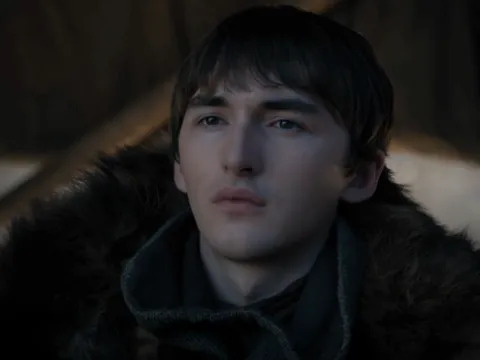
The line belongs to Bran Stark and, in the English version, sounds roughly like: “Theon... You’re a good man. Thank you.” It is said in the eighth season, in the third episode, “The Long Night,” beneath a weirwood tree at Winterfell, as the Night King advances on the castle.
A few moments later, Theon Greyjoy charges at the Night King and dies from his blow. The scene became one of the season’s most striking moments and largely explains why the line carries such weight: behind it stand farewell and acknowledgement, not mere politeness.
What is in the picture
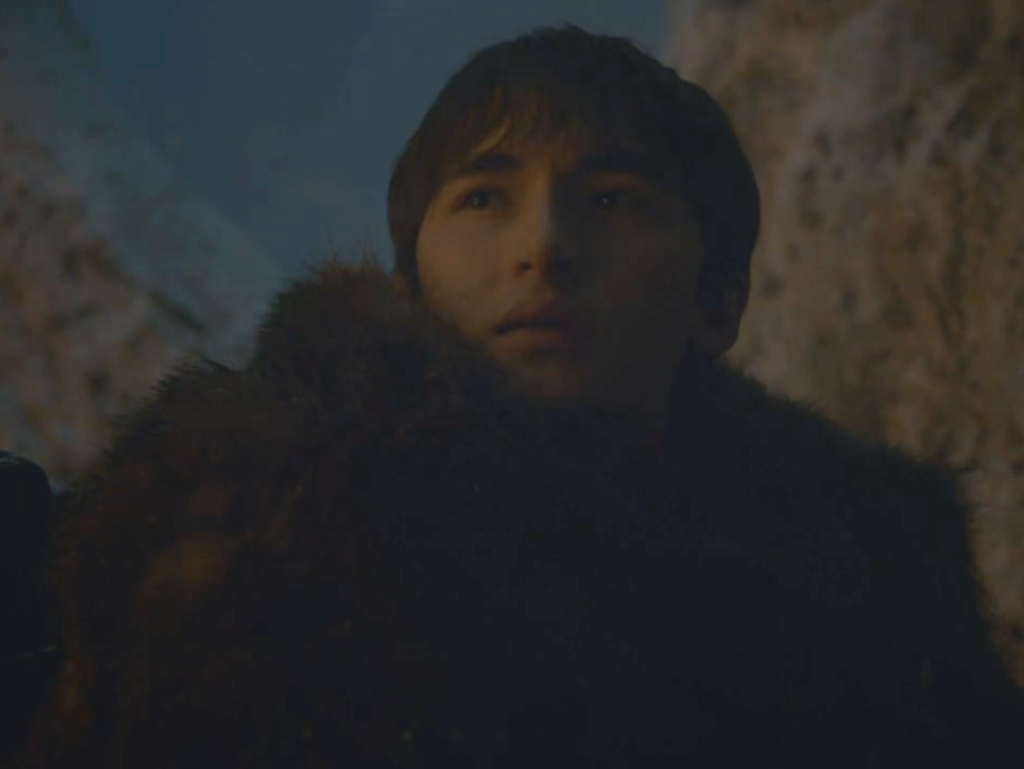
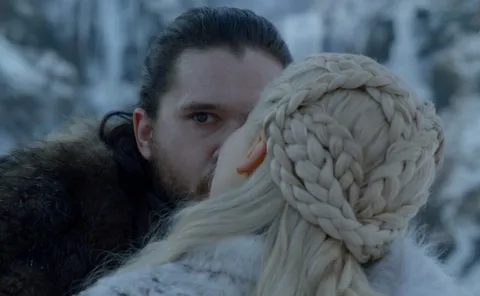
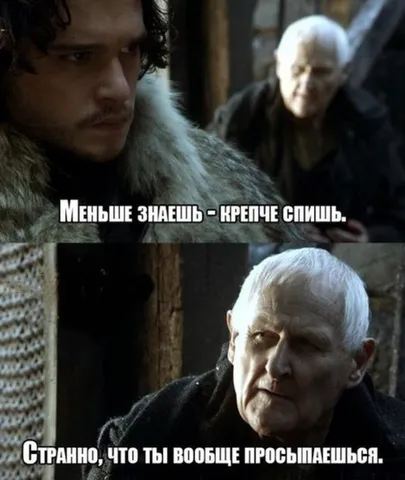
The frame is dark, almost night-time: a bluish-gray background on the left, a stone or snowy wall on the right, and a close-up of a young man with dark hair. He wears a heavy collar of dark fur; his gaze is directed upward and to the side, his lips are slightly parted, and his expression is focused and somewhat anxious.
From the picture alone the scene is hard to identify: there is no caption or recognisable setting, and the lighting hides detail. So the caption is better built on the phrase itself than on recognising the face.
How the phrase became a thank-you
The meaning of the line is that it thanks a person for who they are, not only for a deed. That is why memes apply it to all sorts of small things: someone brought an umbrella, someone wrote the needed file, someone put the kettle on in time.
The meme works precisely because of the contrast. A solemn formula from a dramatic scene is attached to an everyday favour, and the viewer immediately understands that the gratitude is deliberately exaggerated. That gives a smile without sarcasm. There is also a quieter variant: the phrase is written without explanation, as a short reply to someone’s kindness in a chat, and the viewer fills in the scene for themselves.
Examples of captions
Example 1. “You’re a good man. Thank you — I said to the neighbour who brought the parcel while I was looking for my keys.” The solemn phrase gets an occasion in a trifle, and the joke rests on the mismatch of scale.
Example 2. “You’re a good man. Thank you — wrote the colleague who answered the email before the end of the day.” Here the gratitude sounds honest, and the grandeur adds warm irony, as if replying to an email were a battle won.
Example 3. “You’re a good man. Thank you — I muttered when someone in the lift held the door.” The caption moves the line into an ordinary scene and shows how a small courtesy can look almost epic.
In all three versions the phrase keeps its seriousness, and the caption supplies the occasion. The more mundane the occasion, the stronger the laugh from the contrast.
How to apply the template
The phrase works well in reply to a short action that is noticed but doesn’t require a long conversation. If the thanks takes up more than a line, the pathos stops being funny and turns into a speech.
It is important to remember that the line belongs to the plot and the characters of the series. It can be used as a joke, but not as an exact quote with a different meaning: the meme rests on the phrase being recognisable, not on rewriting the scene.
If the caption is addressed to a real person, it helps to choose occasions that are pleasant in themselves. Then the pathos sounds like a game, not like mockery of the other person.