The scene at the ceremony
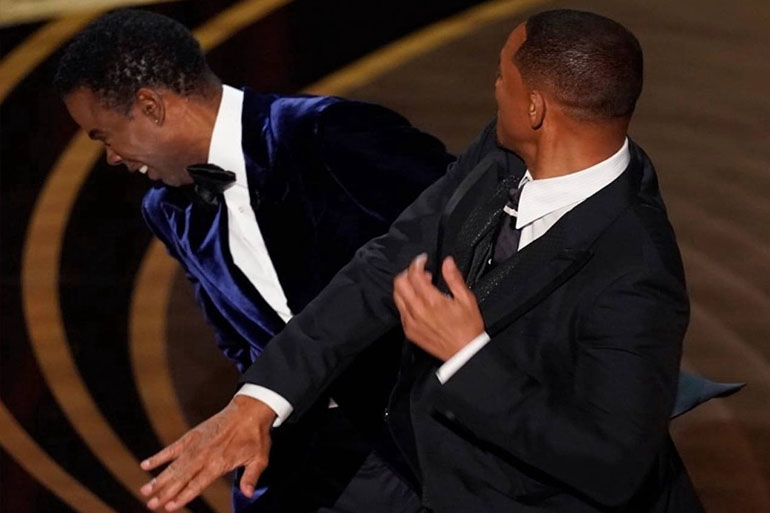
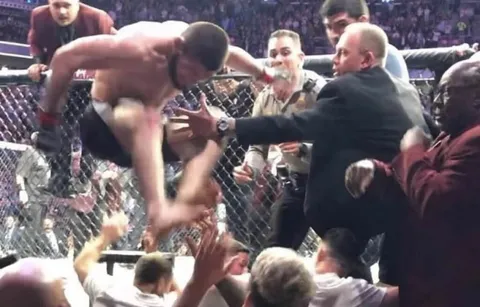
In the picture, the man on the left is bent over after the blow, while Smith on the right turns away and returns to his seat. This is a stylized or redrawn version of the scene shown on television at the 94th Academy Awards on March 27, 2022. Before the blow, host Chris Rock made a joke about Jada Pinkett Smith, the actor's wife; Will Smith went on stage and struck the comedian. Later he received the award for Best Actor. The event was real, although many online versions of the frame are reconstructions or redrawings.
Consequences and the official response
After the ceremony the Academy of Motion Picture Arts and Sciences condemned Smith's behavior and began disciplinary proceedings. On April 8, 2022 the organization announced that he would be barred from attending the Oscars and other Academy events for ten years. Smith apologized to the Academy and colleagues and later addressed Rock separately in public. These actions are the verifiable part of the chronology. They do not mean the audience must regard the conflict as resolved, and they do not change the fact that the blow was physical violence at a public event.
The moment became a reaction template
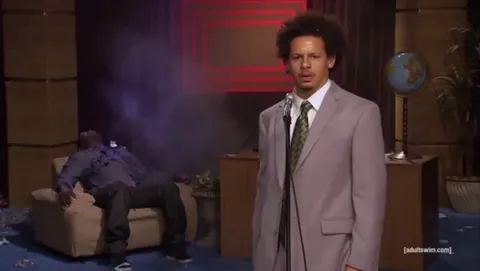
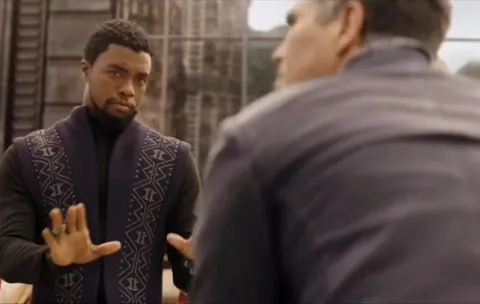
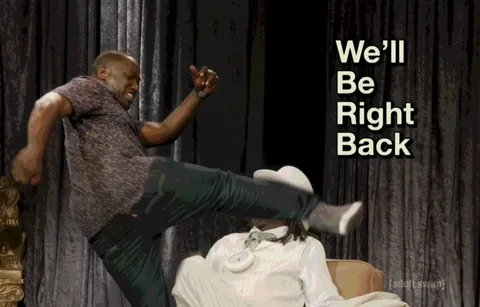
The scene quickly became a short meme because it contains a sharp action, a pause and an emotional shift between the audience's laughter and a tense reaction. The images were used for “before and after” comparisons, sudden interventions or the moment when someone abruptly changes mood. Online retellings often simplify the sequence: a meme may cut the blow out of the conversation, invent a fake dialogue or remove the consequences. A caption should therefore make clear that it is a humorous editorial version.
Examples of fictional comparisons
A caption often plays the “before and after” straight: “The joke about you went one line too far” over the calm frame, paired with “...and you decided the conversation was over” over the frame of him turning away. Another common version reads: “Everyone was laughing — until someone's name came up.” These captions replay the specific hinge of the clip, laughter curdling into a sudden walk-away, rather than a generic argument or a slipped deadline. The examples are not quotes from Smith or Rock and do not describe their personal relationship.
Do not turn real harm into the norm
Memes may mock the event, but they must not glorify the blow as the right way to defend loved ones or respond to a joke. The line between satire of celebrities and normalizing violence matters especially when children and teenagers copy the scene. The image does not explain Jada Pinkett Smith's medical condition and gives no grounds for mocking her appearance or health. Do not add made-up accusations against the participants. It is better to state the date and context and to build everyday variants around sudden conflict without reproducing real physical harm.
During the broadcast the camera did not cut away and the audience saw the action almost without delay; the televised nature of the event amplified the shock. Some viewers at first assumed it was a pre-planned skit, but the subsequent reaction and the official proceedings showed that the Academy treated the incident as the actor's real behavior. Meme repetition of the frame does not make the blow staged. This nuance is useful because online remixes often present it as an ordinary comedy gag.