What the photo shows
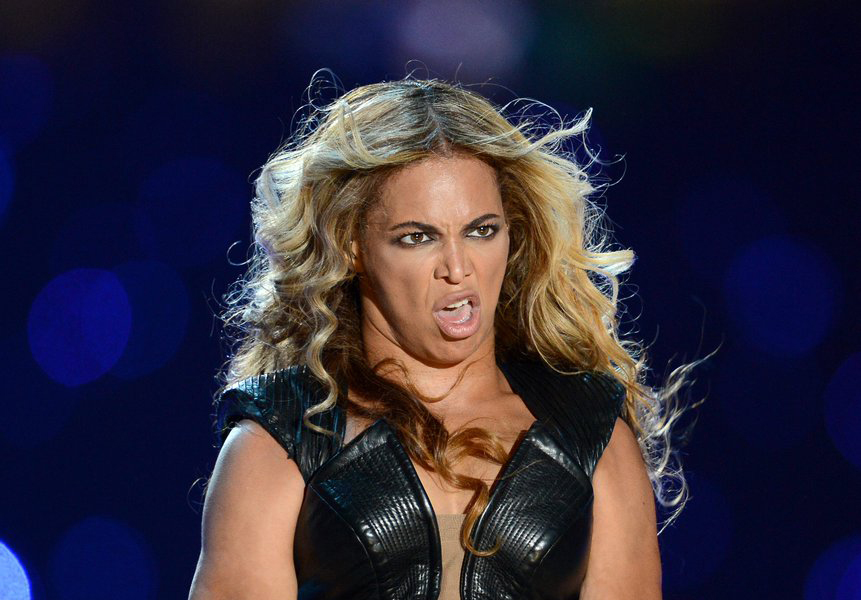
A color concert shot with the face in close-up. Wavy light hair with dark strands flies back from a gust of wind or a sudden movement. The brows are drawn together, the gaze is directed forward, the mouth is slightly open, and teeth are visible. The singer wears a black glossy top made of leather panels, with stiff, structured shoulders and a deep neckline.
The background is dark blue, with blurred light circles that resemble stage lights. That the photo shows Beyoncé is known from the meme's title and descriptions of the event; the frame itself does not establish this. The expression on the face can be read in many ways, and this ambiguity is exactly what helped the image become material for jokes.
Super Bowl 2013 and the publicist's request
The photo is connected to the halftime performance at Super Bowl XLVII, which took place on February 3, 2013. After the show, the site BuzzFeed published a roundup titled “33 of the Most Furious Moments From Beyoncé's Show.” The singer's publicist called the editorial office and then wrote a letter asking them to change the piece: it mentioned “unflattering photos” in the feed and expressed confidence that more flattering shots would be easy to find.
The tone of the letter was polite, and it contained no legal threats. However, the editorial office published the letter itself under a headline about “unflattering” photos that the publicist asked not to show. On the same day and in the following days, other outlets picked up the story, and commentators linked it to the Streisand effect.
The Streisand effect
This is the name for a situation in which an attempt to hide information draws more attention to it than it would have received on its own. The term is tied to a 2003 case in which singer Barbra Streisand sued over an aerial photo of her house: after that, many people saw the picture. Columnist Mike Masnick named the phenomenon after her in 2005.
The Beyoncé case follows the same logic. People who would not have noticed a roundup of many photos from the show were forwarding exactly the frames they asked to have replaced. Jokes were made about the request itself, the grimace in the photo, and how quickly the internet reacts to attempts to remove something.
Caption examples
The captions below were written for this frame. They speak to the viewer's situations, not to the appearance of the person in the photo.
“When the photographer said they caught the perfect moment.” The caption works through a mismatch between expectation and result: perfect, but not at all what was needed.
“You asked to take the photo down? Too late, everyone has already forwarded it.” The caption turns into a dialogue. The request sounds stern, while the tone of the joke is light, and that mismatch is what makes it funny.
“My face when the group chat suggests meeting on Saturday at eight in the morning.” An expression that looks intense on stage becomes an honest everyday reaction and needs no explanation.
“Me when I hear the report was needed yesterday.” The frame conveys the exact mix of indignation and fatigue that would take a long time to put into words.
How to use the frame
The photo was taken at a public performance, but respect for the person in it still matters. It is better not to make appearance the main subject of the joke or to build captions around personal circumstances: it works when the caption speaks to the viewer's situation.
If the meme needs a backstory, rely on the events of February 2013: the roundup, the letter, the publication of the letter, and the Streisand effect. Do not add guesses about the singer's or her team's reaction, since there is no verified information about it. A short caption suits this frame better than a long one, because the expression on the face speaks for itself.