A parody built on the crowd's reaction
Deshon Rowe, performing online as MrDeshawnRaw, created the character Supa Hot Fire for a series of videos titled The Rap Battle [Parody]. The first video appeared on YouTube in 2011. It imitated battle rap — a genre where performers answer each other with rhymes and wait for the crowd's reaction — but pushed the support to the grotesque. The hero could deliver a deliberately simple line, and his entourage would erupt in shouts as if they had just heard a winning final verse.
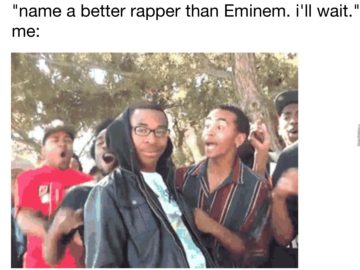
The post quickly spread beyond the author's channel: in summer 2011 the video was reposted on WorldStarHipHop and discussed on blogs. The original videos later disappeared from Rowe's channel, so many people now encounter them through surviving copies. The snapshot with the line about Eminem is already a separate joke based on the video footage, not an archival screenshot with the words visible at the top.
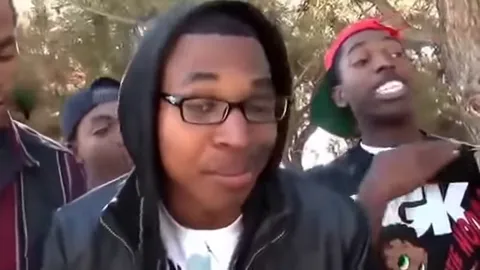
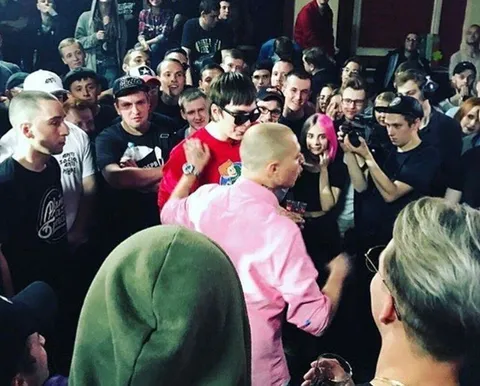
In the photo Rowe is at the center, with several young men around him, mouths open and hands raised. The group has no score cards and no specific line is visible; the effect comes from the reaction itself. Above the image sits the challenge “name a rapper better than Eminem — I'll wait,” followed by a short “me:”. The caption presents the speaker as a candidate, and the photo as an imagined moment when the crowd is already answering his self-confidence.
When confidence replaces results
A real musical debate about the best rapper could include technique, influence, albums, and different tastes. Here it is compressed into two elements: a bold claim and an excessive reaction. That's why the image easily drifts far from rap. A person may present a mediocre result, and the meme instantly imagines a chorus of fans greeting him as a triumphant victor. Or the reverse — a simple achievement turns into an event on the scale of a championship homecoming.
This is not necessarily mockery of Supa Hot Fire as a character. In the original videos the audience is deliberately hyperbolized, and the meme uses exactly this recognizable staging: a self-satisfied center plus an ecstatic company. If the caption is aimed at oneself, it becomes self-irony about one's own confidence; if it targets a friend or a public boaster, it's a joke about how easily friends' support can look like independent recognition.
Invented occasions for applause
Invented caption: “Who picks the best movie for the evening? Me:” The frame makes an ordinary movie argument look like a triumphant speech, even though the viewer knows the choice hasn't even been tested yet.
Another version: “When I correctly pronounced the name of a new dish:” Here the crowd reacts as if one small domestic victory revealed exceptional talent.
The joke can be turned toward self-deception: “Me: I'm sure I know where I left my keys. Friends, when I find them in my jacket pocket:” The reaction looks excessive, and that's the point: an unimportant event gets an imagined recognition matching the speaker's level of confidence.
Why the short "me" changes the whole frame
Without the caption, this is simply a group of people noisily reacting to what's happening. The label “me:” assigns the central figure the role of the person to whom the adoration is directed; the first line sets up an exaggeratedly high challenge. Between them works a pause: the reader for a moment imagines that some real musical argument is about to be named, but instead gets the caption author's own persona. The crowd thus becomes his inner soundtrack — loud regardless of how convincingly he performed.