Structure of the comic
The original comic has four panels. In the first, the hero sets off on a search; the second shows the long journey; in the third he finds the scroll; in the fourth he reads what is written and is disappointed. This simple composition makes the story easy to take in at a glance, which is exactly why the panels are easy to cut out and reuse on their own.
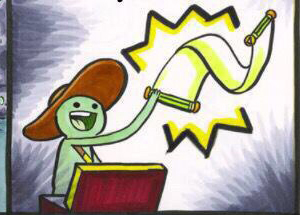
The picture from the catalog shows a character in a wide-brimmed hat holding a scroll over his head. Yellow rays burst out of the scroll, like a flash. The drawing style resembles hand painting with bold outlines, which sets it apart from typical photo-based macros.
Plot and disappointment
The comic's main device is expectation. Fifteen years of searching sets a high bar: the viewer expects a revelation that will change the hero's life. Instead, the truth turns out mundane or even comical, and the gap between the scale of the search and the answer creates the surprise.
This twist became the basis of the meme. What matters is not the text on the scroll itself but the scheme: a long journey, a solemn moment, and disappointment with the result. That makes the story easy to transplant to any situation where expectation outweighed the outcome.
How the meme works
As a meme, the comic is usually used with a new caption on the scroll. The format relies on the text looking weighty while the reader understands that reality fell short of expectations. The device works well in everyday humor, in talk about work, study and relationships.
Examples of captions often seen in compilations: “Scroll of truth: the meaning of life found, but it was written on the back of a utility bill” and “Scroll of truth: you were always right about Mondays.” Both keep the structure of the original: first solemn pathos, then a mundane twist. It is this shift that gets the laugh.
Origin
The catalog entry dates the meme to 2017, but it does not name the comic's author or link to the first publication. So the exact date of creation and the artist's name remain unknown. The reference to a web comic in the description indicates the genre, but not a specific work or site.
Stories like this often spread without attribution: the comic gets reposted, cropped and translated, and over time the original source is lost. This article describes the origin honestly as unconfirmed, and that does not stop us from assessing the meme itself by its structure and its place in internet culture.
Why the meme lives on
The meme keeps circulating because the theme of expectation and disappointment is universal. Almost everyone has been in a situation where a long road to a result ends in something ordinary. The comic makes that feeling recognizable in four panels, which is why it is easy to get without any explanation.
Moreover, the format allows for self-irony. The hero does not look foolish; he simply ended up in a situation where the truth is less impressive than expected. That gentleness makes the meme friendly and suitable for a broad audience. Besides, the template allows different tones: in some versions the scroll becomes an occasion for irony about bureaucracy, in others, on the contrary, for quiet sadness over unmet expectations. Thanks to this flexibility the template survives changes of topic and remains understandable even to those who don't know the original comic. It is also important that the meme rarely comes with complicated explanations: one look at the four panels is enough to see where the expectation is and where the result is, which makes the template handy for quick exchanges in messages and comments.