The Moscow appearance and mixed reactions
On September 1, 2018, Tony Robbins spoke at the Olimpiysky Sports Complex in Moscow before a large audience; the event was advertised as a large-scale seminar on change and personal development. Afterward, participants assessed both the evening and the advice from the stage differently: some spoke of strong emotions, others considered the content too simple for the price of tickets and expectations. That is why the joke about fake quotes grew not out of a unanimous verdict, but out of a clash between the loud image of a motivational event and criticism of the triviality of some of its thoughts.
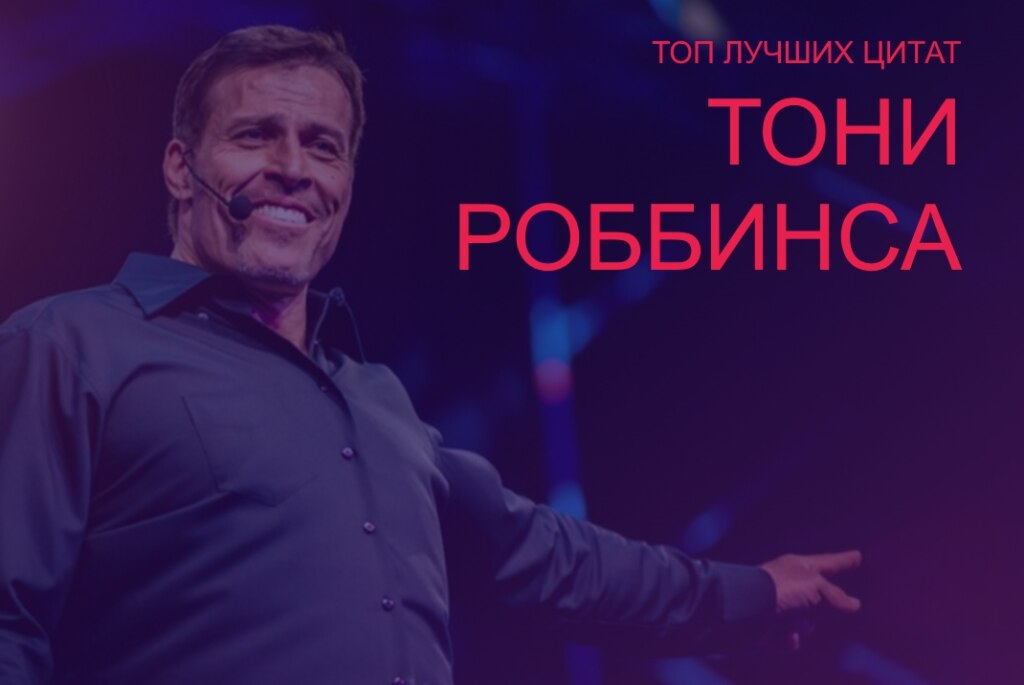
Among the early dated examples is a text joke from the account @Shakhnazaroff dated September 2; the next day a mockup with a photo of Robbins and a phrase attributed to him was already circulating. That is how invented phrases were set next to a famous face: the confident delivery promised wisdom, while the content turned out to be everyday platitudes. The dated traces show how quickly a text jab became a visual joke, but they do not establish the author of the whole format.
Headline, stage and the absence of a quote
On the cover Robbins smiles, stands on stage with a microphone and extends a hand; large pink-red text announces “top best quotes.” No specific thought is printed under the photo. The mockup already resembles a collection of aphorisms: the viewer expects a wise phrase and almost completes it themselves. When an everyday platitude is placed over such design, the mismatch between stage confidence and the simplicity of the words becomes the joke.
The cover works as a promise that each meme post fills in on its own. One version may choose a simple everyday phrase, another an obvious piece of advice. Real discussions of the seminar touched on both organization and content, so a caption could pick up any of these topics; but the invented words remain the work of the author of a specific meme, not of Robbins himself.
Why invented wisdom is recognizable
The parody keeps the outward form of a motivational aphorism: a short complete phrase, confident delivery and the name of a famous speaker. The content changes. Instead of a complex principle, there appears an obvious observation or everyday instruction that is hard to pass off as a discovery. The more universal the phrase, the funnier it looks under the portrait of a man whom listeners came to see as an expert on life changes. But the criticism here is not necessarily aimed at a specific thought from the speech: the author of a meme caption may simply be playing with the expectation that a beautiful poster promises.
Reports on the seminar itself described not only the speeches: Robbins walked down to the audience, invited people onto the stage, suggested dancing, hugging and shouting. Against this backdrop, an invented aphorism about a password or a to-do list sounds especially flat: the meme reduces a multi-thousand-person show with its loud gestures to one phrase that could hang on a fridge reminder. This is not a retelling of what Robbins said from the stage, but a separate joke about the contrast between the format of the event and the deliberately obvious content of the caption.
Invented pseudo-quotes
“If you forgot your password, first check whether you wrote it down on a piece of paper” is an invented obviousness, especially absurd under the solemn headline about the best quotes. “To arrive on time, leave earlier” turns a familiar tip into a pseudo-revelation. And the phrase “Your to-do list gets shorter when you cross off what's done” sounds like a motivational conclusion drawn from an ordinary fridge note. All three examples are invented and are not words of Tony Robbins. They use the visual promise of wisdom already built into the portrait and design: the more banal the thought, the stronger the contrast between it and the big stage image.