The orc and a short verdict
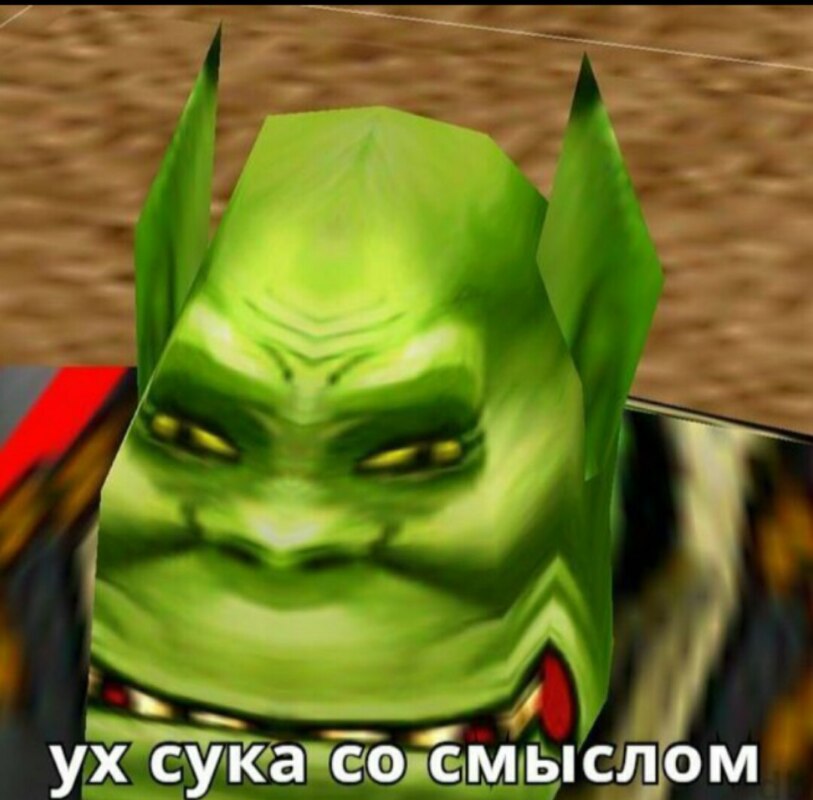
Almost all of the frame is taken up by the green face of an orc: heavy brow ridges, yellow eyes, long ears, and dark armor details. The text “OOH [EXPLETIVE] THAT'S DEEP” is added at the bottom. The specific character or game unit cannot be reliably identified from this close-up. The image is connected to Warcraft III, released in 2002, but the caption itself is a Russian label on the portrait rather than a line from the game. Online mentions of this phrase date to the summer of 2018, well after the game's release; the author of the first post is unknown.
The phrase expresses surprise at a thought and at the same time evaluates it. “That's deep” can be sincere praise for an accurate observation, while the crude interjection makes the reaction sudden and informal. Sometimes it means “wow, nicely noticed,” and sometimes it is a parody of a person who presents a platitude as a revelation. The orc does not state the thesis: he reacts to it.
When obviousness feels like a discovery
A caption after the phrase “If you don't charge your phone, the battery will die” shows the orc stunned by a trivial rule. A caption such as “While you wait for the bus, you can check the schedule for the next one” already contains a small practical twist: the hero praises not the obviousness but a useful thought. The ambiguity keeps both readings, and the neighboring line decides whether the person is being praised or lightly teased.
The example of planning a day off works the same way: “Choosing what you'll do is already half the rest.” The words sound like advice but can seem like a solemn conclusion drawn from everyday experience, and the orc with a grave expression amplifies the mismatch between the small content of the phrase and the big reaction. The more serious the caption is delivered, the easier it is to read it as deliberate parody.
Colloquial tone against game pathos
In Warcraft III, orcs speak and act within a fantasy conflict: armies, spells, and the fate of an invented world set a lofty scale. The meme leaves only the portrait from this scene and places on it a casual Russian evaluation with a strong word. The result is a clash of two registers: stern fantasy meets a remark that one would more likely toss to a friend in a chat.
So the crudeness is part of the comic voice, not evidence that the hero literally said this phrase. In the game's official screens such a line would look out of place; it is the caption that moves the orc from the game world into everyday conversation. It resembles a comment on someone's unexpectedly accurate thought, after which the other person, instead of a long reasoning, offers a short emotional “ooh.”
Invented captions
The invented caption “To avoid being late, leave on time” next to the orc turns a platitude into an object of mockery: the character's heavy stare looks as if he has just discovered a law of nature. Another example, “Keys get lost most often when they aren't put back in their place,” contains a recognizable domestic observation, so the same reaction can be read as sincere agreement rather than only as a jab.
How the joke shifts depends on the exact wording. A short tautology makes the orc a smug witness to the obvious; an accurate observation turns him into an unexpectedly enthusiastic conversation partner. In every case, though, the caption remains an external comment added to a game portrait: it does not belong to the Warcraft III script and does not describe any special ability of the character.