Definition
Hard bass (hardbass) is both a music genre and a dance performed to its beats. The music is based on a low, harsh bass sound, with a tempo noticeably faster than that of most dance genres. Arrangements often use whistles, samples, and short spoken fragments. The name became established in the Russian-language internet and refers both to the genre itself and to the subculture associated with it.
The dance in the narrow sense is a set of sharp, almost mechanical movements: jumps, stomps, and hand gestures without strict choreography. The essence is energy and deliberate simplicity, so practically anyone could perform it. This accessibility ensured the form's wide spread, and later its parodic reinterpretation.
Origins of the genre
The dating of the genre's emergence does not agree across sources. According to one version, it took shape in the late 1990s in St. Petersburg, in a club scene where pumping house was popular. It used a metallic “donk” bass, and the tempo was gradually raised to 150 beats per minute and above. According to another version, the style formed in the 2000s and grew out of the same pumping house, and one of the first works in this style is said to be the remix “Hi-Per — Gimme More.”
It is important to distinguish the genre from the memes. Hard bass long existed as niche club music, and it gained wide recognition thanks to several tracks and videos that went viral in the early 2010s. The irony in many of these works was often not picked up by listeners, which later gave rise to disputes about who exactly was being mocked.
Dance and gesture
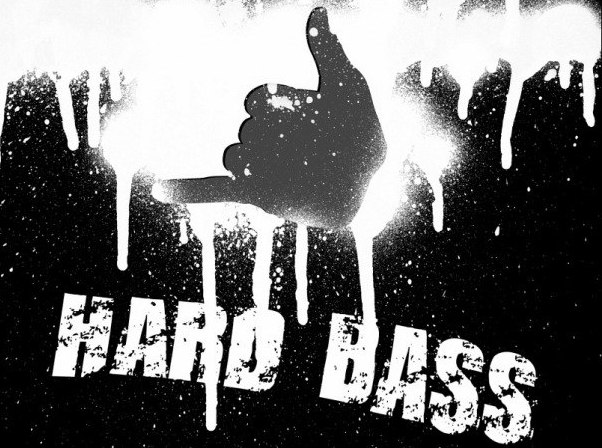
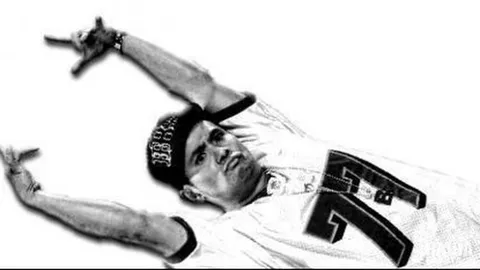
A 2010 video, considered the starting point of the mass dance, contains movements that later came to be called the “hardbass goat.” The dancers stomp and jump without a fixed pattern and form a hand gesture with the thumb and little finger bent out, which became the style's signature.
Attribution of this video differs across sources. Some link it to the St. Petersburg collective XS Project and a satirical clip featuring radio hosts; others link it to the group Hard Bass School, which released the track “Our Anthem” and the clip “Hardbass — the School of Sausage.” In any case, this is parodic material aimed at a viewer who was supposed to get the irony.
After publication, the dance spread in the form of flash mobs resembling the Harlem Shake wave. According to overview materials, such actions took place in Belarus, Russia, and Ukraine, and then in a number of countries of Central and Eastern Europe.
Audience and criticism
Descriptions of the style often name gopniks and football fans as the core audience of hard bass at mass events. This image reflects stereotypes that formed around the subculture rather than data from sociological research. It is used mainly as an object of mockery.
In some European countries, flash mobs and street dancing to hard bass caused alarm. Some commentators saw political propaganda in them because of lyrics containing numerical codes that were associated with neo-Nazi groups. Experts, including researchers of extremism, concluded that such use was ironic and that its influence on public opinion was negligible.
Memes and the comeback
Memes about hard bass are built on the contrast between the participants' earnest self-presentation and the primitiveness of the music and movements. Typical clips show a crowd dancing with stone-faced expressions, and captions mock the aesthetic of “pacanism” (“bro culture”). The image itself often serves as a template for any absurd but energetic scene.
Later, interest in the style returned on a wave of nostalgia for the 2000s and their aesthetic. In 2024, Russian media wrote about a new round of popularity for hard bass and cited recent releases by musicians working in a nostalgic manner as examples. The style's return was already accompanied by deliberate irony, not just mockery.
Image
The catalog's illustration is stylized black-and-white graphics: a hand formed into a gesture with the thumb and little finger bent out, set against paint drips and the words HARD BASS in rough lettering. The image conveys the style's street aesthetic and matches the description of the gesture given in the sources.
This is not a photograph of the dance or a frame from a specific video, so it cannot be used to judge the choreography. The caveat concerns only the form of the illustration: it matches the article's theme but does not document events.