a word on a poster: what's in the picture
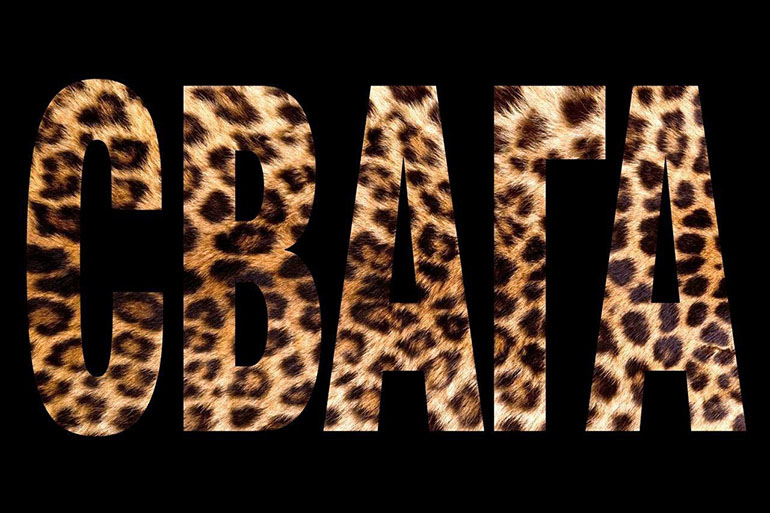
There is no person and no video still in the image — only a word. Large letters spelling "SVAGA" take up almost the whole frame and are filled with a leopard print: a light hide with dark spots, as if the lettering had been cut out of fur. The background is black, so the letters look like a separate logo or a track cover.
This choice captures the meaning of the meme precisely. Leopard print signals ostentatious luxury and an "expensive" look — exactly the showy coolness that "svaga" is all about. The word functions here as a visual tag that can be attached to a photo, a video, or anyone else's look.
from the English swag to the Russian svaga
The word's root is the English verb swag, which as far back as the 16th century meant "to sway" or "to walk with a lurching gait," and from it came swagger — carrying oneself with brashness and defiance. The word appears in this sense even in Shakespeare; linguistic analyses trace this line down to modern slang.
In the 2000s and 2010s, American hip-hop culture picked up swag: rappers used it as part of their stage persona — eye-catching clothes, accessories, a confident delivery. It entered Runet as "sveg," but it never made it into everyday speech and by the early 2020s had all but gone out of fashion. The form "svaga" turned out to suit the Russian ear better and got a second life.
late 2024: a line from a track about Dota 2
The turning point was December 2024. The rapper and streamer who goes by Tragediya (Alexei Kaluga) released the track "Marilyn Monroe," tied to the game Dota 2. The chorus featured a line about "Monroe's svaga," and it instantly spread through gaming chats and memes. This episode is described independently by several outlets, both news items and breakdowns of youth slang.
In the gaming community the word became attached to an image of brash, sometimes deliberately toxic confidence. There was plenty of controversy around the performer himself: his playing style and behavior were widely discussed, and he had both fans and critics. That's why "svaga" quickly became a word with a double meaning — something you can both admire and mock.
the song, TikTok, and "how many percent svaga"
In January 2025, according to one publication, the viral spread was fueled further by the track "2 limuzina" by the Belarusian rapper Napylniik — a fragment of it became the basis for tens of thousands of clips. In June 2025 a song titled simply "Svaga," by Hellovercavi and Soda Luv, came out, with a line that spells the word out letter by letter. The artists made no secret of having written it as a response to the meme, and released the full version once the number of short clips had topped thirty thousand.
From there the trend spread beyond music. On TikTok and Reels, the question "how many percent svaga is in this outfit?" appeared: users put together deliberately ridiculous outfits — cheap sunglasses, tracksuits, plastic jewelry — and waited for a rating in the comments. People "searched" for svaga in other people's profiles, added it to gaming montages, and made ironic cards in the style of mid-2000s pictures.
compliment or mockery: how to read the context
"Svaga" is almost always two-sided. "Wow, now that's svaga" is sincere admiration for someone's charisma and delivery. "Put together an outfit at ninety percent svaga" is already self-irony: the person is deliberately playing into absurdity. The difference comes down to tone and to who's saying the word.
The older form "sveg" sounds dated today: for a young audience it's a marker of the previous generation. Svaga isn't just about clothes: the word gets applied to music, to a game, to an atmosphere, and even to someone else's confidence in an awkward situation.
examples of captions you could come up with
The examples below are not quotes from existing roundups — they are illustrative caption options.
"Got the svaga, but not the confidence" — under a photo in a new outfit; the joke rests on the gap between outward polish and inner state. "Maximum svaga. Minimum sense" — for a video with a flashy but pointless trick: the contrast between the loud rating and the empty action creates the comedy. "The svaga gap between us — same as ours" — under a joint photo where one partner is dressed impeccably and the other in a wrinkled T-shirt. "Looking for svaga in this playlist" — under a mix where instead of the expected style you get a random jumble. "He walked out on pure svaga, but forgot where he was going" — under a confident stride in the wrong direction.