A frame from a science fiction story
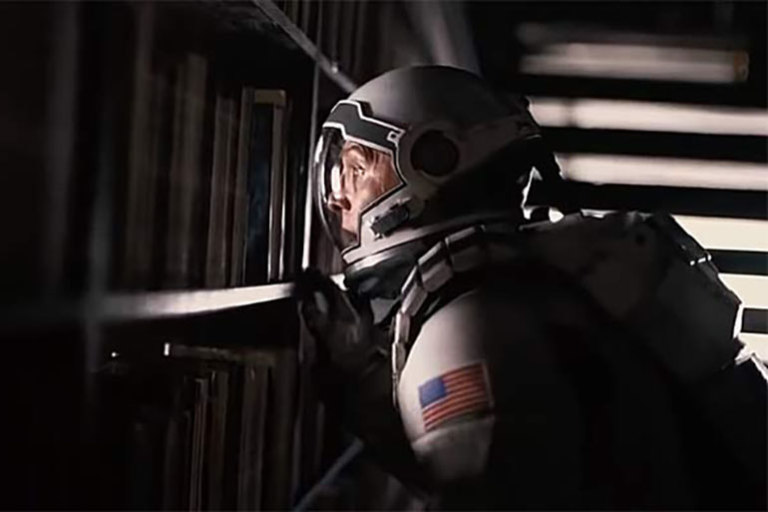
The visual source is Christopher Nolan’s 2014 film Interstellar. The main character, Cooper, finds himself in a space where he can see different moments of his daughter Murph’s life and tries to pass her a message. In the internet template, the complex tesseract scene is simplified to a single image: a person seems to look at the past from the outside. The captions make him an observer of his own future mistake or victory.
Meme write-ups tie the spread of the text template to short videos and social networks in 2021. This does not prove that one particular post was the first: different versions could have appeared independently. In a caption it is important to distinguish the film’s plot from the internet interpretation. Cooper does not literally travel to his own future to judge minor everyday decisions; this is a user metaphor laid over the frame.
The future as a commentator on the present
The phrase “I’m watching myself from the future” creates a double perspective. The present self makes a choice; the later self already knows the consequences and looks at it with a mix of regret, surprise, or approval. That is why the template fits repeated habits: hitting snooze again, ordering an unneeded item, or starting a series right before important work.
The meme is usually self-ironic, but it can also convey a caring warning. The future observer doesn’t have to mock the past version; sometimes they understand that the earlier self acted with limited information. A good caption leaves room for this ambiguity. If the topic is serious traumatic events, the format can come across as dismissive: the image of fantastic omniscience should not imply that a person could easily have predicted everything that happened.
Examples of use
“I’m watching from the future as I order coffee two minutes before the café closes” is a caption about a predictable everyday ending. “Future me is watching as I open work email on Friday evening” uses regret without blame. A positive version is also possible: “I’m watching from the future as I finally back up the file.” Here the hero foresees that being prepared will save the day.
For studying, you could write: “I’m watching from the future as I start preparing early instead of the night before the exam.” The caption is especially clear if the viewer recognizes the specific habit. Don’t add a long backstory; the frame already sets the fantastic distance. If the text is aimed at a friend, joke about a situation they themselves find funny, not about a painful personal choice.
Keeping context without spoilers
When publishing for a wide audience, it is enough to note the link to the film without revealing its final details. For discussing the plot itself, it is appropriate to warn about spoilers. The frame can be cropped, but the observer’s expression and the visual depth of the scene are an important part of the joke. The more precisely the text links a present decision to a future result, the easier the meme is to understand.
Don’t present the phrase as a character’s dialogue: it is usually added by the meme’s author. If you use an edit, consider rights to the video and music. The template works well for personal reflection, not as a claim that a particular person was obliged to foresee the consequences. At its best, the future self is not a judge but a commentator with temporal distance, helping to laugh at the repetition of a familiar script.