The game hero gets a different biography
The basis is the final episode featuring Bryan Fury from Tekken 3, a game from the late 1990s. Soldiers try to stop the hero, he endures the gunfire and responds with incredible strength: he tears the turret off a tank and hurls it at his opponents. Such an ending matches the world of a fantastical fighting character. Bryan himself does not turn into an ordinary worker because of the video’s Russian title.
In the alternative voice-over, the fight gets a down-to-earth reason. The man explains that he works as a mason, is not paid, and is hungry; his pursuers accuse him of stealing bread. Military power crashes down on a small everyday story. The hero, meanwhile, does not lower the intensity and defends the food with such seriousness as if the fate of the whole world were being decided.
The cassette story and the history of publication
The re-dub is tied to the Emerald Weapon author. According to the creator, he made the original recording in 2005 using a VHS tape recorder and a homemade microphone. He mentioned the early production later, when the video had already taken on another life. The well-known YouTube upload dates to May 2013: the cassette joke became available to an audience beyond the original circle of viewers.
A new notable wave came in spring 2018. At the end of April the author’s channel released “I’M A MASON 2,” bringing back the familiar presentation of the hero. The short sound became material for re-dubs of other games and films. It did not require re-explaining the complex world of Tekken: a few words already set the profession, the grievance, and the absurdly heroic mood.
Bryan's portrait instead of the whole fight
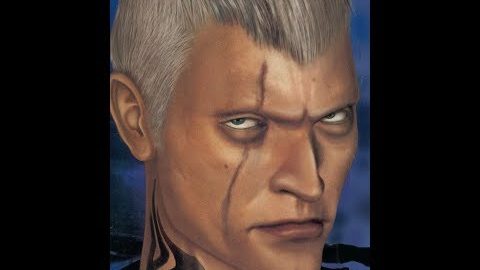
This card shows only the face of the gray-haired Bryan Fury with a scar, a heavy stare, and tense eyebrows. Black fields surround it on the sides. There is no bread here, no tank, no soldiers; the exact version of the in-game portrait is not established. The image recalls the character, and the plot of the parody is reconstructed through the familiar phrase.
The stern face helps even a person who does not remember the scene. Visually the hero looks ready for a huge conflict. The title announces a modest and oddly precise term of work: three days. Meeting these two scales creates a recognizable comic image: a small life experience voiced as the final argument of a person best not interrupted.
The voice explains more than the subtitle
The parody recalls single-voice translations from VHS tapes: the voices of different participants are smoothed out by a common manner, the lines sound abrupt, and the narration does not try to match everyday speech with fantastical action. That is why the new plot feels almost like a strange version of a long-familiar film. The comedy arises both from the content and from how calmly that content has been attached to the fight.
The mason outside the construction site
In an invented sketch, a newcomer to a cooking club has been baking bread for three days. When friends try to cut the still-hot loaf, he answers with the familiar mason presentation and closes the cutting board. The work here is indeed short and the spoils are again edible, but instead of soldiers, impatient tasters stand in front of him.
In another example, a person has spent three days assembling a huge jigsaw puzzle, while a cat reaches a paw toward the last free patch of the table. The owner’s caption is placed on Bryan’s portrait. The small defense of a hobby takes on the tone of an unbreakable fighter; he will not need to destroy a tank.
The third sketch moves the phrase into a game: a team member takes on the builder’s role, erects the first bridge, and hears a request to tear it down immediately for another route. His answer signals both a beginning master and an already accumulated grievance. The three-day term becomes a measure of labor that others too easily consider replaceable.