What's in the picture
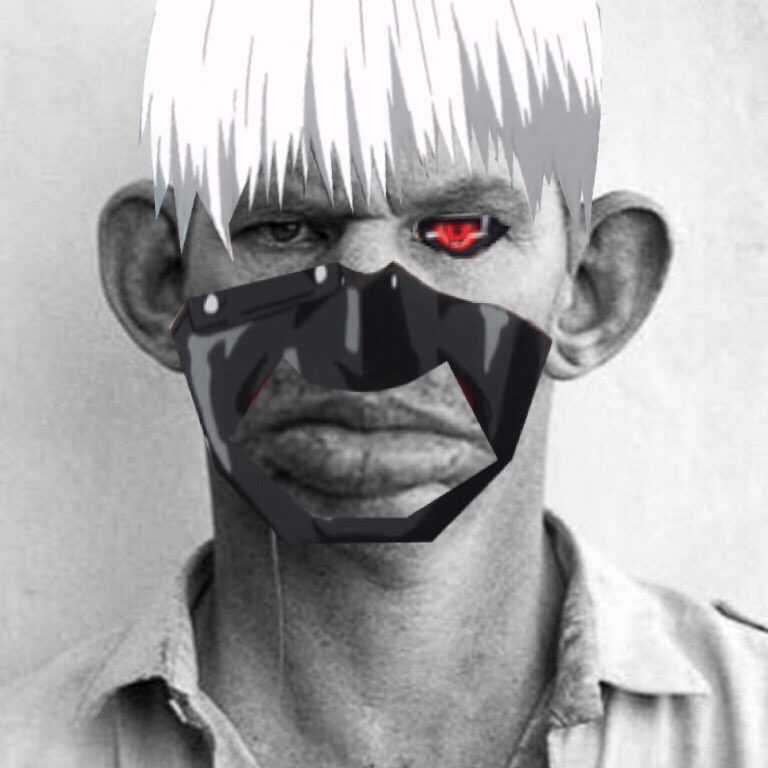
The base of the frame is a black-and-white photograph of a man with an attentive, frowning gaze and noticeably protruding ears. Three details have been added graphically on top: a white jagged fringe, a red eye with a dark rim, and a black mask covering the nose and mouth.
These elements reference Ken Kaneki, the hero of the manga and anime Tokyo Ghoul (by Sui Ishida). The character has white hair, a red eye called a kakugan, and a mask in key scenes. The man in the original photo is not named here: this is ordinary montage, and who is depicted in the original has no bearing on the joke.
Where the name comes from
The English “dead inside” literally means “dead on the inside.” Russian-speaking users turned it into “ded inside,” where “ded” sounds both like the English “dead” and like the Russian word for “grandpa.” The result is a punning formula that came to be used in a playful, self-ironic key.
According to one version, the expression came from gaming culture and took hold in the Russian-speaking internet in the late 2010s. No single point of origin has been established, so the meme's exact birth date should not be stated.
How the image reads
The meme mocks a certain style of presentation: gloomy imagery, black-and-white clothing, demonstrative detachment. White hair, a red eye, and an anime mask are borrowed from a popular dramatic story, but combined with an ordinary face and a stern expression they come across as comical.
What matters is that the joke targets the pose, not genuine feelings. The meme should not be read as a diagnosis or as an expression of a serious condition: for such conversations there are other words.
Caption examples
“Me on Monday at 7:00.” Hyperbole: the morning presented as a tragedy.
“When it's macaroni for lunch three days in a row.” The hero's aesthetic turns a trivial matter into drama.
“My phone at 2% battery.” An everyday annoyance delivered in a gloomy style.
“After opening work email.” The comic effect comes from the clash between a serious persona and a petty trigger.
How to tell the joke from a hurtful caption
The montage mocks an image, not a specific person, but the photograph at its base belongs to a real person, and that should be kept in mind. The safe path is to caption the picture with the author's own situations and fictional characters: fatigue, Mondays, bad internet. Don't attribute diagnoses, pasts, or feelings to the face in the photo. Likewise, don't use the meme against people who are genuinely going through hard times: a joke about a pose stops being a joke when it touches real pain. The meme works best as voluntary self-irony, in which the author laughs at their own theatrical weariness over small things.
How to use the template
The meme is fitting as a joke about oneself and about an expressive, weary persona. Good captions are short, with an everyday detail and without excessive self-dramatization. Fatigue from deadlines, queues, a lost password, a dead phone — this is the scale that keeps the joke alive.
Don't use the template to mock real people for their appearance or clothing style. The face in the photo belongs to a real person, so captions should be tied to the fictional persona, not to the identity of the original person.