The verdict from “Fist of the North Star”
The expression is rooted in the manga Hokuto no Ken, written by Buronson and illustrated by Tetsuo Hara. It began serialization in 1983; the TV anime appeared in the 1980s. Kenshiro masters the fictional martial art Hokuto Shinken and strikes his opponent’s pressure points. In the story, the effect of a blow sometimes arrives with a delay: the enemy is still sure he has won, although the outcome has already been decided.
It is exactly this pause that the famous line explains. The reply “Nani,” meaning “What?”, conveys the instant collapse of self-confidence. The phrase is not an ordinary promise to win in the future: the hero is speaking about the consequences of an action already taken. That is why it is especially easy to apply to situations where a person realizes a mistake a few seconds later than everyone around them.
From subtitled pictures to remixes
The expression existed in fan jokes long before the wave of music-edited videos. Dated traces from the late 2000s include fan art and a parody recreation of a fight with game characters. In the early 2010s the English title “You Are Already Dead” was used: the caption accompanied images of Kenshiro and reactions in discussions.
A new wave came in 2016–2017. Video creators overlaid Japanese lines onto other people’s scenes, and added a freeze frame, a sharp zoom, glowing eyes and a high-pitched sound cue. The result was a portable model of a sudden defeat: an ordinary blow, a fall or a verbal reply took on the scale of an anime battle. This is the history of a remix family; a specific image without a caption does not have to be a frame from the earliest video.
The pointing gesture and the hero’s confidence
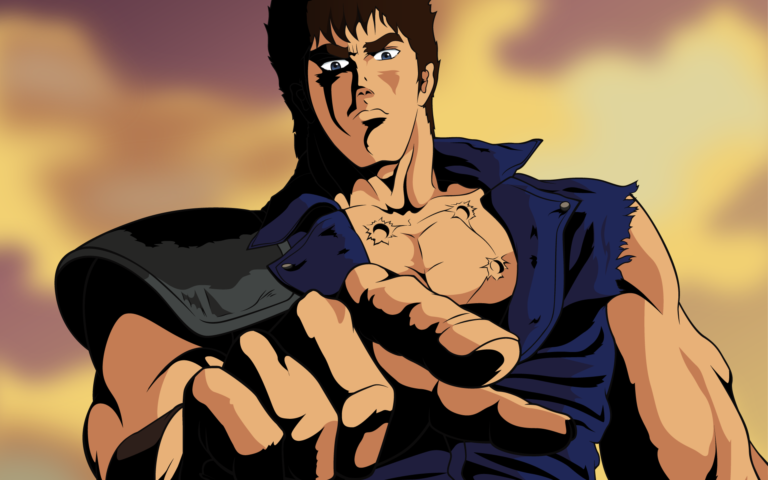
In the picture, Kenshiro looks ahead and extends his arm toward the viewer. Black hair, broad shoulders, dark shoulder guards and a bare chest are visible; behind him is a warm sky. There is no second character, no flashes in the eyes and no inserted text. The image conveys above all the speaker’s confidence, while the opponent’s reply is completed by the viewer in their mind.
Such a portrait can close an exchange of lines: one participant is proud of a successful decision, while the other notices a problem the first one missed. In a single-panel macro, both sides fit into the caption. The expression becomes especially striking when the stakes are small and the tone remains utterly solemn. A broken spoon, a forgotten charger or a lost argument become meme equivalents of the final verdict.
Three invented duels
A made-up example about studying: “I learned all the answers. Teacher: today the assignments are different.” The teacher’s short correction plays Kenshiro’s role; the pause between confidence and realization makes an ordinary school misfortune dramatic. Another variant: “Put my phone on charge. The power strip had been switched off the whole time.” The blow has already landed in the form of lost time, although the owner finds out only in the morning.
A third plot: “Told the cat the sofa is mine now. The cat has already lain down across it.” Here the decisive move is the calm claiming of territory. Kenshiro does not need to be drawn as aggressive: his motionless confidence is enough. The Japanese formula works especially well for an audience familiar with anime, while the Russian translation makes the same comic mechanism understandable without knowing the pronunciation.