A number that outlived its era
At the core of the format is Vitas’ song “The Seventh Element” and a widely circulated recording of his performance, dated 2001. Instead of the usual calm pop-stage image, the viewer gets a shiny costume, an unusual headpiece, and abrupt shifts between styles of performance. The number immediately offers several reasons for imitation: you can repeat the movements, copy the facial expression, or build a joke around the very sound.
In December 2010 the recording appeared on YouTube, posted by vipnews2010. A notable new wave came in the summer of 2015: on June 30 the user jai_kasavin shared the clip in the videos section on Reddit, and new uploads, remixes, and long looped versions followed. For many foreign viewers this looked like a fresh discovery: an old performance suddenly ended up at the center of new discussions.
In 2016 reaction channels and deliberately clumsy musical covers joined the spread. In 2018 new parodies appeared, including edits with the heroes of “The Avengers,” while Russian-language social media discussed Vitas’ success abroad. Each wave added its own form: a surprised first acquaintance, a musical remake, or recognizing an old melody in an unexpected character.
What stays in close-up
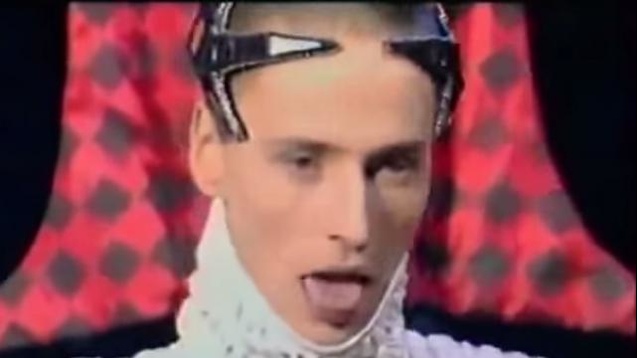
In the picture, Vitas’ face takes up almost the whole frame. His mouth is open, his tongue is visible, and above his forehead sits a black glossy headpiece with angular light details. At the bottom, a tall silver collar is visible; behind him, a red patterned background. There is no full view of the stage here: the dance and the costume belong entirely to the familiar video, while the portrait keeps its most expressive facial play.
Such a freeze frame works well as a reaction. Even a person who does not know the song’s title sees a demonstrative performance and an unusual image. For a viewer familiar with the clip, the photo additionally triggers a memory of the sound. That is why the same picture can work as a grimace of delight, a signal of an oncoming remix, or a playful promise to now perform something completely unexpected.
Musical surprise as a device
The comedy is built on the gap between a solemn delivery and unfamiliar sound. The performer looks confident and acts as if the audience has long known the rules of this musical world. Parody widens the gap: a familiar film hero suddenly gets Vitas’ voice, an ordinary object starts moving to the beat, and a serious composition gives way to a recognizable fragment of the number.
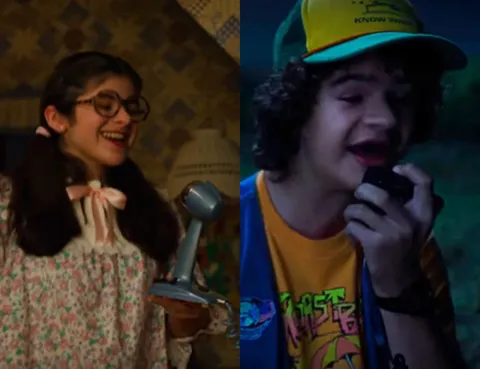
For the reaction, the sudden switch itself matters. If the caption explains the whole musical trick in advance, only an illustration remains. A short phrase about a person finally reaching the microphone leaves room for an imagined continuation. For fans, the song can also signal pure joy of recognition: a funny image becomes a sign of a shared musical memory, not a mandatory mockery of the performer.
Three invented entrances onto the stage
In an invented sketch, a school robot is supposed to quietly report the classroom temperature, but its creator accidentally switched on the demo music mode. The Vitas portrait is captioned “When the project got one more button.” The joke links the useful device’s unexpected transformation into a performer.
Another invented example is an amateur talent night. A participant announces that they have prepared a small, calm number, after which friends pass this picture around to each other. They anticipate the eccentric manner familiar to them, and the photo stands in for a whole description of the upcoming performance.
In a third invented situation, a person listens to a playlist while cleaning. After several quiet instrumental tracks, a favorite strange hit comes on, and the chore turns into a dance with a broom. The caption “The algorithm remembered my true musical personality” ties the meme to the pleasure of a suddenly discovered song.