Two frames that read as a dialogue
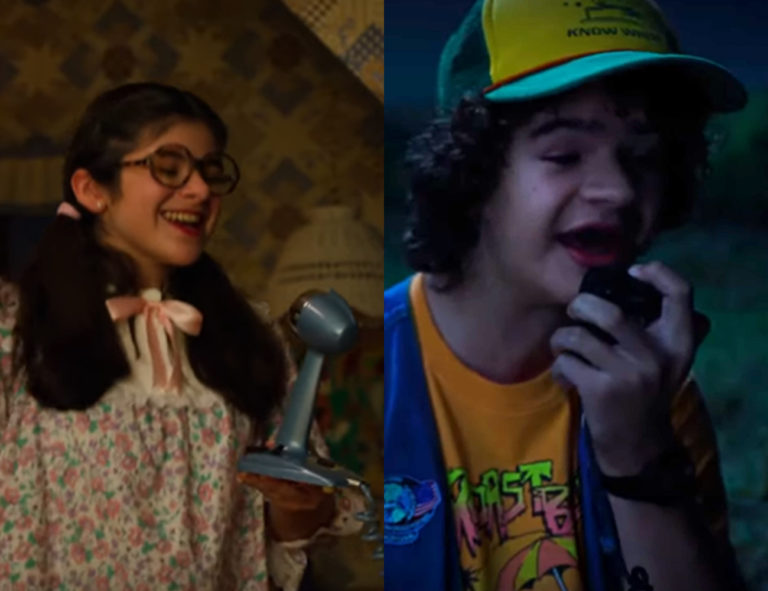
The picture shows two frames placed side by side. On the left, a girl character in round glasses, with two pigtails and a pink bow at the collar of a patterned nightgown, laughs while holding a gray-blue desktop microphone. On the right, a curly-haired hero in a yellow-turquoise cap and a blue vest over an orange T-shirt sings, holding a black walkie-talkie to his mouth. The background on the right is dark, nocturnal.
Together the frames look like a short dialogue: one character laughs, the other sings with full commitment. The collage alone explains nothing, but it is not needed if the viewer recognizes the scene. The caption usually supplies the reason, while the picture sets the tone.
The song and the scene
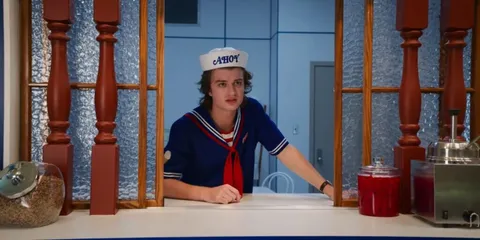
In the scene from the finale of the third season, the characters Dustin and Suzie communicate by radio, and Dustin sings the theme from the 1984 film The NeverEnding Story. The song was originally performed by Limahl and Beth Andersen; it was written by Giorgio Moroder together with a co-author. The serious, almost solemn intonation of the chorus made the scene memorable.
Its main feature is that it is sung seriously, without irony, while the situation itself is funny: two teenage characters are hashing out their differences over the radio. This combination of sincerity and comedy became the basis for the repetitions: the scene had to be sung just as passionately as in the series.
How the challenge spread online
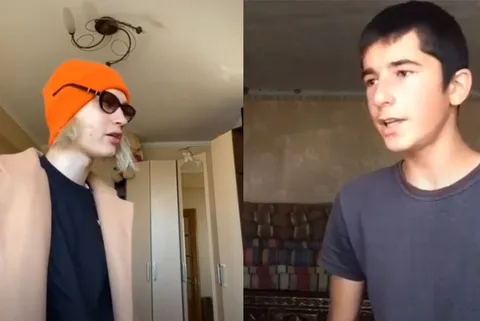
After the third season came out in summer 2019, viewers began recording their own versions of the scene and posting them under a hashtag about the endless challenge. According to reports, people from the show's team also joined the flash mob, although sources describe the exact circle of participants and the order of events differently.
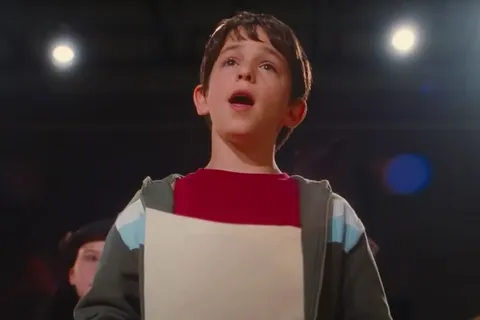
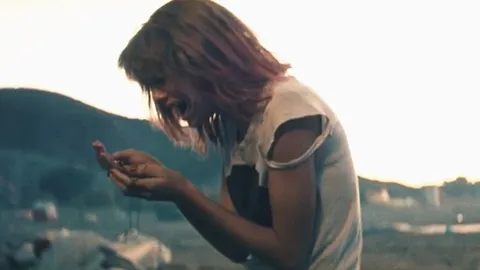
Participants responded with singing, cosplay, and dancing. The format is simple: choose a moment from your own life and sing it with the same commitment as the characters. That is why the videos differ in mood, from home videos to scenes with costumes, and the challenge quickly spread beyond the fandom of the series.
Four captions and the logic of each
Each caption below has one task: to combine the song's high pathos with a household trifle.
“Opened the spreadsheet with the report and started singing as if I were saving the world.” The epic intonation is transferred to a dull task, and the gap between the scale of the gesture and its cause produces laughter.
“The courier wrote that he would arrive in an hour. I'm singing as if this were humanity's last hope.” The hope from the chorus turns an ordinary wait into a drama. The more serious the tone, the more absurd the cause.
“Said hello to the neighbor in the elevator, and it turned into a scene for the whole season.” Here the joke is self-irony: a scene from the show becomes the scale for a simple polite gesture.
“Turned off the alarm and immediately realized I still have to get up.” The pause between the decision and reality works as the scene's finale, while the singing hero sets a sad intonation.
How to use the template
A collage of two frames suits situations where you need to show the contrast between calm and passion. It is better to choose situations where the person is genuinely absorbed: then the singing looks natural rather than forced.
Recognizability depends on the series' characters and plot. If the audience has not watched the third season, the joke may not land, so the caption should be understandable even without knowing the scene. The actors' names are not needed; it is enough to name the characters or the challenge itself.