Who Art the Clown is
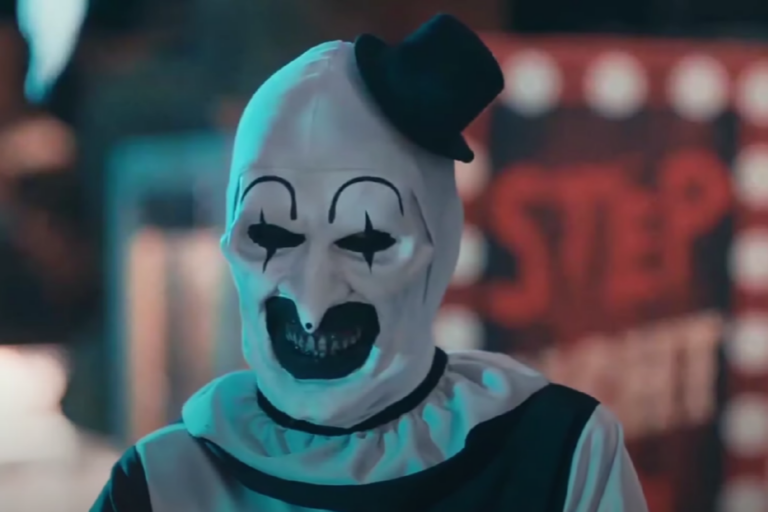
Art the Clown is the silent villain of the independent slasher series 'Terrifier,' created by director Damien Leone. The character is played by David Howard Thornton. His look is memorable for its stark black-and-white makeup, sharp gestures, and expressive facial acting. Art never speaks, so the actor's body language and face have to carry the reaction without a word.
The meme clip comes from the 2022 film 'Terrifier 2.' In the scene, Art's expression shifts from mock surprise to a wide smile. In the original, the moment is embedded in the horror plot, but in short clips viewers may see it as a standalone reaction to an unexpected situation. It's an example of how a genre scene takes on new meaning once it's cut out of the film.
Why the shift in expression became a template
The quick turn from fright to a smile reads clearly even without dialogue. First the character pretends to be surprised or worried, then the expression turns suspiciously pleased. This two-beat gesture suits jokes about an unexpected windfall, an awkward lie, or secret delight. The viewer doesn't need to know the whole plot to get the turn between the first reaction and the second.
In short formats the scene is often trimmed, sped up, or set to music. Sometimes only the smile remains; in other versions the transition is also visible. The shorter the clip, the easier it is to caption it with something like 'said he didn't buy candy — heard the wrapper rustle.' Even so, a recognizable reaction shouldn't be used to pass off a film scene as a real incident.
From horror to internet humor
In late May 2024, the scene began spreading on TikTok as a universal reaction. Its popularity coincided with heightened attention to the franchise's sequel, but that doesn't mean the film was made for the sake of a meme. An online user cuts a piece of footage out of its story and places it in a new sequence, for instance after an unexpected text message or a funny mistake.
That kind of transfer changes the scene's emotional function. In the film, Art's smile is meant to be unsettling, because the viewer knows the character is dangerous. In the meme context, the viewer already understands the clip's artificiality and reads the smile as an exaggerated reaction. The contrast between the two genres — fear in the film, comedy in the chat — adds to the effect as well.
What exactly the illustration shows
The illustration shows a stylized frame: a man's face in black-and-white makeup against a colored background. He looks at the viewer with his eyes closed and a raised smile. This is an illustration of the character's reaction, not a photo of the actor outside the role. The still frame doesn't show the shift in expression, so it conveys only the final phase — the smirk.
In describing the film it's important to name the character and his on-screen nature, without passing his actions off as the behavior of an actual clown or a real person with that face. Art is a fictional horror antagonist. Variations on the meme may change the color, add text and sound, but the illustration itself carries no caption tied to a specific situation.
Examples and careful use
'I said I didn't want dessert. The waiter mentioned chocolate cake — and now I'm smiling.' The second phase suits a joke about a character trying to hide their interest. Another version: 'Thought the meeting would be cancelled. Saw a message about it being pushed to tomorrow.' Here the smile signals relief the character hadn't planned on showing.
Since the original film contains violent scenes and the image of a killer, the frame may not be appropriate for a child audience or a situation where the viewer isn't expecting horror content. Don't use it to scare people or to mock real victims. It's better to apply the template to talk about harmless scheming, sudden luck, or self-deprecation, keeping a clear distance between the fictional character and real life.