How everyday photos became a reaction
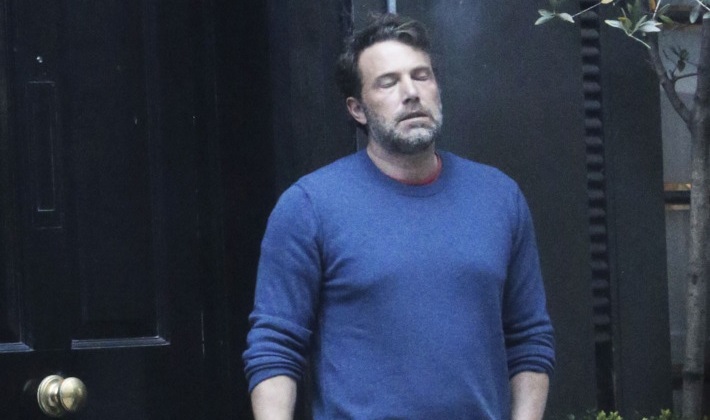
Photos of Ben Affleck stepping out for a smoke acquired a meme life in 2016. A gallery with such shots was published on August 25. The images were then discussed as ready-made reactions, and on Reddit they were used for photomontages: the actor’s figure could be moved into a new background and given a completely different reason for exhaustion. The joke needed not a film with Affleck but a fleeting everyday scene that the public read as an image of a person at the limit.
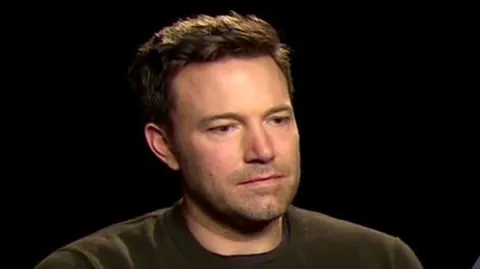
In the summer of 2018 the family spread noticeably in Russian-speaking communities. The captions were about studying, work, relationships and minor annoyances that cause disproportionate exhaustion. Various shots of the actor were in circulation, so the name that stuck does not describe literally every variant. It recalls a shared photo series, whereas the emotional role of an individual picture is defined by body position, the face and the chosen moment.
A pause by a dark door
In this photo Affleck stands in front of a dark door in a blue sweater. His head is tilted slightly back, his eyes are closed, his mouth is slightly open. His shoulders are lowered, and his arms disappear below the lower edge of the frame. Beside the door there is a round handle, and on the right a bit of greenery is visible. There is no noticeable cloud of smoke in the frame and no discernible cigarette: the reaction rests on the face and a still pose.
An ordinary door creates a sense of leaving a noisy space, although the reason for the stop does not follow from a single shot. In the meme reading, the hero seems to have reached a brief respite and is now trying to pull himself together. Nothing especially spectacular happens around him. This calm setting lets the caption name the invisible load: a finished workday, an unexpected assignment, or a tiring conversation from which one wants to step away for a minute.
Huge fatigue from a small event
The image works as an anti-heroic reaction. From a famous actor a viewer may expect a confident pose, an expressive role or a beautiful public photo. Here, instead, a state is offered that is familiar to someone who already finds it hard to keep up a cheerful appearance. The celebrity turns out to be a convenient stand-in for someone else’s everyday life, rather than the object of an obligatory joke about his personal life. To understand the caption, it is enough to see the moment of stopping.
The comic exaggeration is especially noticeable when the occasion is small. The situation is not yet a catastrophe, but the face announces that there are no inner resources left. Between an ordinary event and a heavy reaction a distance opens up, in which the reader recognizes their own habit of dramatizing fatigue. There is no active protest here: the hero neither argues nor runs. He seems to be waiting out another wave of obligations before returning to them.
New occasions for a breather
The first invented example: “When I finished cleaning and heard the cat knock over the pot.” Fatigue sets in right after an achievement that has just been undone. The pose by the door becomes a brief way out of the situation: before picking up the broom again, one wants to stand silently for a moment and admit defeat.
For work, “Me after the message: the meeting got moved to lunch” will do. Here a small organizational change takes away the only promised break. Another variant: “When I explained to my relatives how to turn on the TV, and they ask where the sound is.” What is funny is not the question itself but the sudden continuation of an explanation that was already finished. In each case the photo depicts the moment between understanding a new assignment and having to pose as a patient, active person again.