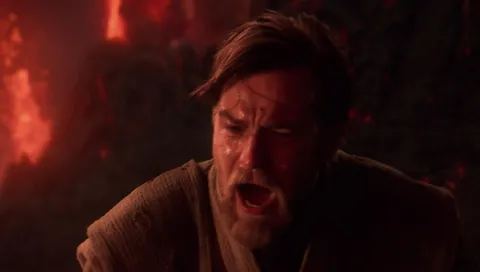
Close-up: squeezed-shut eyes and an open mouth
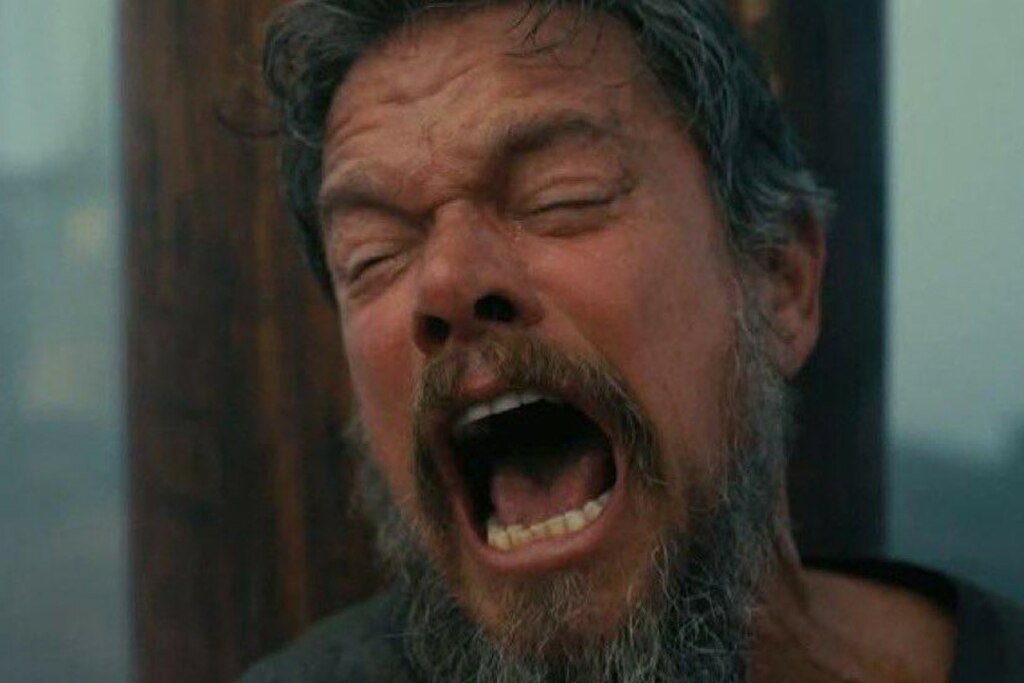
The image is a tight close-up, almost up against the face: a gray beard, knitted brows, closed eyes and a wide-open mouth. You can see the strain in the neck and the creases in the forehead. This is not a pose but a moment of maximum effort.
The background is blurred, so all attention stays on the face. There is nothing in the frame that would explain the scream: the viewer sees only the reaction and supplies the cause themselves.
The frame exists without captions: no text, arrows or explanations on it. That is exactly why it turned into a blank template that everyone fills with their own content.
Nolan, Damon and the premiere of 6 July 2026
This is a frame from The Odyssey, an adaptation of Homer's poem directed by Christopher Nolan. The lead role is played by Matt Damon. The world premiere took place in London on 6 July 2026, and the wide release began in mid-July.
The meme appeared soon after the premiere: viewers posted the frame online, and it quickly detached from the film. From then on it lived on its own, as a picture, a GIF and a short video of that moment.
Where the scene sits in the story does not matter for the meme: the image works outside the plot. The reason for the scream remains unknown, and that is what lets people insert any cause. In this template only the scream itself matters. That freedom made the frame convenient for captions: any reason fits into it without a stretch.
Why the scream goes at the end
This picture has no shades: it marks the upper limit of feeling. Where other templates show surprise, tiredness or mild annoyance, this one goes straight to the extreme: pain, despair, rage or helplessness.
That is why the meme works well as the finale of a sequence. First comes an ordinary annoyance, then its consequences, and only then the scream. Put at the start, the joke loses its build-up.
Sometimes the frame is used without irony too, when you want to show that a situation has genuinely gotten out of control. Even then the same quality is at work: a reaction whose force is understood instantly.
Captions: from a lost file to an email before bed
"I saved the file. The file saved somewhere other than where I was looking." A short description of the loss, while the scream plays the second half of the reaction, which does not need to be spelled out.
"My headphones died twenty-five minutes into the call." A small thing, but exactly the kind that makes you want to scream louder than the setting allows.
"They asked if I was ready for a meeting in ten minutes." The scream here is not about tragedy but about an instant recount of everything left undone.
"I checked my email before bed." The caption leaves it to the viewer to imagine what was in the message, and the picture fills in the rest.
What to keep in the frame
The effect rests on the tension in the beard and neck, so it is worth keeping the whole face in the frame. The close-up is clear even without a caption, and the text can be limited to a single line.
The frame is strong because the person screaming is alone and the cause stays off-screen: a second character or an explanatory caption would distract from that.
The frame is built for the extreme, so next to a minor annoyance it looks too strong. Restrained reactions win on small things, while this scream wins on what has truly crossed the line.