Which movie the frame is from
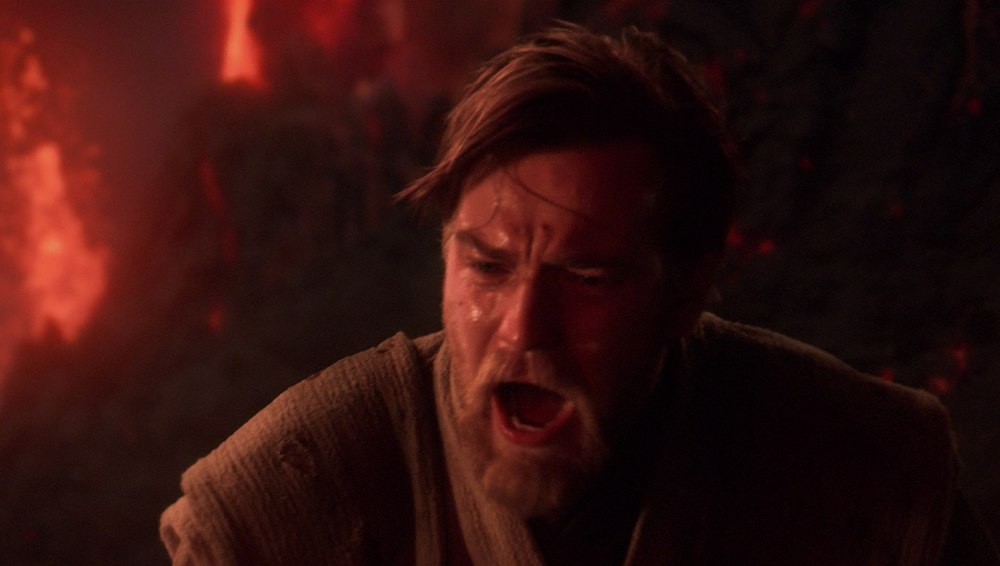
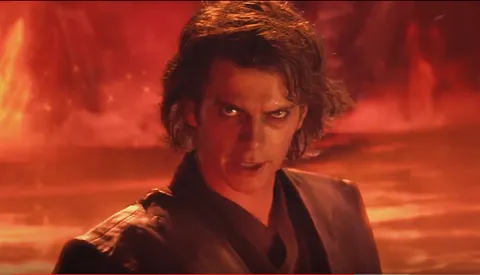
The frame is from Star Wars: Episode III – Revenge of the Sith, released in 2005; it was directed and written by George Lucas. It is the final part of the prequel trilogy. Obi-Wan Kenobi was played by Ewan McGregor, and Anakin Skywalker by Hayden Christensen.
The scene takes place on the volcanic planet Mustafar. Obi-Wan has just lost a lava duel to Anakin, and his former apprentice, now Darth Vader, lies by the shore, burning. In the frame, the Jedi master is not in combat: he stands facing the fire, his face drenched in sweat, his mouth open in a scream.
What the hero says
In the English version, Obi-Wan shouts that Anakin was the Chosen One, destined to destroy the Sith rather than join them, to bring balance to the Force rather than plunge it into darkness. In Russian-language memes, the line is often retold in a shorter formula: “you were supposed to fight evil, not join it.” This is a loose paraphrase of the meaning, not a verbatim quote from the film.
The emotional center of the scene lies not in the words but in how they are delivered. Obi-Wan does not threaten; he is almost crying. This blend of rage and grief is what makes the frame valuable for memes: the reproach sounds like personal pain.
Why the template is funny
The joke rests on a mismatch of scale. The original situation is the fall of the Order, a battle on lava, and the betrayal of a best friend. Memes lay it over something trivial: choosing a coffee flavor, the order of grocery shopping, someone else's taste in music. The more serious the face in the frame and the more petty the reason, the funnier it gets.
The second mechanism is role assignment. The caption usually contains the one being reproached and the one doing the reproaching. The joke's author more often takes Obi-Wan's place, while the “traitor's” choice is framed as a mundane trifle.
Caption examples
“I, to the friend who put pineapple on pizza.” An ordinary food argument turns into a tragedy.
“My cat, to the bowl I didn't manage to fill within five minutes.” The pet's exaggerated disappointment reads as a reproach in Obi-Wan's style.
“My coworker, when I closed the shared document without saving.” A cry of despair fits a situation where shared work was harmed.
“My brother, to me, when I said the second part of a favorite series was better than the first.” A dispute over taste is elevated to the level of betrayal.
What makes the frame visually expressive
The image is built on a warm red-orange palette: fire along the edges of the frame, reddish light on the face, dark clothing. All attention goes to the open mouth and the features, wet with sweat and tears, so the caption can be placed even over the dark part of the background and remain legible. For memes this is convenient: the image needs no processing, just one line of text. Keep in mind that the frame depends on pathos. If the text comes out too soft or cautious, the comic effect disappears; if it is too long, the viewer stops seeing the face. The best option is a reproach in one phrase and an obvious culprit.
How to use the template
The frame suits situations where someone has broken expectations: a friend switched favorite bands, a team lost after a confident start, an acquaintance made a choice that seems unserious. It works best with a short caption that clearly shows who is being reproached.
Don't use the image in real arguments: the face in the frame expresses extreme pain, and as a genuine reproach it would seem excessive. The playful, exaggerated tone is exactly what makes the meme safe and funny.