A phone order with an unexpected ending
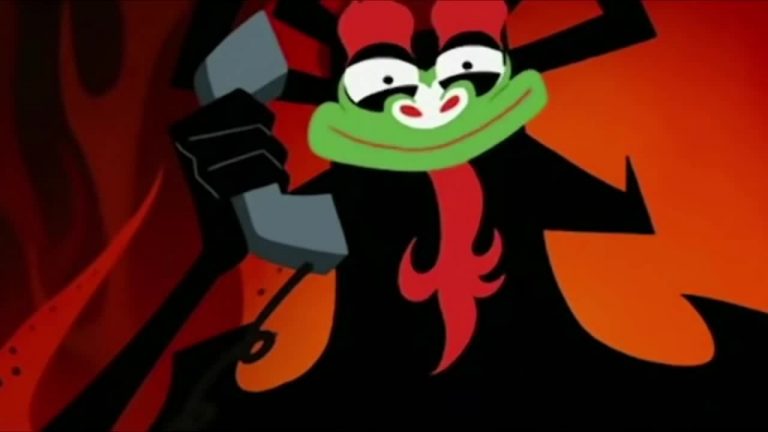
The frame comes from episode XLVIII, “Jack versus Aku,” which aired on November 24, 2003. The series “Samurai Jack” was created by Genndy Tartakovsky. At the start of the episode, Aku orders another hired fighter over the phone, one who is supposed to take down Jack. The conversation is structured like a food order: a question about size makes the villain especially pleased. However, the supposed pizza turns out to be a comic lure for the viewer, since what gets ordered is a huge bounty hunter.
This ending matters for the origin of the line. The later meme took over the intonation and the phone frame, so the short excerpt is easy to mistake for a scene about an actual pizza. The start of the series in 2001 is also sometimes confused with the date of the episode. The separate meme history begins much later: the well-known Nepeta Leijon remix appeared in October 2016, and the return of “Samurai Jack” in 2017 was accompanied by a new wave of remakes.
Aku's smile on an orange background
The image shows Aku holding a gray telephone receiver to his head. His face is bright green, with red eyebrows above his eyes and a red beard hanging below. His black body almost merges with the dark parts of the silhouette, and the orange background amplifies the color contrast. At the same time, the expression is pleased: the enormous villain looks as if he has heard exactly the answer he was waiting for.
There is no text in the picture, and the mercenary he ordered is not shown either. The phone itself creates a convenient frame for a future caption: the character can receive a product description, discuss size, or confirm an unusual request. This reaction differs from Aku's usual frightened or angry look. What makes it useful for a meme is precisely his unexpected joy, which can be linked to anything outside the plot of the series.
Why the spelling "thicc" changed the tone
In remixes from March 2017, the line was repeated, stretched, and combined with music. The spelling "thicc" with two c's tied the sound to internet slang about pronounced curves and noticeable volume. The spaced-out letters and wide intervals visually prolonged the spoken words, as if the ordinary caption had also received an amplifier. The frame and the sound became suitable for separate jokes, although they come from one scene.
The assessment carries a sense of pleasure in excess. The object is no longer merely big: its size is perceived as an added virtue. That is why the format was applied to food, massive characters, wide silhouettes, and exaggerated details. Transferring it to an inanimate object adds another layer: Aku seems to be appraising the thickness of a blanket with the same passion the villain brought to choosing each new means of defeating his opponent.
Orders worthy of such delight
In an invented scene, a salesperson reports that a winter blanket will take up half of the armchair. The next picture shows a smiling Aku with the phone. A quantity that could look like an inconvenience suddenly becomes the main argument for buying. The phone prop helps present the reaction as a literal continuation of the conversation.
Another invented variant concerns a novel: a reader orders a light story for the weekend and receives a volume the size of a brick. Aku approves not a person's figure but the excessively solid promise of reading. In a third example, a baker asks how thick to slice homemade bread, and the pleased villain answers on behalf of a person who meant to make a small sandwich. All three situations keep the idea of joyful excess. Yet the object changes so much that the frame stops being a retelling of the episode and becomes a short conversation about personal preferences.