The character and its manner
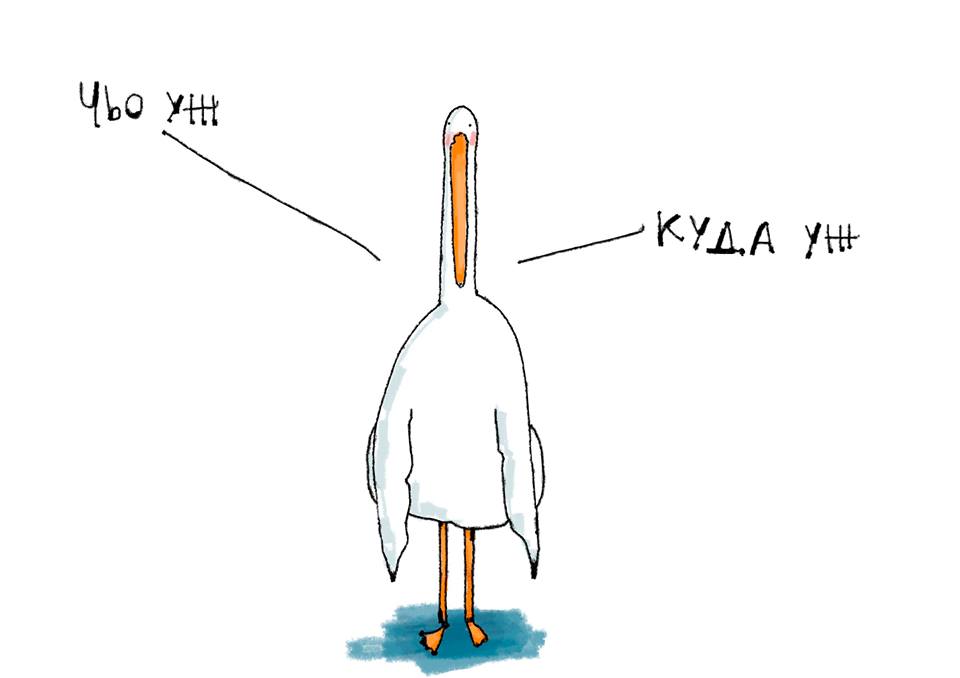
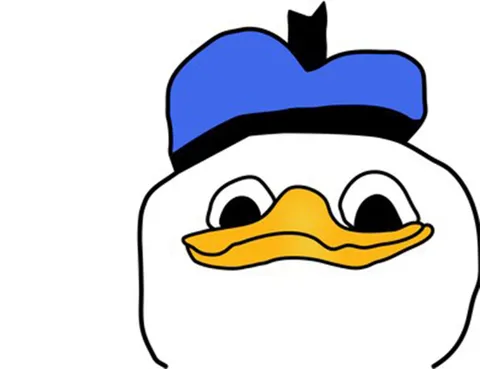
Goose is an internet character in the form of a drawn white bird with a long orange beak, thin orange legs, and dark outlines. The character's main trait is speech: it talks in surzhyk, a mix of Ukrainian and Russian with colloquial forms, and addresses whoever it's talking to with short phrases that sound like everyday remarks.
The catalog's description calls the character a giver of life advice. It's exactly this framing that makes it recognizable: a serious, mentor-like tone combines with an everyday, almost nonsensical phrasing, and the comedy comes from the gap between the two. In the image linked to the entry, two such lines are visible — "Chyo ush?" and "Kuda ush?" — written in the same phonetic manner.
Origin
The character's origin hasn't been established: no post or author page confirming the date it first appeared is known. The character dates to 2016, but this date is not confirmed by independent sources.
The character's author is said to be Ukrainian artist Nadezhda Kushnir. This claim is also unconfirmed: material on surzhyk, Ukrainian internet humor, and goose-themed merchandise doesn't point to who authored this particular drawing.
Language and the source of the humor
Surzhyk is an important part of the meme's mechanics. The character speaks a mixed language that in Ukraine is traditionally perceived as colloquial speech and often becomes the object of good-natured irony. For Russian-speaking audiences, such speech is both familiar and slightly foreign at the same time, which boosts how recognizable and amusing the image is.
The comedy also rests on the contrast between the visual image and the text. The bird looks calm and even dignified, while the lines are short, clumsy, and without any obvious meaning. This setup allows any kind of advice to be put into the goose's mouth, from mundane to downright absurd, without changing the image itself.
In practice, the goose is used when you need to portray an adviser with an important air and an absurd remark. Example captions invented for illustration: "Don't rush, the tea will go cold, but you won't" or "First eat, then think." The reader only has to recognize the bird and the manner of speech to understand that the advice is playful and not to be taken seriously. That is why the character fits easily into chats where friends trade everyday observations.
Imitations and spread
According to the catalog's description, the character became the object of imitations, including in Russian. For internet humor this is a typical picture: an original image turns into a template, and it gets copied by authors who change the text or the language while keeping the look and manner.
The extent of its spread is not known: there's no exact data on print runs, reposts, or the number of imitations. It can't be claimed that the goose became a widely known meme during any specific period.
Caveat about the image
The image from the catalog shows a white bird with a long orange beak that looks more like a pelican than a goose. The text on the picture matches the manner of speech described in the catalog, but the bird's silhouette doesn't fully match the stated character. This discrepancy is noted as a caveat.