What's depicted
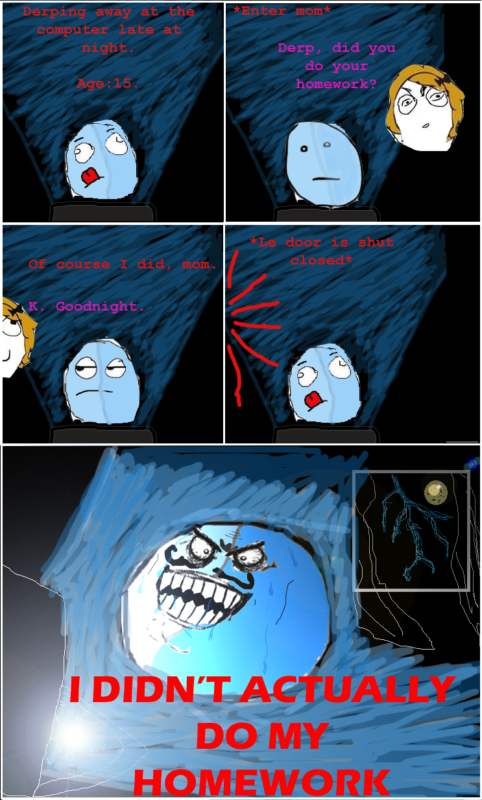
The image shows a face in rage-comic style: a wide stretched grin, narrowed eyes, and an expression of poorly concealed triumph. The face is minimalistic, but the expression reads instantly, so it's easy to recognize even at a small size. It's exactly this expression that gives the meme its meaning: the character has just told a lie and is now gloating that he hasn't been caught.
The face usually appears at the end of a comic or in a separate reaction panel. A short line describing the deception is written next to it, while the face fills in the emotion. In this way the image serves as both caption and facial expression at once, which is typical of the whole rage comic aesthetic.
Origin
Rage comics took shape around 2008–2009 on anonymous imageboards and in Reddit communities: users drew simple characters from a set of standard faces and captioned them with lines about everyday mishaps and irritation. This environment produced many faces, each covering a specific emotion, and the I Lied variant is one of them.
The author of this particular face and the first publication featuring it have not been established. The catalog dates the meme to 2009, which lines up with the genre's peak. The genre itself declined quickly after 2011, but individual faces went on living in chat messages and image captions, because they turned out to be shorter and more expressive than many lines of text.
How it's used
A typical caption describes a lie the character has just told — for example, "Said I did my homework" or "Swore I didn't eat the last piece of cake." The face following such a line conveys gleeful satisfaction, creating a short story out of two elements: the act and the reaction to it.
In chats, the face is used in reply to someone's confession that's obviously untrue, as well as in jokes about self-deception. It's sometimes placed next to photos where a person is clearly pleased with themselves, to underline the irony of the situation. The meme also works as self-irony: the poster shows they know their own lie is obvious. The same line works well in game discussions, where a player deliberately hides their results, and in talk about school, where a student insists they understood everything while clearly knowing nothing.
Why the meme works
The strength of I Lied Face is that it turns a minor lie into a small pleasure. The viewer sees not horror at the deceit but an almost childish gloating, and that's what brings a smile. The facial expression separates the act from moral judgment and makes it comic.
The meme also works conveniently as a visual marker. It tells the other person that a line was false and that its author is pleased, without spelling it out in words. That's why the face has stayed in use longer than many other characters from that era: it's understandable without context and easy to adapt to any situation.