A comic about an unexpectedly changed rule
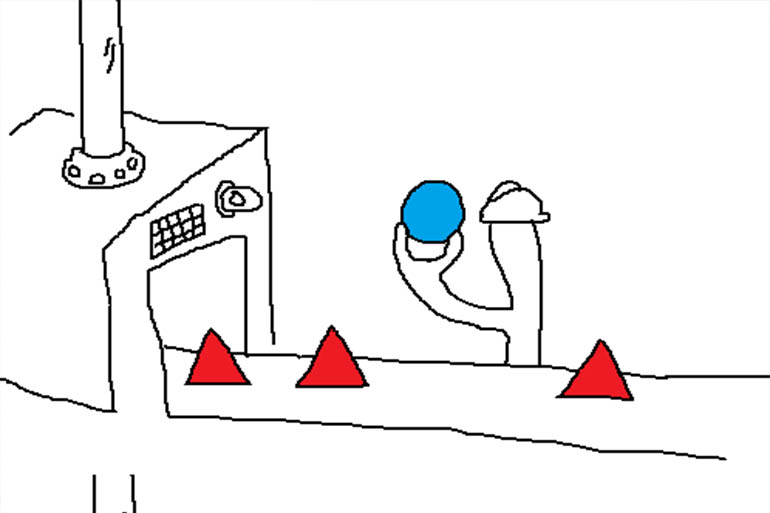
"A Circle at the Triangle Factory" is a short webcomic in which a production line is set up for triangles, but a circle rolls out along the belt. The first worker notices the mismatch. The second does not stop the conveyor or look for the cause but casually adjusts the expectation: apparently the factory makes circles now. The jump from error to new rule is the joke.
The comic and its redraws spread in 2024. Simple geometry and the lack of a complicated background make it easy to transfer the idea to different situations: a change of priorities, a sudden requirement, or a broken workflow. Some versions keep the line "we make circles now," others invent new dialogue. The mechanic stays recognizable even when the objects are replaced.
Why the employee's reaction is funny
A factory normally runs on a clear set of rules: the line sorts parts, the worker does the task, the result is checked. In the comic, the error is not fixed but redefines the task itself. The second employee reacts so calmly, as if this were not an absurd glitch but a long-planned reform. His composure makes the absurdity part of everyday normality.
The meme is especially recognizable where a person is tired of asking why a process changed and just adapts. It might be an office procedure, a household schedule, or an interface where the button you need has moved again. It does not necessarily blame a particular manager: sometimes the joke is aimed at the human habit of getting used to even a completely random rule.
What is visible in the local version
The picture keeps the conveyor, two generic employees, a blue circle, and red triangles. The black-and-white minimalist drawing emphasizes the scheme rather than a specific factory. The image points to no country, industry, or real working conditions. It is a universal set for a situation in which an object of the wrong shape suddenly appears on the belt.
This minimalism explains why the comic is easy to remake. Instead of geometric shapes, you can draw folders on a desktop, dishes in a kitchen, or tasks in a to-do list. It is best to keep three anchor elements, though: the rule was clear, someone noticed the mismatch, and another person accepted it as the new norm. Without the last step, the joke becomes just a picture about a defect.
Examples of transfer into everyday life
"The expense app now has three identical categories." "Well, now we count coffee separately three times." The glitch stays funny because the character doesn't fix the system but adapts to it. Another variant: "I was asked to prepare a short talk." "Looks like short now means forty slides." The exaggeration makes recognizable the situation where a criterion changes without explanation.
The format also works in a family chat: "We agreed to meet at six, but someone suggested nine." "Well, that's it, the evening starts at nine now." The main thing is to aim the humor at the absurd rule or habit, not at a specific person who may find it hard to do the task. A caption tied to the audience's own experience works better than abstract blame.
What to keep in mind
The comic is good for discussing recurring oddities and procedures that suddenly lose their meaning. It lets you say briefly: "we've adapted to the glitch again." But if the subject is a real production defect, a safety threat, or important working conditions, the meme should not replace a description of the problem. The picture does not show what exactly happened or who is responsible.
In public conversations, leave enough context so that satire is not mistaken for a real instruction. If the humor is aimed at an organization, it is better to criticize the process than to mock workers who have little control over the rules. The point of the template is the gentle absurdity of normalizing an error; it does not require attributing specific intentions to people or inventing a factory backstory.