What the picture shows
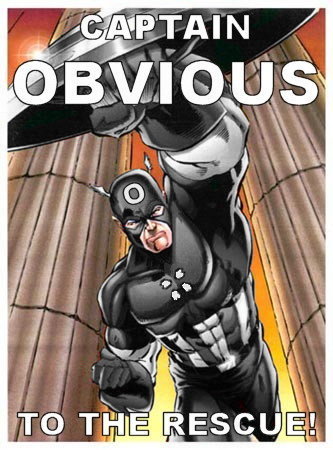
The picture shows a character in a black-and-gray costume with the letter "O" on his helmet, resembling classic American comic-book heroes. The figure is shown in a dynamic, heroic pose against a backdrop of massive columns, as if the hero is preparing for a rescue. Above the image, in large letters, is written "CAPTAIN OBVIOUS," and below, "TO THE RESCUE!," and this caption immediately sets up the ironic frame: the hero is rushing to save the world from something that is already perfectly clear.
Visually the poster imitates the design of superhero comics and posters: high-contrast graphics, a dramatic angle, and a bright background. This style creates a comic gap between the solemnity of the image and the banality that the character is about to "save."
Origin and history
The exact origin of the image could not be established. The character has been known in English-language culture since the early 2000s, and his image has been used in advertising materials, comics, and parody videos. The date 2000 given in the catalog points roughly to the time when Captain Obvious began spreading noticeably, but a specific author and original source cannot be named.
The joke built around this character gained popularity on the Russian-language internet, where the word "Cap" became a synonym for a tedious person who states the obvious: "It's winter outside, it's cold" or "Water is wet." The similarity to the name Captain America adds a layer of irony: instead of protecting humanity, the hero is busy reminding people of what they already know. Over time the figure came to symbolize not so much a superhero as the very situation in which someone describes the obvious in painstaking detail, which is why it is used even when there's no picture of the character at all.
How it's used and typical captions
The image of Captain Obvious is used in messages, comments, and captions as an ironic response to a trite remark. A user writes "Captain Obvious here" when the other person states something obvious, or inserts a picture of the poster. Sometimes a photo of someone's own actions is captioned ironically in the same way, for example: "It's raining today, Cap to the rescue."
Typical captions follow a simple pattern: the obvious statement is plugged into the template "Captain Obvious to the rescue" — "Summer is hot," "Pizza is tasty," "Monday is a day of the week." The joke is funnier the more seriously the character is depicted, which is why the poster is so often used for contrast.
Why the joke works
The irony rests on the contrast between form and content. The hero's appearance, classic superhero grandeur with a tense pose and dramatic lighting, calls for a momentous story, while the text announces that the subject is the most obvious thing imaginable. The viewer sees seriousness and banality at the same time, and it is exactly this gap that triggers laughter. It also matters that the picture barely needs any explanation: just seeing the hero in that pose is enough to expect something thoroughly mundane, and that expectation itself becomes a source of humor.
The image is recognizable because it relies on a familiar type of interlocutor: almost everyone has met someone who explains things that everyone already understood long ago. That's why Captain Obvious became a convenient label for mocking tediousness, not so much aimed at a specific person as at the habit of overvaluing banal observations.