What the image shows
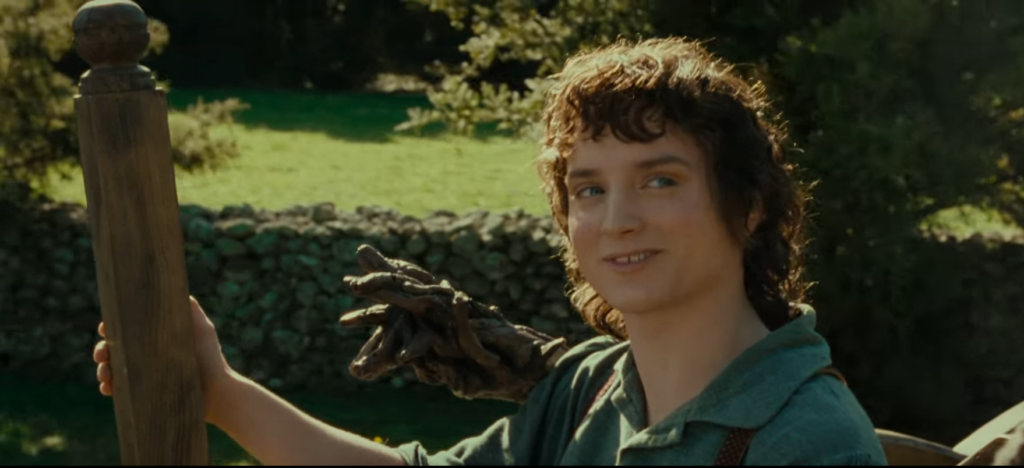
The shot was taken outdoors. On the left is a wooden post with a rounded top, beyond it a low stone wall, a green field in soft light, and some shrubs. A young man with curly dark hair, wearing a green shirt with suspenders, looks toward the camera and smiles slightly, squinting a little. A dark, gnarled hand enters the frame on his right.
There is no caption or text on the image. The meaning comes from the facial expression: the man seems to understand more than he is saying, and that is enough for viewers to recall the line.
Where the phrase comes from
According to available descriptions, the phrase appears in Peter Jackson's adaptation “The Lord of the Rings: The Fellowship of the Ring,” released in 2001. It is spoken by Frodo, played by Elijah Wood. The exact scene this still comes from, and the literal wording of the line in different dubs, may vary, so the scene is not described in detail here.
The line has a restrained tone: the character does not argue or push, but shows that he doesn't understand what is happening and accepts the refusal. This mix of hurt and resignation became the basis of the intonation later carried over into memes.
How the still entered memes
Accounts of the first posts are contradictory. According to reports, a separate clip with the phrase appeared on YouTube in 2017, and in 2018 the still spread noticeably across Facebook, Twitter and Reddit, including with captions about a silent cat and a conversation with a tree. The first publication has not been established, and post titles differ across retellings, so the dates should be treated as approximate.
Caption examples
Invented captions in which a direct question is asked first, and then the other person stays silent or changes the subject.
“Asked my boss when the bonus would come. He told me about lunch and nothing else.” Ordinary evasiveness turns into a small story, and the line from the film puts a dry, polite full stop at the end.
“Asked my friend to confess who ate the last pizza. My friend pretended he wasn't there.” Silence becomes the answer, and the line reads as a gentle acceptance of defeat.
“Asked the Wi-Fi why it dropped again. No answer.” The template also works for inanimate conversation partners.
What's funny is that the reaction is calm: the character isn't angry, he just acts as if that was the plan all along.
Why the phrase works
The template rests on a pause. A direct question, silence and a short reply create an awkwardness that viewers recognize immediately. The character's slight smile shows that he is not seriously hurt, only pretending.
It is important not to apply the phrase to serious topics. If the subject is illness, safety or someone's misfortune, a dry reply sounds heartless. It works best in a light argument where nobody got hurt.
A caption usually consists of one situation and one line: the fewer explanations around it, the better the pause works.
For longer captions, it helps to split the text into a question and a reaction: the question goes above the image, and the character's line stays as the final remark. This keeps the rhythm in which a pause comes first and the dry answer follows.