What's shown
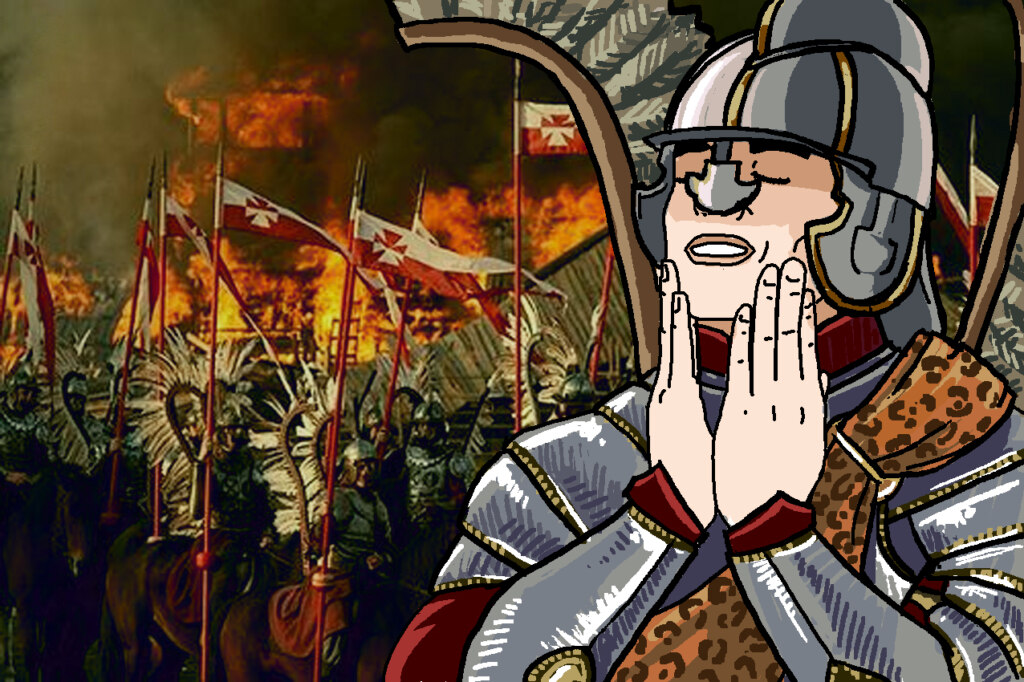
The image shows a knight clad in armor and a steel helmet, covering his face with his hands in a pose of rapturous or touched embarrassment. The background is made up of mounted warriors with red flags bearing white crosses, and flames rising over the battlefield. The combination of an epic battle scene and an exaggerated emotional gesture forms the basis of the joke.
The image's style is mixed: the battle background looks like a fragment of a historical reenactment or illustration, while the character is drawn in a crude, comic-book manner with bright outlines. The contrast between the solemn setting and the almost girlish gesture of hands pressed to the cheeks works as a visual gag, and it's exactly this that makes the picture recognizable among other variants of the meme.
Origin of the phrase
The phrase Deus Vult dates back to 1095, when at the Council of Clermont Pope Urban II called for the First Crusade, and those gathered, according to legend, responded with this Latin cry. The words "God wills it" became a symbol of the crusaders' religious zeal and took root in European culture as a sign of resolve and faith.
The phrase got its online life thanks to the Crusader Kings II strategy game from Paradox Interactive, released on February 14, 2012. In the game, when the Pope declares a crusade, a pop-up window reading "Deus Vult" appears on screen, and players started repeating it in videos and discussions.
It's hard to pin down a specific author of the first images built around this phrase, so the meme's origin, in its mass form, is best described as collective: it was created by gaming communities and imageboard users.
How the meme spread
In December 2013 a YouTube slideshow of crusade-themed paintings titled Deus Vult appeared, and in October 2015 a video called "Ave Maria! Deus Vult" paired the phrase with footage from military clips. The pairing with "Ave Maria" took hold at that point and became a fixed combination used in jokes.
In 2016 images captioned Deus Vult circulated widely across forums and image-macro communities. Themed galleries collected knights, Templars, and medieval scenes with captions where, for instance, a crusader asks whoever he's talking to if they have time to talk about Jesus. Such captions turned the pompous cry into self-irony.
The meme also made its way onto popular community news hubs, and animated comics with the repeated phrase appeared on YouTube and in amateur web series. That's how it moved from gamer circles into wider internet culture.
Political use and controversy
Over time the phrase began to be used in controversial contexts. It was picked up by alt-right communities on forums and in discussions of Islamist extremism, where Deus Vult began to be set against the battle cry "Allahu akbar." It's exactly this context that made the meme a subject of controversy and drew criticism from those who see religious-ethnic aggression in it.
It's important to separate the gaming and humorous tradition of the meme from its politicized use. In most jokes tied to Crusader Kings, the phrase serves as a pompous, self-ironic comment, but in certain communities its meaning was deliberately narrowed into propaganda. This sets Deus Vult apart from many gaming memes that have kept a neutral character.
Why the meme works
The meme's main strength is the contrast between the lofty solemnity of the medieval phrase and the mundanity of internet situations. The pathos with which God's will is proclaimed easily transfers onto any trivial matter, whether it's another epic trip to the store or a choice the whole group is waiting on.
The short Latin formula is memorable and sounds impressive even in translation, which makes it easy to turn into a template. A single repetition is enough for the viewer to get the irony, which is why the meme stays recognizable even for people who have never played Crusader Kings.