What the photo shows
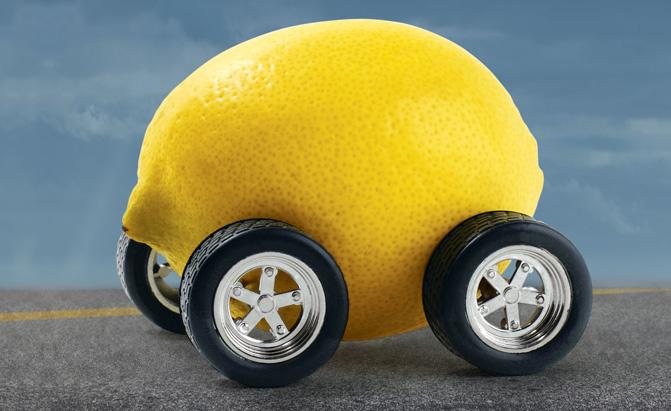
The photo shows a large yellow lemon with a rough peel. Beneath it are four black tires with chrome rims that look like parts of a toy car. The background is gray-blue: a cloudy sky and smooth asphalt with yellow markings on the left. Everything is arranged so that the fruit looks like a car on the road.
There is no motion in the frame: it is a staged photo of a single object. The meaning comes from combining two things, a round fruit and wheels. The lemon sits confidently, almost like a car body, and the image is recognized at a glance.
Where the idiom comes from
The joke rests on the English word “lemon.” In American slang, a car that breaks down soon after purchase is called a lemon, meaning an unsuccessful, defective purchase. Later the word was also applied to other things that turned out worse than promised. In the US there are even so-called “lemon laws” that protect buyers of systematically faulty new cars, which is why the image is especially familiar to American audiences. In Russian it is usually rendered as “лимон на колёсах” (a lemon on wheels).
The picture literally embodies the idiom: the fruit has received wheels and become a car. Little is known about the photo itself: the author, the first publication and the exact date have not been established, so it cannot be called someone's specific invention. Most likely it is an advertising or illustrative image that turned into a template.
Why a lemon on wheels is funny
The humor comes from literalness. Many expressions sound like images, but nobody actually sees them. When an idiom becomes a real object, a brief moment of recognition kicks in: “aha, I get it.” That is why the template reads without explanation, even for a viewer who does not know the English word.
There is also a second layer, related to taste. A lemon is sour, which is immediately associated with an unpleasant surprise. A caption about an unsuccessful purchase or a hard day gains a double meaning: the expectation of a nice thing and the sour disappointment.
Example captions and how they work
Four variants written for this template.
“Bought a car from an online listing, and the showroom turned out to be a lemon on wheels.” The caption uses the idiom directly, and the picture confirms it without any extra words.
“Called a taxi, and a lemon on wheels showed up: the ride started out sour.” The idiom turns into an everyday situation, and the taste association adds a second joke.
“Friday: I look like a lemon on wheels, but I'm still going.” The image works in a figurative sense: it is about fatigue, not a purchase.
“Asked the seller why the wheels turn but there's no engine. He said: it's a lemon.” The question and the unexpected answer form a short dialogue, and the punchline creates the laugh.
How to use the template
The image suits short stories about purchases, trips and failed plans. The shorter the caption, the stronger the picture works: if the text grows, the fruit loses its meaning and remains just a photo of a lemon.
It is best to combine the template with one specific detail: a price, a day of the week or the name of a service. For advertising real brands the template is less convenient, since the author of the image is unknown, and this should be taken into account before publishing.