Creating the series
Annoying Orange was created by Dave Carlson, who also voiced the main character and wrote a large part of the scripts. The first videos were posted on YouTube in 2009, a period when the platform was quickly turning into a venue for short, low-budget homemade series. The exact date of the first release and the order of the early episodes are not known.
The format was simple: short scenes in which fruits and vegetables discuss their own topics in a kitchen or similar setting, while the orange keeps interrupting the others over and over. This straightforward setup made it possible to put out new episodes quickly and find topics for them, which mattered for a format that depended on regularity.
The character and his manner
The main character is a cocky, pushy orange who loves to needle the other characters and butt into other people's conversations. His catchphrase "Hey, Orange!" and his small jabs became his signature traits, the ones by which viewers recognized the character even without knowing the episode's context.
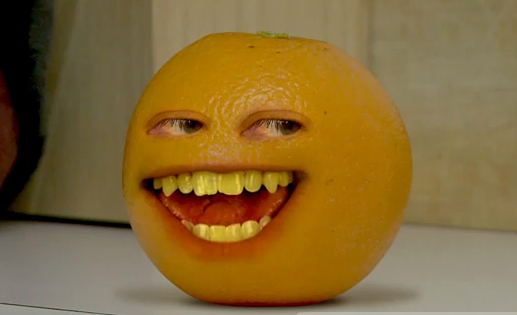
Visually, the character looks like an ordinary piece of fruit with facial expressions, eyes, and a wide grin laid over it. It's precisely this contrast between a harmless object and a human expression that creates the comic effect, one that transfers easily into short gifs and pictures.
Spread of the meme
The shot of the orange with his mouth wide open and his teeth gleaming became a universal reaction to an overbearing conversation partner. It gets dropped into chats whenever someone goes on too long and too loudly about trivial things, accompanied by a short "Hey, Orange!" or a quote from the video.
In the Russian-language internet, the series spread through translations, dubs, and clips. The exact dates of the first Russian translations and the authorship of the most popular dubs are not known.
Users often caption shots of the orange with phrases that have nothing to do with the series itself but keep its intonation: pushiness, exaggerated attention to trivial things, and a drive to butt into any conversation. In this way the character stopped being tied to a specific series and became a universal stand-in for a conversation partner who won't let anyone else get a word in.
Cultural context
Annoying Orange belongs to the wave of videos from 2009–2010, when YouTube became a place for homemade series, not just amateur clips. Such projects were built on meme-driven humor, fast editing, and characters recognizable from a single frame.
The series also shows how content that looks like it's for children can quickly become fodder for adult internet humor: viewers reworked its jokes into their own memes and parodies. That's why Annoying Orange is still cited as an example of early internet humor that outlived its original platform.
The series also became notable because its characters are recognized even by people who never watched the videos in full. The fruits and vegetables from the shots turned into a set of recognizable symbols, convenient for labeling certain types of behavior: pushiness, fussiness, the urge to comment on everything. That's exactly why the image of the orange outlived its specific episodes and lives on in jokes about people who can't stop talking.