The film and the character
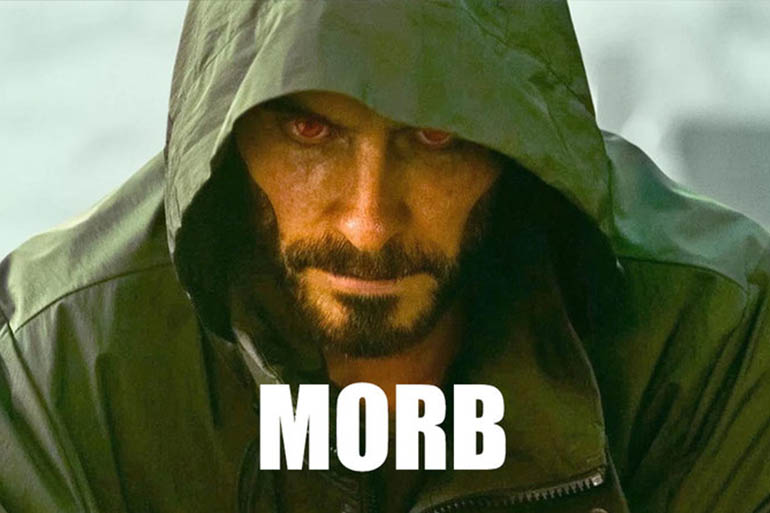
Michael Morbius is a Marvel Comics character, a scientist who gains vampiric traits after an experiment. In the 2022 film "Morbius," he was played by Jared Leto. In this image, the hero's face is partly hidden by a hood, and the word "MORB" has been added over the frame. It looks like a clipped name turned into a standalone sign. This is not a recognizable quote from the plot, and the image does not confirm that the character says this word in the film.
The frame itself was probably taken from promotional material or the film, but the exact episode cannot be established from a single picture. To understand the meme, the link to the character and the online irony that followed matter more. The word sounds as if it should mean something epic, though in this form it has no direct meaning. This deliberate emptiness prepares the parody: the more serious the image looks, the more absurd the short caption is.
How the mockery went viral
After the film's release, users posted over-the-top enthusiastic messages, as if the film were the greatest event in cinema. The formula "It's Morbin' Time" was invented on the model of superhero catchphrases and delivered with unflinching confidence. The joke worked precisely because viewers understood that it was not a real cult quote. The repetition of supposedly serious praise turned into a parody of fan hype and advertising language.
Gradually a meta-meme emerged: it laughs not only at the film but at how the internet can massively back a single joke. In talk about the film's re-release and the attention it got, satirical claims about records and universal popularity appeared. They should not be read literally. In this format, false seriousness is the main comic mechanism, and repeating one formula is part of collective play-along.
What MORB means
The short caption works as a password for those who remember the context: dropped into an unrelated conversation, it can mark the sudden turn of an ordinary moment into something maximally dramatic, vampiric or pompous. Used mid-argument, it can also just interrupt with an absurd word as if that settled things. The hero's dry expression does the rest of the work, since a flat face selling nonsense lands harder than an enthusiastic one.
The template suits jokes about fan arguments and inflated expectations: "Said I'd watch one scene, now I know all the movie's memes" or "Out of arguments, still full of confidence." The caption can also be applied to situations where a small problem suddenly takes on epic proportions. It is important not to pass off invented formulas as lines from the film: the internet parody and the official script exist separately here.
The meme apart from the film
A viral joke can gain an audience that has no interest in the original work. A person knows "MORB" or "Morbin' Time" but has not seen the film and does not remember the plot. This is a common shift: the meme uses the familiar name as material, while its own subject is collective play-along and self-irony. The picture with the caption becomes a brief symbol of absurd hype that can be understood without retelling the hero's whole story.
It is worth distinguishing real facts from later jokes. "Morbius" is a film with a specific character and actor; claims of nonexistent records, historical significance or literally universal quotes are usually satirical. The caption here also does not show that Morbius actually says "MORB." It rather shows how viewers turn advertising and discussion of a film into an independent internet joke.