What is in the picture
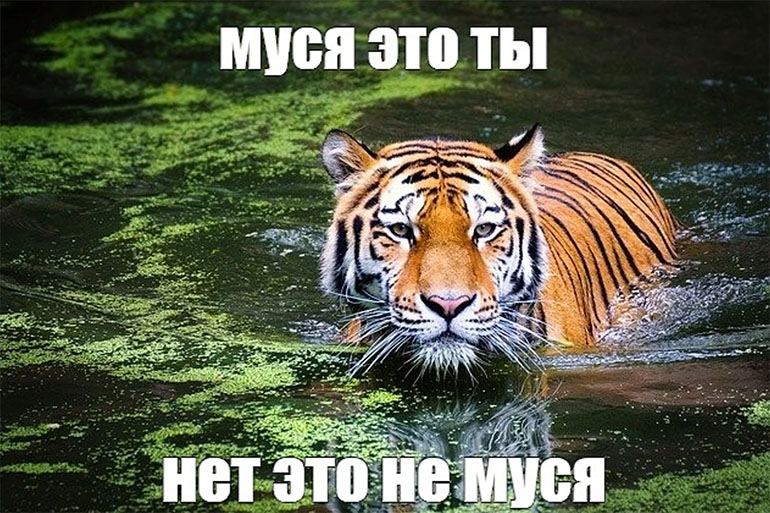
The collection holds a photograph, not a drawing: a tiger up to its chest in water, the surface of the pond completely covered in green duckweed, the animal looking straight into the lens. At the top and bottom are white captions with black outlines, the classic meme format: "Musya is that you" and "No it's not Musya." A striped predator in murky water has nothing in common with a house cat, and in that absurdity lies the whole point. The tiger version became the most recognizable version of the meme, although it was not the first to appear.
The sketch the phrase grew out of
The original source is the video "Dad and the Classmates' Reunion, He Is No Longer My Friend" on the Batek_official channel, published in October 2025. It is a compilation of sketches, and the Musya scene is played in the second half. In the plot, a schoolboy named Aslan tells the class that his beloved cat Musya (a common pet name for a cat) has gone missing, asks everyone to pass on any information and cries. After lessons, a classmate the hero feuds with secretly calls him and meows into the phone. Moved, Aslan asks: "Musya, is that you?" and asks the cat to come home. In reply there is a rude meow, and then it turns out that the pet was simply stolen. The roles in the sketch are played by adults, which adds to the comedy. One outlet links the idea of the meme to the author of a Telegram channel as early as 2024, but most publications agree that the phrase was first heard in Batek_official's video.
Sound first, picture second
The order was this: first the voiceover went viral. The short dialogue with the meowing was laid over animations, cuts and remixes, and there were even pages named "Musya, is that you." Only later did someone find a photo of a tiger in a swamp and add the two captions, and that gave the meme its visual template. This detail matters: the meme is neither the photo nor the sketch on its own, but a stitching together of two independent sources that met by chance.
How the phrase broke away from the plot
Then the usual mechanism of an abstract meme kicked in: one line was taken from the video, and the story about the stolen cat was left offscreen. Leopards were used, an airplane with a tiger face painted on its nose, and sometimes entirely unrelated characters, for example a musician. The captions also became a template: "No, it's not Musya" turns into "No, it's..." and plugs in anything: a news item, contest results, someone else's photo. The phrase made its way into organizations' accounts and into advertising for small companies, and some people drew an almost existential reading from it: if anyone can turn out to be Musya, then maybe I am Musya too. The humor rests on a sharp shift in tone: a tender address and an absurd answer.
What to write under the tiger
The template "Musya, is that you? No, it's..." comes together in a second. For example: "Musya, is that you? No, it's my deadline." The unexpected answer turns a touching question into a workplace joke. "Musya, is that you? No, it's Monday." The same device, but with an everyday gloom familiar to almost everyone. "Musya, is that you? No, it's the neighbor upstairs." It works on the contrast between a sweet question and an irritant from real life. Such captions land harder the further the second part is from the cat.