An ad slogan turned into a template
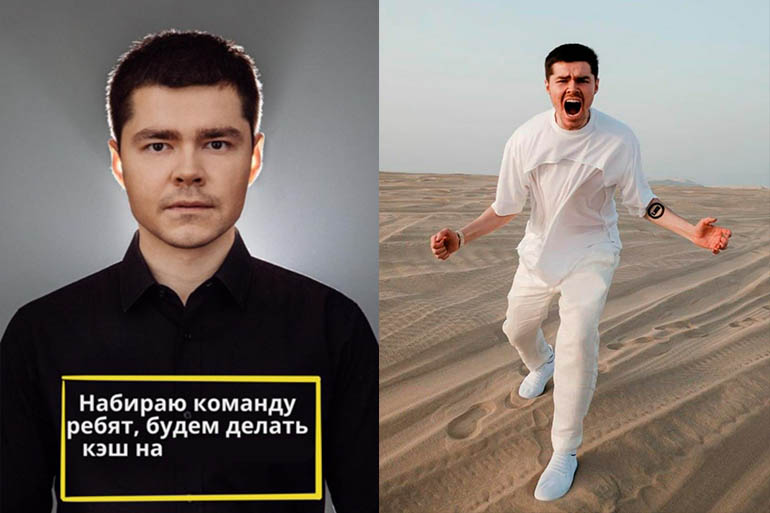
The meme grew out of an ad for entrepreneur Ayaz Shabutdinov, where a framed portrait sat next to an offer to build a team and earn money on a marketplace. In the summer of 2022, a wave of near-identical ad posts became fodder for ironic remakes. The frame shows the recognizable composition on the left and a swapped-out subject on the right: instead of the ad portrait, there's a man running furiously across a sandy desert.
This kind of montage folds two states into one scene. The first part sounds confident and businesslike — there's a team and a clear commercial goal. The second looks as if the whole project has turned into a desperate sprint or a reckless adventure. In the original template, both the person and the caption were usually swapped out, so a given version could take on a new meaning depending on which character and which "niche" appear in the frame.
Why the joke works
The ad promises a clear path to income, and the meme shows it as an exaggeratedly chaotic venture. The words "I'm building a team" give the impression everything is already organized; then the visual cut abruptly shatters the calm business tone. The contrast is sharper when a deliberately absurd project is placed next to it, like "making cash by finding lost socks" or "launching an agency that rescues deadlines."
Timing matters: the announcement has to look serious, and the follow-up has to be so over-the-top that the viewer immediately reads it as parody. This template laughs at the bravado of get-rich-quick advertising rather than passing judgment on specific course sellers: the joke works even with a fantastical "niche" like hunting for lost socks. If a real ad is used in the frame, accusations of defrauding buyers need to be backed up separately, by actual case documents, rather than by how absurd the photoshop looks.
Examples for new versions
Instead of a marketplace, you could write: "Building a team, guys — we're going to monetize the family group chat" or "launching a startup to find the second set of keys." After that, any shot of someone looking overly committed works on the right: running, carrying boxes, or staring dramatically into the future. The more modest the goal and the grander the pitch, the clearer the parody.
Another option is to show the contrast between the pitch and the practice: on the left, a confident launch plan; on the right, a team member with a long task list and an empty calendar. Your own caption lands better if it aims the joke at generic entrepreneurial bravado rather than at one specific person. If you keep a real person in the frame, don't put dubious promises in their mouth, and note that it's a photoshop, not their own post.
What context should be kept
The first versions are tied to course ads and a project about earning money on Wildberries, and the format was later applied to other people and absurd ideas. This is the meme's historical connection, not a how-to for making money and not a guarantee of results. Details changed quickly, and the caption on one copy could differ from the original. So when describing it, it's useful to talk about the general ad template rather than attributing every remake to the author of the original ad.
The image on the right is done in the style of a digital game or photomontage: it shouldn't be read as a confirmed episode from the entrepreneur's own life. If Shabutdinov's personal life or related legal news comes up, use separate verified sources and don't draw facts from memes. The most durable part of the template is the confident call to rally people around an absurd plan and its unexpected visual follow-through.