What's in the shot
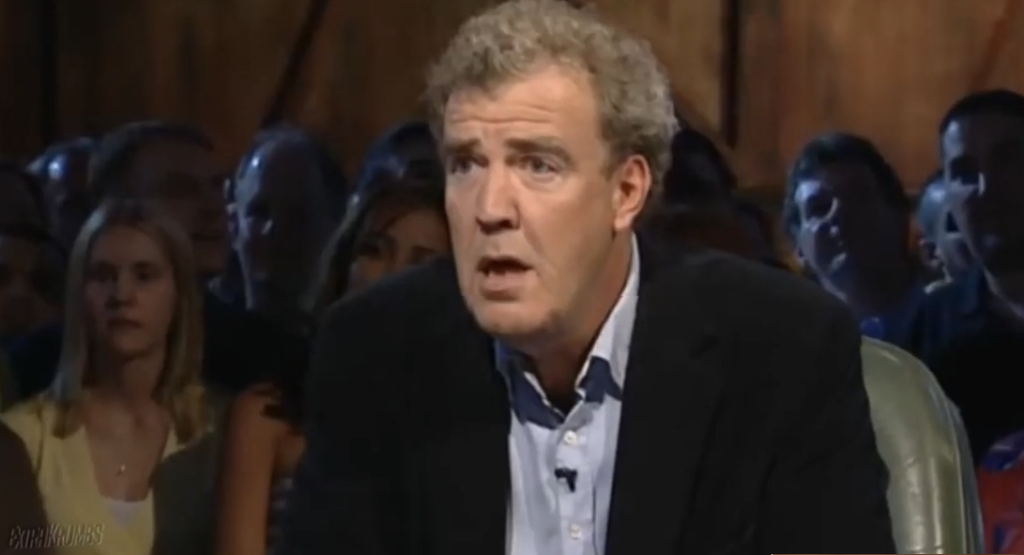
The shot was filmed in a TV studio. A middle-aged man with curly gray hair sits turned slightly to the side, wearing a black jacket over a light-blue shirt with an open collar, on which a small lapel microphone is clipped. His brows are drawn together, his forehead furrowed, his mouth half-open as if he's about to say "oh no." Behind him, against a wooden wall, the audience is visible, slightly blurred and lit in warm light. In the bottom left corner there's a semi-transparent watermark from whoever posted the video.
His expression looks both alarmed and bewildered at once. That's precisely the initial "reaction" which, per the joke's logic, is meant to be followed by indifference.
Where the line comes from
The shot is attributed to the British motoring show Top Gear, and the man in it to host Jeremy Clarkson. According to accounts, in a 2008 episode Clarkson reacted with a brief "oh no" to a piece of news his co-host James May was reading out, then immediately moved on to another topic. The exact episode isn't specified, so the details of the broadcast are presented as "reportedly."
It became a meme format later: reportedly, on May 13, 2020, a Reddit user posted a two-panel image pairing this expression with the phrase "Oh no, anyway." The first panel depicted fright, the second a detached shrug. The Russian-language name follows the same meaning.
How the joke reads
The meme describes a familiar defense mechanism: a person realizes the news is bad, briefly puts on a show of sympathy, and immediately goes back to their own business. The comedy comes from the speed of the switch. The dismay lasts a split second, because the person's real feelings about the problem aren't as deep as politeness demands.
That's why the format is often used for jokes about indifference to big headlines, minor annoyances, or other people's problems that don't actually affect the speaker. Importantly, the humor is aimed at the speaker themselves, not at whoever they're talking to: the person is admitting that they don't always react the way they're supposed to.
Example captions
The template has two parts: alarmed and detached. Below are invented examples, where the first line refers to this shot and the second to the "anyway" half.
"The doctor says to sleep at least eight hours." Then "anyway" and one more episode until three in the morning. Health concerns lose to laziness.
"Phone: five percent battery left." Then "anyway" and more scrolling through the feed. A minor annoyance quickly becomes the new normal.
"Weather forecast: freezing tomorrow." Then "anyway" and the same old autumn jacket.
"Coworker: we've got an unscheduled meeting today." Then "anyway": alarm gives way to resignation and a cup of coffee.
How to use it
If all you have is this one shot, caption it with the alarmed line and add the second half as a separate reply or follow-up message. The contrast between the first and second reaction is the heart of the joke, so don't drag out the transition.
Keep in mind that the meme easily turns inappropriate if it's describing someone else's genuine misfortune: indifference to a real tragedy comes across as cruel. It's better to aim the irony at everyday trivialities, advertising claims, or your own habit of putting off unpleasant tasks.