Origins of the project
The project appeared amid the YouTube video blog boom, when Russian-language creators were experimenting with interview and reality-show formats. By that point, host Alexey Panin had already become known as someone who often found himself at the center of loud scandals and who readily played up his own reputation. This combination became the basis of the idea: to make a program in which being scandalous isn't a side effect but the actual subject of the joke.
The project's description mentions Sergei Druzhko and his "Druzhko Show," which points to a connection between the format and a well-known Russian-language video channel. The launch details, budget, and internal production workings were not fully disclosed publicly, so many details rely on descriptions from open sources and on the videos themselves. The first episode drew attention with its unusual delivery: the host kept a straight face, while the absurdity arose from the contrast with the surrounding studio.
Format and participants
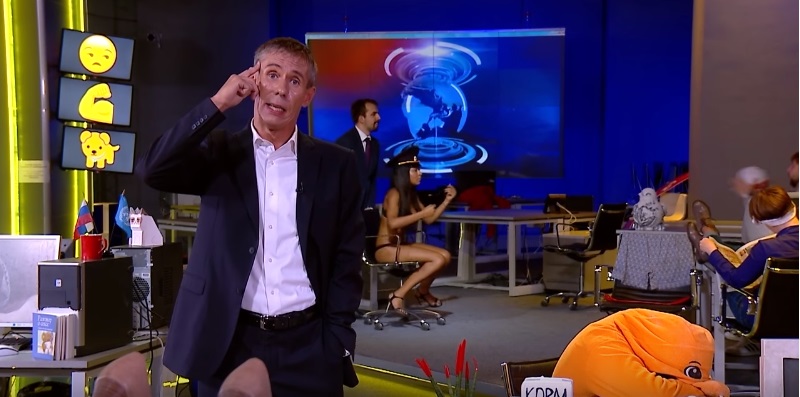
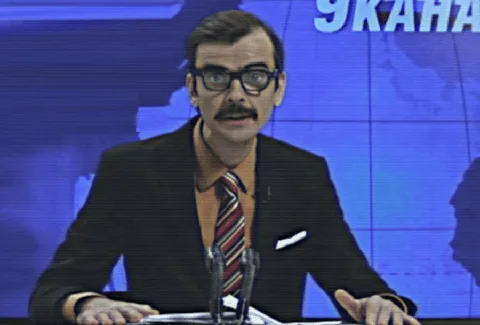
The show is built as a studio program with the host at the center of the frame, bright screens, and news-style decor. Frames from the first episode show a blue studio with an enormous screen, where people are constantly moving in the background, while monitors with emoji stand off to the side. This look emphasizes that the show plays with the familiar aesthetic of news and entertainment programs.
Among the project's participants and guests, the description mentions Diana Shurygina. The format itself is built for short dialogues, controversial lines, and characters' reactions. An important part of the humor is that the host keeps a deadpan expression even when sheer buffoonery is going on around him, including costumed characters in the background.
Why Panin became the meme's hero
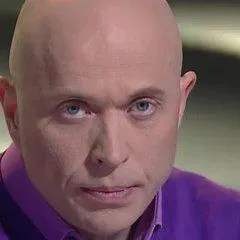
Alexey Panin has long been perceived in the Russian-language internet as a figure whose public statements, interviews, and on-camera behavior often become the basis for quotes and parodies. Over time, the host's own persona turned into a self-contained meme: a single gesture or intonation is enough to trigger an association with his media image in a viewer's mind. In a frame from the episode, he points a finger at his temple, and online this gesture serves as an ironic comment on someone's strange idea.
It's worth noting that the meme here isn't built on mocking appearance. The subject of the jokes is the public behavior and media role of a person who himself takes part in this game. That's why it's correct to treat this material as a story about a public figure and a show format, rather than about a private individual.
How the show spread online
The first episodes spread across YouTube and social media in fragments: short clips, quotes, and reactions. The clips worked better than full episodes, because a snippet of a line easily turned into a universal comment on any situation involving hype, scandal, or self-promotion.
Over time, the name "Haipovosti" became a common noun for shallow but loud content. Users use it jokingly when talking about news built on scandal for the sake of views, which reflects the project's main idea: to show the mechanics of hype from the inside.
Conclusion and context
Haipovosti remains an example of how talk shows and video blogs turn into meme-generating environments. The program is interesting not only for its storylines but also for showing how a public figure can consciously work with their own reputation.
Exact viewer numbers, the dates of all episodes, and the creators' internal decisions are not fully confirmed in open sources, so the text includes only the facts tied to the project's description and the first episode. The format's further development depends on its creators and on whether audience interest holds.