The title sequence with a collage of faces
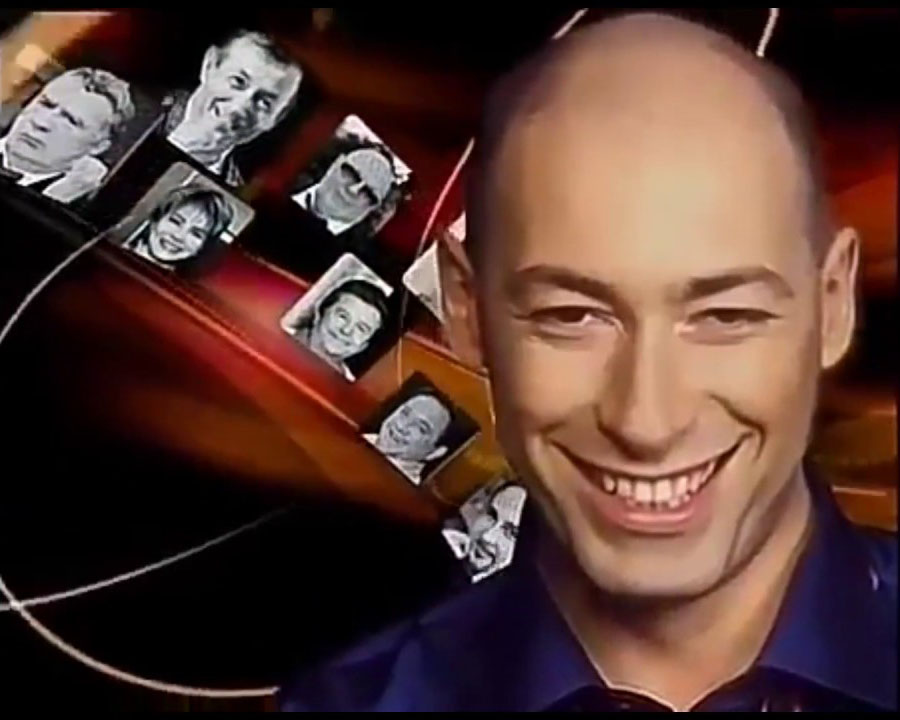
The frame shows, in close-up, a smiling bald man in a shiny dark-blue shirt. On the left, against a dark red-orange background, black-and-white photos of people appear to fly past, some in tilted frames. The image looks like a stylized TV title sequence: a bright gradient, smooth arcs, and a large portrait of the host.
The man in the frame is Dmitry Gordon, and the photos around him apparently depict guests of the program. Who exactly is in them can't be determined from the image, so these people shouldn't be named.
Who Gordon is
Dmitry Gordon is a Ukrainian journalist and TV host, creator of the program "In Dmitry Gordon's Company," in which he conducts long interviews with well-known people. He's long been known outside Ukraine as well, and the host's persona — energetic, with a wide smile and a recognizable speaking style — has proven to be convenient material for jokes.
There are several memes built around him, and "Egg Man" is just one of them: it doesn't rest on any particular interview, but on the picture itself — the bald head and the fixed smile.
2020: the song and the title sequence
According to Russian-language overviews, "Egg Man" emerged in 2020: a video appeared online in which a long musical piece built around the words "egg man" was set to Gordon's old show title sequence. The track's creator, the exact date, and the view counts vary between different retellings, so no precise figures are given here.
Exactly where the word "egg" came from isn't reliably known. The most obvious guess is the host's smooth head and the sheer absurdity of the comparison, but that's speculation, not an established fact.
How the meme lived on
The title sequence got spliced into edits, set to unexpected music, and used as a backdrop for absurd stories. According to reports, Gordon himself responded to the jokes with self-deprecating humor, and that helped keep the meme from turning into bullying: there's no malice in the joke, because its subject isn't offended.
What matters is that the meme laughs at the picture and its comical grandiosity, not at the man's personal life. Captions should be built on that distinction.
Example captions
"When a nine-minute voice message lands in the chat at 6 AM." The character's smile turns into anticipation of a long monologue.
"My face when they announce in the kitchen that the borscht is ready." The joy is too big for the occasion, and that's exactly what the joke is built on.
"Manager: project delivered. Developer: actually, there are still some issues left." The wide smile is set against an alarming situation.
"Hello, we'd like to invite you for an interview." The caption uses the frame's original meaning — an interview show's title sequence — and adds an absurd sense of anticipation.
How to use the frame
This picture works well as an absurd reaction image: the smooth, smiling head against a backdrop of flying portraits looks, on its own, far too grand for a simple everyday situation, and it's exactly that mismatch that carries the joke. The best option is a short everyday situation where someone is too cheerful or too talkative. Captions shouldn't touch on the host's personal life: the meme runs on his public persona and the TV title sequence.
The title sequence also works well over screenshots of chats and over videos: the fixed smile against a backdrop of flying faces looks like a grand introduction after which something serious ought to happen, and the caption subverts that expectation.