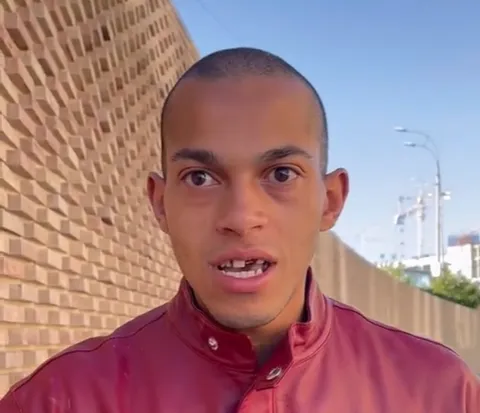
Who Dmitry Kiselyov is
Dmitry Kiselyov is a Russian television host and journalist known for his work on state television channels. In the 2010s he hosted news programs on the channel Russia-1, which were widely discussed in Russian media and on social networks. His manner of speaking, including his expressive turns of phrase and rhetorical devices, has repeatedly been the subject of parody.
The phrase "Coincidence? I don't think so" is one of a number of recognizable expressions that became associated with the host and spread beyond his programs. The exact circumstances of its first use on air have not been established, so the meme's entry uses 2013 as a reference point.
Origin of the phrase
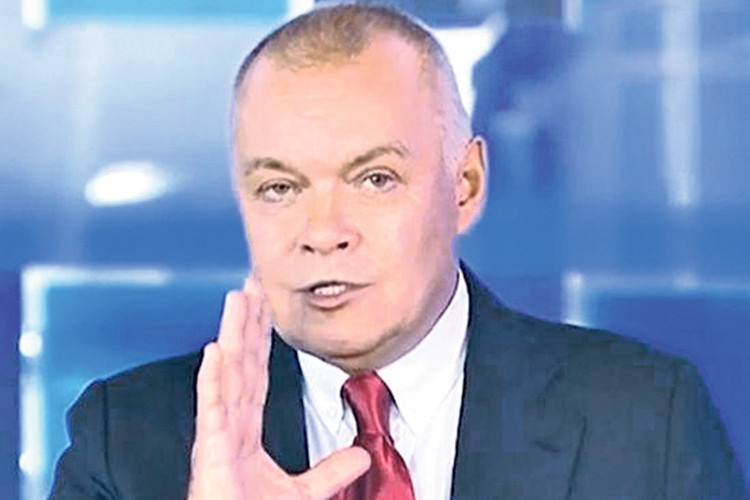
The phrase was used in news broadcasts as a rhetorical answer to a question about a connection between events. The host usually accompanied it with a pause and a raised hand, which made the phrase recognizable. Over time it became a stand-alone expression, quoted independently of the program's context.
It's important to distinguish the phrase itself from the meme: the meme arose as a retelling and a playful take on how the phrase is used. That's why what circulates online is more often not a verbatim quote but a pattern of "event — explanation — irony."
How the meme spread
The phrase quickly became material for parodies, video edits, and photo captions. Users applied it whenever someone was explaining away coincidences that looked too convenient for one side. That's how the meme about contrived coincidences arose, one where what matters isn't the phrase itself but the irony directed at it.
The meme is widely used in political discussions, but isn't limited to them. It's also used for joking about everyday situations, for instance when three events in a row point to the same conclusion and someone in the argument suggests not looking for a connection.
Context and controversy
The phrase gets used in different ways. Supporters of the media outlets the host worked for saw it as calm irony directed at unproven theories. Critics saw it as a way to wave off arguments. That's exactly why the meme functions as both a joke and a marker of a dispute.
Readers should keep in mind that judgments in such disputes often depend on the observer's position, and the phrase itself contains no proof of anything. The meme reflects not a resolution of the question but how the public reacts to convenient explanations.
Usage today
Today the expression continues to be used in comments, captions, and conversations. Understanding it only requires knowing the general meaning: it's about a connection that someone is denying too confidently.
A photo of the TV host with his hand raised serves as a recognizable illustration of the meme, so the image conveys the ironic tone easily even without a caption. That makes the meme a handy tool for talking about disputed explanations of events.