What's depicted
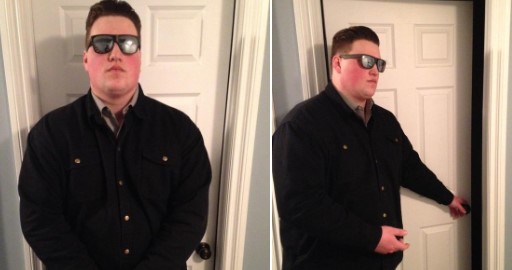
In the widespread versions, the meme is a shot of a man in a dark jacket and sunglasses standing at a door, as if checking guests. The image is split into two parts: in one the character stands upright, in the other he opens the door slightly, as if deciding whether to let the person in. Captions usually add short lines about who's worth letting in.
The name Persuadable Bouncer can be translated roughly as "a bouncer who can be talked into it." That idea is the center of the joke: the guard looks strict but is ready to change his decision if the guest seems worthwhile, interesting, or simply convincing. The Russian-language name, "Vyshibala" ("Bouncer"), conveys the same role.
History of the meme
The exact date of first publication and the author of the original comic have not been established. The meme has been noted since 2016, when multi-panel comics and formats built on a sequence of several panels were gaining popularity. The comic was quickly remade: some versions changed the lines, others kept only the photograph while preserving the recognizable pose.
Russian-language communities picked up the format and translated the captions while keeping the overall structure. The joke adapted easily to different situations: being screened for clubs, standing in lines, being accepted into a company, and applications to join communities.
How the joke works
The main mechanism is the duality of the role. The guard formally stands guard over the rules, but in the memes he turns into a figure who decides what counts as worthy. The viewer recognizes a familiar social situation: many have felt that rules are applied arbitrarily.
The humor targets the selection situation itself, not a specific person. The character in the memes is a generic bouncer figure, and the captions play on his decisions rather than his appearance. That's why the meme works as satire on formal procedures rather than mockery of the person in the photo.
Variants and usage
Over time the format was used for jokes about job interviews, entry into closed communities, course admissions, and even checking personal contacts. The captions were built on pretended strictness and a sudden willingness to "soften up," which created the comic effect.
In comments, the meme was often used as an ironic reply to the question "why wasn't I let in": the bouncer doesn't explain his reasons, only hints at criteria the viewer has to guess for themselves.
Assessment and context
The meme belongs to the classic formats of internet humor, where a comic or photograph serves as the basis for repeated reworking. That makes it easy to recognize and repeat: a new version only needs a new caption, since the recognizable pose already does the work for the author. The original photograph belongs to a private individual, so it's appropriate, when discussing the meme, to talk about the image rather than the real person and his appearance. The detailed history of the original comic is not fully confirmed in open sources, so conclusions about its spread remain approximate.