What can be seen in the frame
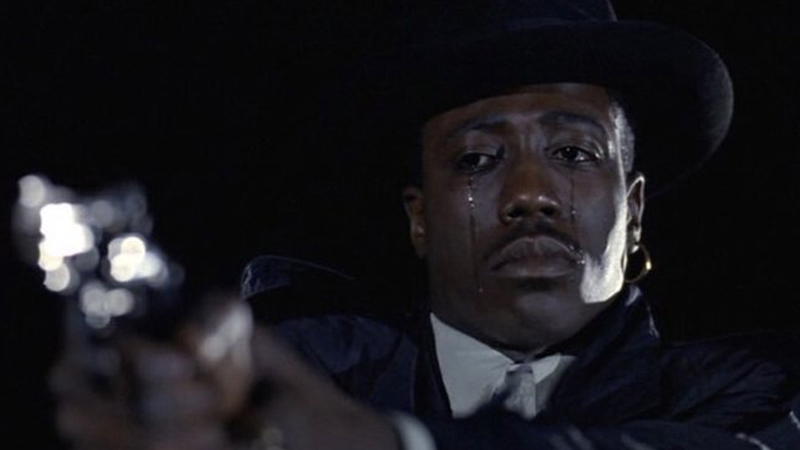
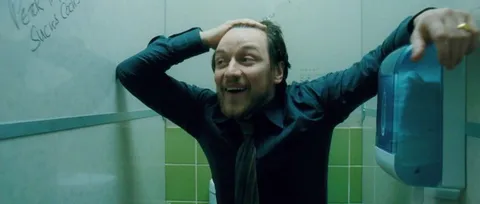
A dark night shot. In the center is a man in a black hat with a brim and a dark jacket, under which is a light shirt and a tie. A ring glints in his ear. Tears run down his cheeks, his eyes are red, and his lips are pressed tightly together. In the foreground on the left, a pistol barrel sticks out, blurred but recognizable: the glints of light on the metal have spread into pale smudges.
The face and the weapon lie in different planes of focus: the weapon is blurred, while the hero's gaze is sharp. This composition makes the viewer look first at the tears, while the pistol reads as a second, no less powerful part of the message.
Where the frame comes from
The source is the film “New Jack City” (1991). Wesley Snipes plays Nino Brown in it, the head of a criminal gang in New York. It is a mistake to link this frame with Spike Lee's “Jungle Fever”: Snipes did appear in that picture too, but the meme is taken from “New Jack City”.
The plot of the scene behind the meme is almost irrelevant: the template rests on the expression itself, not on the events of the film. That is precisely why there is no point in attributing a specific cause to the hero's tears: the frame shows only the contrast between emotion and weapon.
How the template emerged
According to available reports, the template began to spread on Twitter in February 2017: the author captioned the frame with a fictional conflict in which he has to “fight” a likeable celebrity, and invented a deliberately absurd pretext for it. In October 2018, a tweet featuring skateboarder Tony Hawk's name gathered tens of thousands of likes, and he replied to the author. After that, the formula spread beyond English-language pages.
Later the meme outgrew its original formula and became a general shorthand for the situation “I don't want to do this, but I will”. In this form it applies to any everyday decision, not only to imaginary conflicts.
Why it works
Tears and a pistol do not usually appear together. Tears are a sign of weakness and sympathy; a pistol is a sign of determination and aggression. When both are on one face, the result is a comic picture of a person who is suffering but carries on. The caption adds a ridiculous pretext: the joke carries a double load, both dramatic and domestic.
The smaller and more harmless the task, the funnier the contrast. “I am going to tell my friend that I don't like his pineapple pizza” sounds like an execution sentence. The more a person loves the object of the “execution”, the more palpable the conflict.
Example captions
“Me, when it's time to throw out the old T-shirt with a hole in it that I've been wearing for ten years” — love for a thing and the need to part with it.
“Me, when it's time to delete 400 cat photos from my phone” — the hand reaches for the button, but the eyes are wet.
“Me, when I tell my dietitian that I'll have just one slice of cake and that's it” — tears as a premonition of a broken promise.
“Me, when I have to tell my friend that he sings worse than he thinks” — tenderness toward a person and the duty to be honest. In every example, a strong reason is replaced by a small or sweet one, but the emotion remains tragic.