Creating the character
Matt Furie introduced Pepe as a minor character in the comic "Boy's Club," about the life of a group of friends. In the original stories the little frog was cheerful and carefree, and it was his line "feels good man" that became the basis for later memes. Originally Pepe wasn't intended as a symbol of anything beyond a comic character.
The comic circulated online and gradually built up a small audience. There the character acquired a recognizable look: a rounded green figure with big eyes and a wide smile. Compared with the later images, the original look stands in sharp contrast, since the original Pepe was more joyful than sad.
Spreading on imageboards
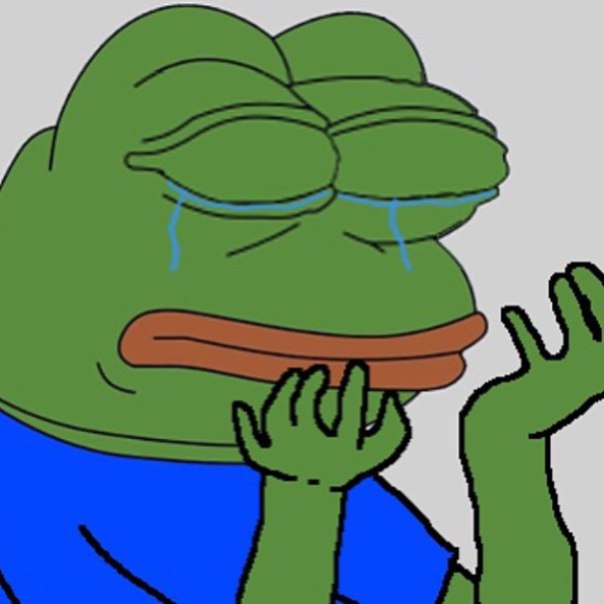
Starting around 2008, images of Pepe began to be massively remixed on imageboards. Users changed his facial expression, added captions, and inserted the character into their own jokes. One of the most widespread versions was the sad face with tears, known in English-speaking circles as "sad frog" and "feels bad man."
The reversal of the character's image was apparently tied to internet culture's love of repurposing other people's characters. These images later spread across social networks and became familiar even to people who had never read the comic. This is a typical path for a meme: first a recognizable image, then a wave of variations, and only afterward a conversation about its meaning.
Symbol status and controversy
In 2016 the Anti-Defamation League (ADL) added a version of Pepe carrying racist and antisemitic connotations to its database of hate symbols. This sparked a wide-ranging debate, since most users had used the character with no such intent. Matt Furie, the comic's creator, spoke out against this use and in 2016-2017 supported the #SavePepe campaign.
Furie took steps to restore the character's original meaning, including releasing drawings that showed Pepe in a positive context. The controversy surrounding the symbol showed how hard it is to control the meaning of a meme living in an open environment. Details of specific organizational decisions are not given here, since they could not be reliably verified.
Cultural context
Pepe's story shows how a character created for a joke can turn into a symbol with multiple meanings. Some users keep using him as a humorous image with a sad face, while others associate him with political communities. That's why different sources describe Pepe differently, with assessments depending on the specific context.
Today the sad frog is most often seen as an emotional reaction to failure or bad news. People recognize it by the simple face and characteristic tears, with the exact meaning clarified by the caption. For a Russian-speaking audience, the meme is interesting above all as an example of how an internet image can slip out of its creator's control.